
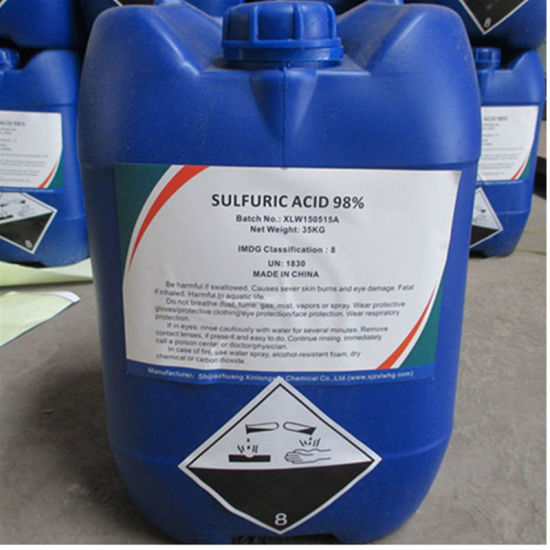
Concentrated Sulphuric Acid in Kenya | Industrial Chemical Information
Welcome to Olinc Chemical Suppliers, your industrial chemical information and supply partner in Nairobi, Kenya.
Are you researching concentrated Sulphuric Acid for an industrial, manufacturing, laboratory or specialised processing application? Understanding the chemical’s concentration, properties, applications, quality specifications and safety requirements is essential when evaluating this important industrial acid.
Sulphuric Acid (H₂SO₄) is one of the most widely used inorganic chemicals in industrial manufacturing. It plays an important role in fertiliser production, petroleum refining, chemical processing, metal treatment and several other industrial operations.
At Olinc Chemical Suppliers, we understand that industrial customers need accurate product information before making chemical procurement decisions. This guide explains the identity, properties, grades, industrial applications, technical considerations, hazards and regulatory requirements associated with concentrated Sulphuric Acid in Kenya.
Other names of Concentrated Sulphuric Acid
Customers may search for this product using different chemical and commercial names. Including these names helps improve the page’s search visibility.
Common alternative names include:
-
Sulphuric Acid
-
Sulfuric Acid (American spelling)
-
Concentrated Sulphuric Acid
-
Sulphuric Acid 98%
-
Sulphuric Acid 96%
-
Hydrogen Sulphate
-
Dihydrogen Sulphate
-
Oil of Vitriol
-
Vitriol Oil
-
Battery Acid (a general term for certain sulphuric acid solutions, not necessarily concentrated acid)
-
Dipping Acid
-
Sulfuric Acid H₂SO₄
-
CAS 7664-93-9
Chemical identification
| Property | Information |
|---|---|
| Chemical name | Sulphuric Acid |
| Common product description | Concentrated Sulphuric Acid |
| Chemical formula | H₂SO₄ |
| CAS number | 7664-93-9 |
| EC number | 231-639-5 |
| Molecular weight | 98.08 g/mol |
| Chemical family | Inorganic mineral acids |
| Appearance | Clear, colourless, oily liquid when pure |
| Common concentrated grade | Approximately 96–98% |
| UN number | 1830 for sulphuric acid above 51% concentration |
| Primary hazard | Severe corrosive hazard |
What Is Concentrated Sulphuric Acid?
Concentrated Sulphuric Acid is a highly concentrated inorganic mineral acid with the chemical formula H₂SO₄.
It is one of the most important industrial chemicals worldwide because of its extensive use in chemical manufacturing, fertiliser production, petroleum refining, metal processing and other industrial operations.
Commercial concentrated sulphuric acid commonly has a concentration of approximately 96–98% by weight, although other concentrations are also manufactured for particular applications.
It is a dense, oily liquid with strong corrosive properties. It is also highly hygroscopic, meaning it has a strong tendency to absorb moisture from its surroundings.
One of its most important chemical characteristics is that mixing it with water releases considerable heat. This makes concentration, compatibility and handling information particularly important.
Available Grades and Concentrations
Sulphuric Acid is manufactured in different concentrations to meet different industrial and laboratory requirements.
| Grade or description | General characteristics |
|---|---|
| Concentrated Sulphuric Acid | High-concentration commercial acid, commonly 96–98% |
| Technical-grade Sulphuric Acid | Intended for suitable industrial processes |
| Industrial-grade Sulphuric Acid | Used in various industrial manufacturing operations |
| Laboratory-grade Sulphuric Acid | Supplied with specifications appropriate to laboratory work |
| Battery-grade Sulphuric Acid | Formulated for lead-acid battery applications |
| Dilute Sulphuric Acid | Lower-concentration aqueous solution |
| Fuming Sulphuric Acid (Oleum) | A different, more specialised product containing dissolved sulphur trioxide |
Important: These descriptions are not interchangeable. Customers should verify the actual concentration, purity and impurity limits from the manufacturer’s Certificate of Analysis.
Physical and Chemical Properties
Understanding the physical and chemical properties of concentrated Sulphuric Acid helps industrial users determine whether it is suitable for their intended process.
| Property | Description |
|---|---|
| Chemical formula | H₂SO₄ |
| Molecular weight | 98.08 g/mol |
| Appearance | Colourless, oily liquid when pure |
| Odour | Essentially odourless |
| Density | Approximately 1.84 g/cm³ for 96–98% acid |
| Melting point | Approximately 10°C for pure acid |
| Boiling point | Approximately 337°C for concentrated acid |
| Water solubility | Miscible with water, releasing considerable heat |
| Chemical nature | Strong inorganic acid |
| Hygroscopic property | Strongly absorbs moisture |
| Corrosiveness | Highly corrosive |
These are approximate reference properties. Actual values depend on concentration, temperature and product specification.
Industrial Applications of Concentrated Sulphuric Acid
Concentrated Sulphuric Acid has a wide range of industrial applications. Its importance comes from its chemical reactivity, dehydrating properties and role in industrial manufacturing.
Fertiliser Manufacturing
One of the largest industrial applications of Sulphuric Acid is fertiliser production.
It is used in the manufacture of phosphate-based fertilisers, including phosphoric acid and superphosphate fertilisers.
The agricultural sector therefore depends on sulphuric acid as an important industrial raw material in fertiliser manufacturing.
Chemical Manufacturing
Sulphuric Acid is used in the manufacture of numerous industrial chemicals.
It serves as a chemical reactant or processing agent in the production of selected acids, sulphates, dyes and other chemical compounds.
It is also important in various industrial chemical synthesis processes.
Petroleum Refining
The petroleum industry uses Sulphuric Acid in selected refining and processing operations.
It has applications in specialised petroleum refining processes, including certain alkylation operations.
Metal Processing and Metallurgy
Sulphuric Acid is used in selected metal-processing industries.
Its applications include metal pickling, surface treatment and certain metallurgical processing operations.
In these industries, product concentration and impurity specifications are important considerations.
Battery Manufacturing
Sulphuric Acid is an important electrolyte component in conventional lead-acid batteries.
Battery manufacturing and servicing use specially specified acid solutions.
It is important to distinguish battery-grade electrolyte from concentrated industrial sulphuric acid.
Textile Manufacturing
Sulphuric Acid is used in certain specialised chemical processes associated with textile and synthetic-fibre manufacturing.
Paper and Pulp Industry
Sulphuric Acid has applications in selected paper and pulp manufacturing processes, including chemical processing and the production of other required industrial chemicals.
Water and Wastewater Treatment
Sulphuric Acid is used in certain industrial water-treatment operations where controlled pH adjustment is required.
Its use must be based on a properly designed treatment process and appropriate chemical-safety arrangements.
Industrial Chemical Production
It is also used in the manufacture of sulphates and other chemical intermediates required by various industrial sectors.
Technical Quality and Specifications
For industrial customers, understanding the quality specification is important when evaluating Sulphuric Acid.
The following parameters may be relevant when reviewing a manufacturer’s technical specification:
-
Sulphuric Acid concentration, expressed as percentage by weight.
-
Purity or assay.
-
Iron content.
-
Chloride content.
-
Nitrate content.
-
Heavy-metal impurities.
-
Appearance and colour.
-
Density at a specified temperature.
-
Batch identification and traceability.
Not every parameter is specified for every grade. The requirements depend on the intended industrial application.
Certificate of Analysis (CoA)
A Certificate of Analysis is an important quality document supplied by a manufacturer or authorised distributor.
It provides analytical information about a particular production batch.
Industrial buyers should review the CoA to establish whether the material meets their required concentration and impurity specifications.
Understanding Sulphuric Acid Concentration
Concentration is one of the most important considerations when identifying concentrated Sulphuric Acid.
Commercial products may be described using percentages such as:
-
96% Sulphuric Acid.
-
97% Sulphuric Acid.
-
98% Sulphuric Acid.
These percentages normally refer to the mass percentage of H₂SO₄ in the product.
A product labelled 98% Sulphuric Acid is not the same specification as one labelled 50% Sulphuric Acid.
Customers should always confirm the concentration stated on the product label, technical specification and Certificate of Analysis.
Compatibility and Material Considerations
Concentrated Sulphuric Acid is highly corrosive and may react with numerous substances and materials.
Its compatibility with industrial equipment, storage systems, seals, pipelines and transfer components must be assessed against the exact concentration and operating conditions.
Important incompatibilities include:
-
Water, due to the substantial heat released during mixing.
-
Strong bases and alkalis.
-
Many organic substances.
-
Certain combustible materials.
-
Some reactive metals.
-
Strong reducing agents.
-
Certain incompatible oxidising or reactive chemicals.
Sulphuric Acid may also react with metals and release hydrogen gas under certain conditions.
Material compatibility should always be confirmed by a qualified chemical-safety professional and the manufacturer’s documentation.
Storage and Handling Requirements
Concentrated Sulphuric Acid requires dedicated chemical storage arrangements.
Because of its severe corrosive properties and heat-generating reactions, it must not be handled like ordinary industrial liquids.
Storage arrangements should include:
-
A designated, access-controlled chemical storage area.
-
Compatible, professionally selected storage equipment.
-
Suitable secondary containment.
-
Clear chemical identification and hazard labelling.
-
Segregation from incompatible substances.
-
Adequate ventilation and emergency provisions.
-
Appropriate inspection and maintenance arrangements.
-
Trained and authorised personnel.
The manufacturer’s Safety Data Sheet should determine the specific storage and handling requirements.
Health and Safety Information
Concentrated Sulphuric Acid presents serious health hazards.
It can cause severe skin burns, permanent eye damage and respiratory injury.
Skin contact
Direct exposure can cause severe chemical burns and tissue destruction.
Eye contact
Contact with the eyes can cause serious injury and permanent loss of vision.
Inhalation
Sulphuric Acid mist can irritate or severely damage the respiratory system. Significant exposure may result in life-threatening complications.
Accidental ingestion
Swallowing the acid can cause severe burns to the mouth, throat and digestive system.
Emergency precautions: Suspected exposure requires immediate emergency medical attention. Follow the product-specific SDS and emergency-response procedures. Do not attempt to neutralise acid on the body.
Environmental Considerations
Uncontrolled releases of concentrated Sulphuric Acid can cause serious environmental damage.
Potential consequences include:
-
Soil contamination.
-
Acidification of water bodies.
-
Harm to aquatic organisms.
-
Damage to vegetation.
-
Corrosion of infrastructure.
-
Changes in the pH of surrounding environments.
Industrial users should maintain appropriate spill-prevention systems, emergency-response plans and compliant hazardous-waste management arrangements.
Transportation and Regulatory Requirements in Kenya
Businesses importing, storing, distributing or transporting concentrated Sulphuric Acid in Kenya must consider the applicable hazardous-chemical and dangerous-goods requirements.
Sulphuric Acid above 51% concentration is generally identified under UN 1830 for transport purposes. Its classification, packaging and documentation must be confirmed against the actual product and applicable transport rules.
Kenya’s Environmental Management and Coordination (Management of Toxic and Hazardous Chemicals and Materials) Regulations, 2024, Legal Notice No. 182, provide a regulatory framework for hazardous industrial chemicals.
NEMA’s regulations address activities including:
-
Importation and exportation.
-
Distribution.
-
Storage.
-
Transportation.
-
Handling.
-
Disposal.
The regulations also address requirements for Safety Data Sheets and environmental licensing for relevant activities and facilities.
Before undertaking any regulated activity, businesses should confirm the exact applicable permits, registrations and licences with NEMA and other relevant authorities.
Sources:
Important Documentation for Industrial Buyers
Organisations evaluating concentrated Sulphuric Acid should establish that the relevant product documentation is available.
Important documents include:
-
Safety Data Sheet (SDS).
-
Certificate of Analysis (CoA).
-
Product technical specification.
-
Manufacturer information.
-
Batch number and traceability information.
-
Chemical concentration details.
-
Dangerous-goods transportation documentation.
-
Applicable regulatory approvals and licences.
These documents help industrial buyers assess product quality, suitability, safety and compliance.
Frequently Asked Questions About Concentrated Sulphuric Acid in Kenya
What is concentrated Sulphuric Acid?
Concentrated Sulphuric Acid is a high-concentration inorganic mineral acid with the chemical formula H₂SO₄. Commercial concentrated grades commonly contain approximately 96–98% acid by weight.
What is the chemical formula of Sulphuric Acid?
The chemical formula is H₂SO₄.
What is the CAS number of Sulphuric Acid?
The CAS number is 7664-93-9.
What is the difference between Sulphuric Acid and concentrated Sulphuric Acid?
Sulphuric Acid is the general chemical name. Concentrated Sulphuric Acid refers to a high-concentration formulation, commonly around 96–98%.
What is Sulphuric Acid used for?
It is used in fertiliser manufacturing, petroleum refining, chemical production, metal processing, battery manufacturing and selected industrial water-treatment applications.
Is concentrated Sulphuric Acid corrosive?
Yes. It is highly corrosive and can cause severe skin burns and permanent eye damage.
What is the appearance of concentrated Sulphuric Acid?
Pure concentrated Sulphuric Acid is generally a clear, colourless, oily liquid.
Is Sulphuric Acid soluble in water?
Yes. It is miscible with water, but mixing releases substantial heat and requires specialist controls.
What is the density of concentrated Sulphuric Acid?
A common reference density for 96–98% acid is approximately 1.84 g/cm³. Actual density depends on concentration and temperature.
Is concentrated Sulphuric Acid used in battery manufacturing?
Sulphuric Acid is used in lead-acid batteries, but the battery electrolyte is a specifically formulated solution and should not be confused with concentrated industrial acid.
What is the UN number for concentrated Sulphuric Acid?
The usual transport identification is UN 1830 for Sulphuric Acid above 51% concentration.
What documents should accompany industrial Sulphuric Acid?
Relevant documentation includes an SDS, CoA, technical specification, product identification and applicable transport and regulatory documents.
Is Sulphuric Acid regulated in Kenya?
Yes. Its applicable management requirements must be assessed under Kenya’s hazardous-chemical regulatory framework, including the 2024 NEMA regulations.
What is the difference between Sulphuric Acid and Oleum?
Sulphuric Acid is H₂SO₄, whereas Oleum is fuming Sulphuric Acid containing dissolved sulphur trioxide. They are distinct industrial products.
Contact Olinc Chemical Suppliers
Olinc Chemical Suppliers is based in Nairobi, Kenya, and serves businesses seeking industrial chemical information and solutions.
For enquiries concerning concentrated Sulphuric Acid, customers should establish the required product specification, concentration, intended industrial application and applicable regulatory documentation.
Olinc Chemical Suppliers
-
Location: Nairobi, Enterprise Road, Avon Business Center.
-
Email: sales@olincinchemicals.com
-
Phone: 0793062849 / 0743657810
-
Website: www.olincchemicalsl.com
Our commitment: Providing accurate industrial chemical information, supporting responsible chemical management and maintaining awareness of applicable safety and environmental requirements.



Reviews
There are no reviews yet.