
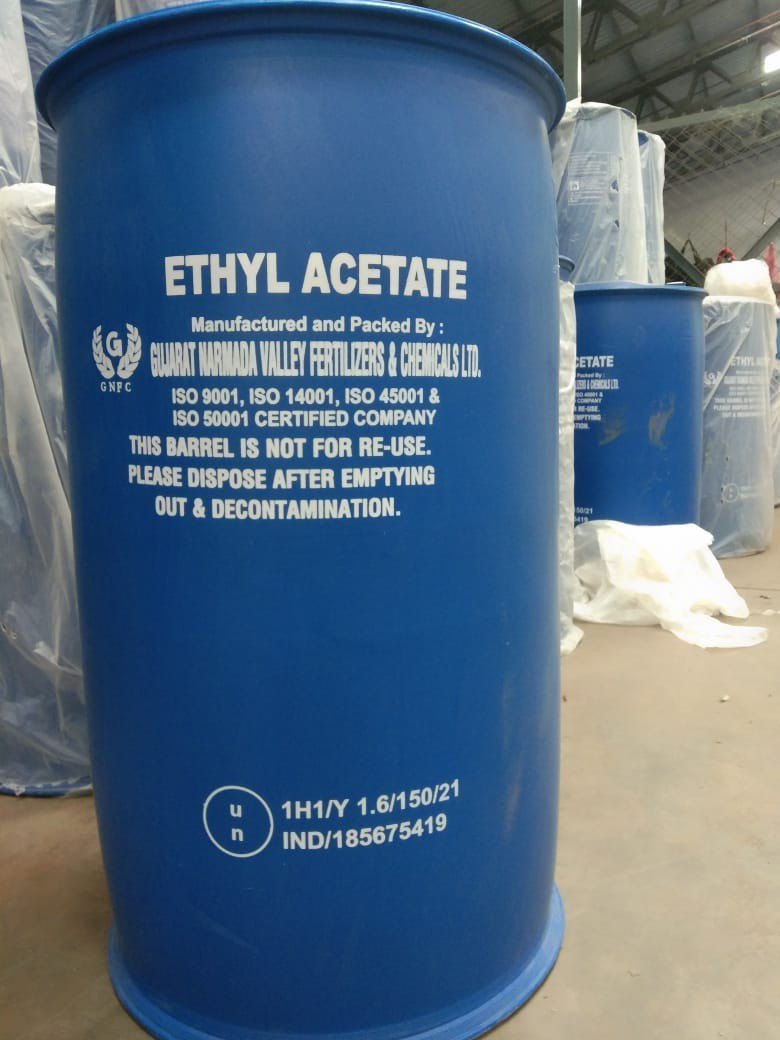
Ethyl Acetate Supplier in Kenya | Olinc Chemical Suppliers
Are you looking for Ethyl Acetate in Nairobi, Kenya, for your manufacturing, formulation or industrial production requirements? Olinc Chemical Suppliers welcomes businesses, manufacturers, laboratories and bulk chemical buyers looking for information and supply enquiries for Ethyl Acetate.
Ethyl Acetate is a versatile organic solvent valued for its strong dissolving ability, relatively rapid evaporation and compatibility with many commonly used industrial resins. It is widely used in the manufacture of paints, lacquers, coatings, printing inks, adhesives and flexible packaging materials. It also has applications in pharmaceutical processing, chemical manufacturing, extraction processes and selected personal-care formulations.
Whether you manufacture printing inks, formulate industrial coatings, produce adhesives or require a solvent for a specialised process, selecting the correct Ethyl Acetate grade is important for product performance, safety and production consistency.
At Olinc Chemical Suppliers, we welcome enquiries from customers in Nairobi and across Kenya, Uganda and Tanzania. Contact us to discuss your required grade, specifications, packaging and quantity.
What Is Ethyl Acetate?
Ethyl Acetate is a colourless, volatile organic liquid belonging to the ester family. It is produced through the esterification of ethanol and acetic acid. It has a characteristic sweet, fruity smell and is widely recognised as an industrial solvent.
Its main function in manufacturing is to dissolve or dilute compatible materials, particularly resins, polymers and other organic compounds. It is also used to control viscosity and drying behaviour in certain formulations.
One of its important characteristics is its relatively fast evaporation rate. After application, Ethyl Acetate evaporates and leaves the non-volatile components of the formulation behind. This makes it useful in products such as printing inks, lacquers, coatings and adhesives that require controlled solvent release and drying.
Ethyl Acetate is used in different industries, but the required purity and quality depend on the final application. Industrial solvent grade should not automatically be treated as suitable for pharmaceutical, food, cosmetic or laboratory applications.
Other Names of Ethyl Acetate
Ethyl Acetate is sold and identified under several chemical and commercial names. Buyers may encounter these names when searching for the product or reviewing technical documents.
- Ethyl Ethanoate
- Acetic Acid Ethyl Ester
- Ethyl Acetic Ester
- Acetic Ester
- Acetic Ether
- Ethyl Ester of Acetic Acid
- EtOAc
- EA
- Vinegar Naphtha (historical or less common name)
The most widely used chemical name is Ethyl Acetate, while Ethyl Ethanoate is its systematic IUPAC name. EtOAc is a common abbreviation in laboratories and chemical manufacturing.
Ethyl Acetate Chemical Identification
| Property | Information |
|---|---|
| Product name | Ethyl Acetate |
| IUPAC name | Ethyl Ethanoate |
| Chemical family | Organic ester |
| Chemical formula | C₄H₈O₂ |
| Structural formula | CH₃COOCH₂CH₃ |
| Molecular weight | 88.11 g/mol |
| CAS number | 141-78-6 |
| EC number | 205-500-4 |
| Physical state | Liquid |
| Appearance | Clear, colourless liquid |
| Odour | Sweet, fruity, ester-like |
| Solubility | Partially soluble in water; miscible with many organic solvents |
These identifiers help buyers distinguish Ethyl Acetate from other solvents, including Butyl Acetate, Methyl Acetate, Acetone and Ethanol.
Key Physical and Chemical Properties of Ethyl Acetate
Ethyl Acetate has a combination of physical and chemical properties that make it useful in industrial formulations.
| Property | Typical value |
|---|---|
| Appearance | Clear, colourless liquid |
| Odour | Sweet, fruity |
| Boiling point | Approximately 77°C |
| Melting point | Approximately -84°C |
| Density at 20°C | Approximately 0.90 g/cm³ |
| Flash point | Approximately -4°C, closed cup |
| Molecular weight | 88.11 g/mol |
| Water solubility | Limited; approximately 8 g per 100 mL near room temperature |
| Vapour pressure | Approximately 9–10 kPa at 20°C |
| Autoignition temperature | Approximately 426–485°C, depending on test data |
Values are typical reference figures and may vary slightly by test method, temperature and product specification. Always consult the current supplier Technical Data Sheet (TDS) and Safety Data Sheet (SDS) for the exact material being purchased.
Excellent solvent properties
Ethyl Acetate dissolves many organic materials, including numerous resins used in paints, coatings, printing inks and adhesives. Its solvent strength makes it useful in formulations that require the resin or other ingredients to remain evenly dissolved or dispersed.
Fast evaporation rate
Ethyl Acetate evaporates relatively quickly compared with many higher-boiling solvents. This can support faster drying in suitable ink, coating and adhesive systems.
Compatibility with organic solvents
It is miscible with many common organic solvents. This allows formulators to combine it with other compatible solvents when designing a blend with specific drying, viscosity and solvency characteristics.
Low water solubility
Ethyl Acetate has limited solubility in water. This property is important when designing solvent blends and selecting cleaning or extraction processes.
Characteristic fruity odour
Ethyl Acetate has a sweet, fruity smell. However, its odour should not be used to judge exposure levels or safety. Adequate ventilation and the precautions stated in the SDS remain essential.
What Is Ethyl Acetate Used For?
Ethyl Acetate has a wide range of industrial and commercial applications. Its main role is as a solvent, but its exact function depends on the formulation and production process.
Paints and coatings manufacturing
Ethyl Acetate is used as a solvent in selected paint and coating formulations. It helps dissolve compatible resins and supports the adjustment of viscosity and drying behaviour.
Applications include:
- Industrial coatings
- Protective coatings
- Lacquers
- Wood finishes
- Furniture coatings
- Automotive refinishing products
- Selected metal and machinery coatings
- Nitrocellulose-based coatings
In these formulations, the solvent helps the coating spread and form a film. Its evaporation rate can influence drying time, flow, levelling and final finish. The formulator must select a solvent blend appropriate for the resin and application conditions.
Printing inks
Printing ink manufacturing is one of the important application areas for Ethyl Acetate.
It is used in selected:
- Flexographic printing inks
- Rotogravure printing inks
- Flexible packaging inks
- Plastic-film printing inks
- Commercial printing inks
- Packaging and label inks
In ink formulations, Ethyl Acetate can dissolve compatible resins, help control viscosity and contribute to the drying characteristics required by high-speed printing processes.
The exact solvent blend must be matched to the ink resin, printing equipment, substrate and drying system.
Adhesives and glue manufacturing
Ethyl Acetate is used in some solvent-based adhesive formulations. It can dissolve compatible polymers and resins and help produce an adhesive with the required viscosity and application characteristics.
Potential applications include:
- Industrial solvent-based adhesives
- Packaging adhesives
- Selected footwear and leather adhesives
- Contact adhesive formulations
- Laminating adhesives
- Rubber-based adhesive systems, where formulation compatibility is established
Not every adhesive is suitable for Ethyl Acetate. Water-based adhesives and many specialised adhesive systems use different chemistry. Manufacturers should confirm compatibility before incorporating it into a formulation.
Flexible packaging and lamination
Flexible packaging manufacturers use solvent-based printing inks and adhesive systems for printed films and laminated packaging materials.
Ethyl Acetate may be used in these formulations to dissolve compatible resins, adjust viscosity and support solvent evaporation during production.
Applications include packaging films, printed plastic materials and selected laminated structures. Packaging intended for food contact requires suitable raw materials, controlled manufacturing conditions and compliance with applicable food-contact requirements. Industrial-grade Ethyl Acetate must not be assumed suitable for direct food-contact applications.
Pharmaceutical manufacturing and processing
Ethyl Acetate is used in certain pharmaceutical processes as an extraction or process solvent. It may help separate or recover specific compounds during manufacturing and purification.
Its use depends on the process, product specification, applicable pharmacopeial requirements and residual-solvent controls. Pharmaceutical applications require an appropriate documented grade and validated processes. Industrial-grade material should not be substituted for pharmaceutical-grade material.
Cosmetics and personal-care products
Ethyl Acetate may be used in selected personal-care and cosmetic formulations, including certain nail-care products and fragrance-related applications.
Its suitability depends on the intended use, purity, formulation and relevant cosmetic regulations. A technical or industrial solvent is not automatically suitable for cosmetic manufacturing.
Chemical manufacturing
Ethyl Acetate is used as a solvent and processing medium in various chemical manufacturing operations. It can support reactions, extraction, separation and purification where its chemical properties are appropriate.
Cleaning and degreasing
Ethyl Acetate can be used in selected industrial cleaning blends to help remove certain oils, grease, residues and organic contaminants.
Before use, the operator should check compatibility with the surface, coating, plastic, rubber or other material being cleaned. It may damage or soften some materials.
Laboratory applications
Laboratories use suitable grades of Ethyl Acetate as a solvent for sample preparation, extraction and analytical procedures, including certain chromatography methods.
Laboratory use requires the purity and documentation specified by the analytical method. Technical-grade material may not meet analytical requirements.
Industries That Purchase or Use Ethyl Acetate
Ethyl Acetate may be relevant to businesses operating in the following sectors:
| Industry | How Ethyl Acetate may be used |
|---|---|
| Paint and coatings manufacturers | Resin solvent and formulation solvent |
| Printing ink manufacturers | Solvent for compatible ink resins and viscosity adjustment |
| Flexible packaging manufacturers | Solvent in selected printing inks and laminating systems |
| Adhesive manufacturers | Solvent in compatible adhesive formulations |
| Pharmaceutical manufacturers | Extraction and process solvent |
| Cosmetics manufacturers | Selected nail-care and personal-care formulations |
| Chemical manufacturers | Process, extraction and reaction solvent |
| Laboratories | Analytical and sample-preparation solvent |
| Furniture and wood-finishing businesses | Solvent in selected lacquers and coatings |
Grades of Ethyl Acetate
Ethyl Acetate is available in different grades depending on purity, manufacturing controls and intended use. Buyers should select the grade based on the final application rather than relying on the product name alone.
Industrial or technical grade
Industrial-grade Ethyl Acetate is commonly used in manufacturing applications such as paints, coatings, printing inks, adhesives and industrial solvent blends.
The required purity and impurity limits should be checked against the customer’s formulation or production specification.
Urethane grade
Urethane-grade Ethyl Acetate is produced for applications where controlled solvent quality is important, including certain polyurethane coating and adhesive systems.
Manufacturers may specify limits for water, alcohol, acidity and other impurities. These limits matter because moisture and other contaminants can affect sensitive polyurethane formulations.
High-purity grade
High-purity Ethyl Acetate is used in applications that require tighter control of the main ester content and specified impurities.
The term “high purity” should be supported by an actual specification and Certificate of Analysis (COA).
Laboratory or analytical grade
Laboratory grades are intended for analytical and research applications. The required purity depends on the method and the limits for water, acidity, residue and other impurities.
Food or pharmaceutical grade
Special grades may be manufactured for specific food-processing or pharmaceutical uses. These applications require suitable documentation and compliance with the relevant regulations. A product described as industrial or technical grade must not be represented as food or pharmaceutical grade.
Technical Specifications Buyers Should Check
When purchasing Ethyl Acetate, customers should review the supplier’s TDS and COA. Important parameters may include:
- Ethyl Acetate assay or purity percentage
- Water content
- Acidity, commonly expressed as acetic acid
- Colour
- Specific gravity or density
- Alcohol content
- Residue after evaporation
- Appearance and clarity
- Relevant grade and test method
A typical commercial product may be supplied at a high assay, often around 99% or higher, but this is not a guarantee of the specification of every batch. Confirm the actual assay and impurity limits before placing an order.
Packaging of Ethyl Acetate
Ethyl Acetate is commonly handled and transported in approved, compatible containers designed for flammable liquids.
Depending on supplier arrangements and order quantity, common commercial packaging formats may include:
- Small sealed containers for limited requirements
- 20-litre or 25-litre containers
- Approximately 200-litre drums
- Intermediate bulk containers (IBCs)
- Bulk tanker supply for large industrial requirements
These are common market formats, not a confirmation of current Olinc stock or available pack sizes. Contact Olinc Chemical Suppliers to confirm the packaging options, quantity and delivery arrangements for your order.
How to Choose the Right Ethyl Acetate
Before ordering, consider the following:
- Application: Explain whether the solvent is for printing inks, paints, coatings, adhesives, cleaning, laboratory work or another process.
- Required purity: Confirm the minimum assay and impurity limits required by your formulation.
- Grade: Establish whether industrial, urethane, high-purity, laboratory or another documented grade is required.
- Compatibility: Confirm that Ethyl Acetate is suitable for the resin, polymer, substrate and other ingredients in your formulation.
- Evaporation requirements: Consider whether its evaporation rate is suitable for your production speed and working conditions.
- Documentation: Request the current TDS, SDS and batch COA where required.
- Quantity and packaging: State the amount needed and preferred container size.
Providing these details helps the supplier understand your requirement and helps you avoid ordering a solvent that does not match your process.
Storage and Handling of Ethyl Acetate
Ethyl Acetate is a highly flammable liquid. Proper storage and handling are essential to reduce fire, explosion and exposure risks.
- Store in tightly closed, approved containers in a cool, well-ventilated area.
- Keep away from heat, sparks, flames, hot surfaces and other ignition sources.
- Use suitable electrical equipment and controls in areas where flammable vapours may be present.
- Keep containers properly labelled and secured.
- Use appropriate bonding and grounding procedures during transfer to reduce static ignition risks.
- Keep away from incompatible materials and follow the product SDS.
- Prevent spills from entering drains, soil and waterways.
- Do not store near food, beverages or animal feed.
- Restrict access to trained and authorised personnel.
Because Ethyl Acetate vapour can form flammable mixtures with air, use only with appropriate ventilation and workplace controls.
Safety Precautions and Personal Protective Equipment
Ethyl Acetate vapour may irritate the eyes and respiratory tract. High exposure can cause symptoms such as headache, dizziness, drowsiness and other central nervous system effects. Repeated skin contact may cause dryness or irritation.
Appropriate precautions include:
- Chemical splash goggles or suitable eye protection
- Gloves selected for compatibility with Ethyl Acetate, as specified by the SDS
- Protective work clothing
- Adequate ventilation or suitable local exhaust ventilation
- Respiratory protection where required by a workplace risk assessment and applicable standards
- Access to suitable eyewash and emergency washing facilities
Do not rely on the fruity smell to determine whether the air is safe. Follow the SDS, workplace risk assessment and applicable occupational safety requirements.
In case of a spill, remove ignition sources if this can be done safely, restrict access, provide appropriate ventilation and use trained personnel with suitable protective equipment to contain and clean the spill. For exposure, fire or a significant spill, follow the SDS emergency instructions and contact the relevant emergency response services.
Ethyl Acetate vs Other Common Solvents
Ethyl Acetate is sometimes compared with other solvents. They are not interchangeable in every formulation.
| Solvent | Main distinction |
|---|---|
| Ethyl Acetate | Ester solvent used in inks, coatings, adhesives and processing |
| Methyl Acetate | Smaller ester molecule with a lower boiling point and faster evaporation |
| Butyl Acetate | Ester solvent that generally evaporates more slowly |
| Acetone | Ketone solvent with very fast evaporation and different solvency behaviour |
| MEK | Ketone solvent used in coatings, inks and adhesives; different solvency and evaporation profile |
| Ethanol | Alcohol solvent with different polarity and water-mixing behaviour |
The correct replacement or blend should be determined through formulation testing, not simply by comparing price or evaporation speed.
Quality Documents to Request Before Purchase
For industrial purchasing and quality assurance, buyers may request:
- Technical Data Sheet (TDS)
- Safety Data Sheet (SDS)
- Certificate of Analysis (COA) for the supplied batch
- Product grade and origin information, where available
- Packaging and batch identification details
The COA should correspond to the actual batch supplied. For regulated applications, confirm that the documentation meets the requirements of the relevant quality system and local regulations.
Frequently Asked Questions About Ethyl Acetate
What is Ethyl Acetate mainly used for?
Ethyl Acetate is mainly used as an organic solvent in paints, lacquers, coatings, printing inks, adhesives, flexible packaging, cleaning blends and chemical processing. It is also used in selected pharmaceutical extraction and laboratory procedures.
What is the chemical formula of Ethyl Acetate?
The chemical formula is C₄H₈O₂. Its molecular weight is approximately 88.11 g/mol.
What is the CAS number of Ethyl Acetate?
The CAS number is 141-78-6. This identifier helps buyers confirm that they are enquiring about the correct chemical.
Is Ethyl Acetate the same as Ethyl Ethanoate?
Yes. Ethyl Ethanoate is the systematic chemical name for Ethyl Acetate. Both names refer to the same compound.
Is Ethyl Acetate suitable for printing ink manufacturing?
It is used in selected flexographic and rotogravure printing ink formulations. The suitability depends on the ink resin, substrate, printing equipment and required drying characteristics.
Can Ethyl Acetate be used in paint manufacturing?
Yes. It is used in compatible paint, lacquer and coating formulations as a solvent. The formulator should check resin compatibility and drying requirements.
Is Ethyl Acetate used in adhesive manufacturing?
Yes. It can be used in certain solvent-based adhesive systems where the adhesive polymers and resins are compatible with it.
Does Ethyl Acetate dissolve in water?
Ethyl Acetate has limited solubility in water. It is, however, miscible with many organic solvents.
Is Ethyl Acetate flammable?
Yes. Ethyl Acetate is highly flammable and has a low flash point. It must be kept away from sparks, flames, heat and other ignition sources.
What is the difference between industrial and laboratory-grade Ethyl Acetate?
Industrial grade is intended for specified manufacturing applications, while laboratory grade is produced and tested to meet the requirements of analytical or research work. The appropriate grade depends on the application and required impurity limits.
Is industrial Ethyl Acetate suitable for food or pharmaceutical use?
Not automatically. Food and pharmaceutical applications require the appropriate grade, documentation, quality controls and regulatory compliance. Buyers should not use industrial-grade material for these applications without confirming suitability.
What packaging is available?
Ethyl Acetate is commonly traded in sealed containers, drums and IBCs, with packaging dependent on the supplier and order quantity. Contact Olinc to confirm current packaging options.
Can I request Ethyl Acetate in bulk?
Customers with larger production requirements can enquire about bulk quantities. Provide the required volume, grade and delivery location so the supply arrangements can be assessed.
What information should I provide when requesting a quotation?
Please provide the product name, intended application, required grade or purity, quantity, preferred packaging and delivery location. If you have a TDS or specification from your production team, share it when making your enquiry.
Enquire About Ethyl Acetate from Olinc Chemical Suppliers
If your business is looking for an Ethyl Acetate supplier in Nairobi, Kenya, contact Olinc Chemical Suppliers for product and supply enquiries.
We welcome enquiries from manufacturers, printing companies, paint and coating formulators, adhesive producers, laboratories and other industrial customers.
When contacting us, please indicate:
- Required quantity
- Intended application
- Required grade or purity
- Preferred packaging
- Delivery location
Olinc Chemical Suppliers
Location: Enterprise Road, Avon Business Center, Nairobi, Kenya
Phone / WhatsApp: 0793062849
Alternative phone: 0743657810
Email: sales@olincinchemicals.com
Website: www.olincchemicalsl.com
Contact Olinc Chemical Suppliers to discuss your Ethyl Acetate requirements and request current product specifications, packaging details and a quotation.


Reviews
There are no reviews yet.