
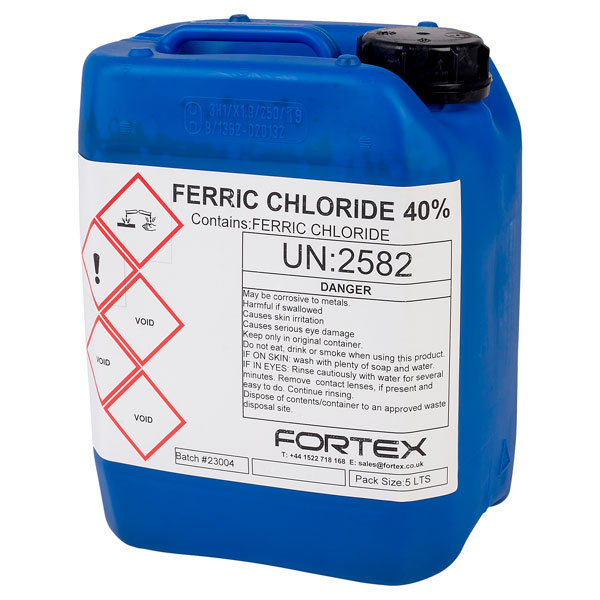
Ferric Chloride Supplier in Nairobi, Kenya, Tanzania and Uganda | Olinc Chemical Suppliers
Are you looking for a reliable Ferric Chloride supplier in Nairobi, Kenya, for water treatment, wastewater treatment, sewage processing or industrial applications?
Olinc Chemical Suppliers provides a point of contact for businesses and industrial buyers sourcing chemicals for water purification, manufacturing and other industrial processes in Kenya and the wider East African market.
Ferric Chloride is a versatile inorganic chemical widely used in municipal water treatment plants, industrial wastewater facilities, sewage treatment plants, textile factories, chemical manufacturing and metal processing industries. Its most important application is coagulation, where it helps destabilise suspended particles so they can combine into larger flocs and be separated from water.
Also known as Iron(III) Chloride, Ferric Chloride is available in different forms, including anhydrous solid, hydrated crystals and aqueous liquid solution. Each form has different concentration, physical properties, storage requirements and handling considerations.
Whether you operate a water treatment plant, manage an industrial facility, manufacture chemicals or require Ferric Chloride for metal etching, understanding the product’s specifications is essential before purchasing.
This guide covers its chemical identity, properties, grades, applications, treatment mechanism, technical specifications, packaging, safety, storage, selection and frequently asked questions to help you make an informed purchasing decision.
Contact Olinc Chemical Suppliers for current prices, specifications, packaging and bulk-order enquiries.
What Is Ferric Chloride?
Ferric Chloride is an inorganic chemical compound consisting of iron in the +3 oxidation state combined with chloride ions.
Its chemical name is Iron(III) Chloride, and its chemical formula is FeCl₃.
It is commonly used as a coagulant in water and wastewater treatment. When added to water under suitable conditions, it forms iron hydroxide precipitates that help capture suspended particles, colloidal materials and certain contaminants.
Ferric Chloride is also used in metal etching, particularly in the manufacture of printed circuit boards, and in selected chemical and industrial processes.
Chemical identity and basic information
| Property | Description |
|---|---|
| Product name | Ferric Chloride |
| Chemical name | Iron(III) Chloride |
| Alternative name | Iron Trichloride |
| Chemical formula | FeCl₃ |
| CAS number | 7705-08-0 (anhydrous compound) |
| Molecular weight | 162.20 g/mol (anhydrous compound) |
| Chemical family | Inorganic iron salt |
| Iron oxidation state | +3 |
| Appearance | Dark brown, yellow-brown or brown-black solid; brownish liquid solution |
| Solubility | Water-soluble; forms an acidic solution |
| Main industrial function | Coagulant, flocculant aid in treatment systems, etching agent and chemical processing reagent |
Important: The CAS number and molecular weight above refer to anhydrous Ferric Chloride. Hydrated forms and commercial solutions have different compositions. Always check the exact product documentation.
Other Names for Ferric Chloride
Customers may search for Ferric Chloride under several alternative names.
Common names include:
- Iron(III) Chloride.
- Ferric Chloride.
- Iron Trichloride.
- Iron Perchloride.
- Ferric Trichloride.
- FeCl₃.
- Anhydrous Ferric Chloride, when referring to the water-free form.
- Ferric Chloride Solution, when referring to the liquid product.
The term ferric refers to iron in its +3 oxidation state, distinguishing Ferric Chloride from Ferrous Chloride, which contains iron in the +2 oxidation state.
Different Forms of Ferric Chloride
Ferric Chloride is commercially available in different physical forms. Buyers should identify the form required by their process before ordering.
Anhydrous Ferric Chloride
Anhydrous Ferric Chloride is the water-free form of FeCl₃.
Characteristics:
- Dark brown, brown-black or yellow-brown solid.
- Highly hygroscopic, meaning it readily absorbs moisture from the atmosphere.
- Reacts with water to form an acidic solution.
- Used in chemical manufacturing, specialised industrial applications and selected etching processes.
Applications:
- Chemical synthesis.
- Metal etching.
- Laboratory applications.
- Selected industrial chemical processes.
Anhydrous Ferric Chloride requires moisture-resistant packaging and careful handling.
Ferric Chloride Hexahydrate
Ferric Chloride Hexahydrate is a hydrated crystalline form containing six molecules of water for each formula unit.
Its chemical formula is:
FeCl₃·6H₂O
It is commonly found as yellow-orange to brownish crystals or lumps.
Characteristics:
- Contains chemically associated water.
- Has a different molecular weight from anhydrous Ferric Chloride.
- Dissolves in water.
- Used in selected laboratory and industrial chemical applications.
Buyers should not assume that hexahydrate crystals and anhydrous Ferric Chloride have the same active FeCl₃ content per kilogram.
Liquid Ferric Chloride Solution
Ferric Chloride Solution is a liquid preparation containing Ferric Chloride dissolved in water.
It is widely used in water treatment and wastewater treatment because it can be dosed directly into treatment systems using appropriate chemical dosing equipment.
Characteristics:
- Brown, dark brown or yellow-brown liquid.
- Acidic in nature.
- Water-soluble.
- Available in different commercial concentrations.
- Requires corrosion-resistant storage and dosing equipment.
Commercial solutions are commonly available at concentrations such as 30% or 40%, depending on the supplier and product specification. Other concentrations may also be manufactured.
These percentages must always be confirmed as weight percentages or another clearly defined concentration basis.
Which form should you choose?
- For many water treatment plants using liquid dosing equipment, Ferric Chloride Solution may be convenient.
- For facilities that prepare their own solutions, a suitable solid grade may be considered.
- For metal etching and specialised chemical processing, the required form depends on the process specification.
Do not substitute one form for another without calculating the actual active Ferric Chloride content and checking process compatibility.
How Does Ferric Chloride Work in Water Treatment?
Ferric Chloride is widely recognised as a coagulant.
Many suspended particles in water are very small and carry electrical surface charges that prevent them from easily joining together. These particles can remain suspended for long periods, making the water appear cloudy or turbid.
When Ferric Chloride is added under suitable conditions, it hydrolyses and forms positively charged iron species and iron hydroxide precipitates.
These products help destabilise suspended particles and encourage them to combine into larger aggregates known as flocs.
The treatment process
- Chemical dosing: Ferric Chloride is introduced into the water at a controlled rate.
- Rapid mixing: The chemical is distributed throughout the water.
- Coagulation: Suspended and colloidal particles are destabilised.
- Flocculation: The destabilised particles combine into larger flocs.
- Settling or separation: The flocs settle in a clarifier or are separated through suitable filtration or flotation equipment.
- Sludge removal: The accumulated sludge is removed for appropriate handling and disposal.
Why is Ferric Chloride effective?
Ferric Chloride can support the removal of:
- Suspended solids.
- Colloidal particles.
- Turbidity-causing substances.
- Certain organic matter.
- Phosphates under suitable conditions.
- Certain colour-causing materials.
- Some substances associated with wastewater odour.
Its performance depends on water chemistry, pH, alkalinity, temperature, contaminant concentration, mixing and dosage.
Main Applications of Ferric Chloride
Ferric Chloride is used across several industrial sectors.
Municipal Water Treatment
Municipal water treatment plants use Ferric Chloride to help remove suspended particles and reduce turbidity.
It supports coagulation and flocculation, allowing particles to form larger aggregates that can be removed through sedimentation and filtration.
Typical uses:
- Raw-water clarification.
- Reduction of turbidity.
- Removal of suspended solids.
- Treatment of certain colour-causing substances.
- Support of conventional drinking-water treatment processes.
For drinking-water treatment, the chemical must meet the applicable purity and regulatory requirements for the intended use. A treatment process must also include appropriate filtration and disinfection where required.
Industrial Wastewater Treatment
Industrial wastewater can contain suspended solids, colloids, colour, organic matter and other pollutants.
Ferric Chloride is used in suitable wastewater treatment processes to improve the separation of these contaminants.
Industries that may use it include:
- Textile manufacturing.
- Food and beverage processing.
- Chemical manufacturing.
- Paper and pulp production.
- Metal processing.
- Paint and coating production.
- General manufacturing.
- Industrial washing facilities.
It can help improve clarification and reduce certain wastewater pollution indicators. However, the amount of COD, BOD or other pollutants removed depends on the actual wastewater composition and treatment design.
Sewage Treatment Plants
Ferric Chloride is used in municipal and industrial sewage treatment.
It can support:
- Removal of suspended solids.
- Phosphorus reduction.
- Improved clarification.
- Control of certain odour-related compounds.
- Sludge conditioning in selected treatment arrangements.
Its use depends on the sewage characteristics and the treatment objectives.
Phosphate Removal
Ferric Chloride is particularly useful in wastewater treatment where phosphorus reduction is required.
Iron ions react with phosphate under suitable conditions, producing iron-phosphate-containing precipitates that can be separated from the water.
This helps reduce phosphorus discharge into rivers, lakes and other receiving waters.
Phosphorus removal performance depends on pH, alkalinity, competing substances, chemical dosage and the separation equipment.
Textile Industry
Textile manufacturing generates wastewater containing dyes, suspended particles and other process chemicals.
Ferric Chloride may be used as a coagulant in wastewater treatment to help remove certain colour-causing substances and suspended contaminants.
It is especially relevant where factories use coagulation and flocculation as part of their effluent treatment systems.
Paper and Pulp Industry
Ferric Chloride can be used in selected paper and pulp processing and wastewater treatment operations.
Its applications may include:
- Wastewater clarification.
- Removal of suspended material.
- Reduction of phosphorus.
- Selected process-water treatment operations.
Metal Etching and Printed Circuit Board Manufacturing
Ferric Chloride is widely used as an etching chemical in printed circuit board manufacturing and other metal surface treatment applications.
It reacts with copper and is used to remove unwanted copper areas from circuit board materials during controlled manufacturing processes.
Applications include:
- Printed circuit board production.
- Copper etching.
- Metal engraving.
- Selected metal surface treatment processes.
The product grade and concentration must be compatible with the etching process and equipment.
Chemical Manufacturing
Ferric Chloride is used as a chemical reagent and catalyst in selected industrial manufacturing processes.
Its Lewis-acid properties make it useful in certain chemical reactions and synthesis operations.
The required grade depends on the intended reaction and purity requirements.
Odour Control in Wastewater Systems
Ferric Chloride can be used in selected wastewater systems to control hydrogen sulphide-related odour problems.
Under suitable conditions, iron can react with sulphide species and help reduce the formation or release of hydrogen sulphide.
The treatment programme must be designed according to the wastewater chemistry and process conditions.
Laboratory and Research Applications
Laboratory-grade Ferric Chloride is used in selected analytical, educational and chemical research applications.
It may be used as:
- A chemical reagent.
- A catalyst in selected reactions.
- A test reagent.
- A material for studying iron chemistry.
Laboratory applications require the appropriate reagent grade and documented purity.
Industries That Use Ferric Chloride
| Industry | Typical application |
|---|---|
| Water treatment | Coagulation and clarification |
| Wastewater treatment | Suspended-solids and pollutant removal |
| Sewage treatment | Phosphorus removal and clarification |
| Textile manufacturing | Industrial effluent treatment |
| Paper and pulp | Wastewater treatment |
| Chemical manufacturing | Chemical reagent and catalyst |
| Electronics | Copper etching in circuit-board production |
| Metal processing | Etching and surface treatment |
| Municipal authorities | Water and sewage treatment |
| Laboratories | Research and analytical applications |
Ferric Chloride Technical Specifications
Before purchasing Ferric Chloride, industrial buyers should understand the technical parameters that determine product quality and suitability.
Specifications differ depending on whether the material is supplied as anhydrous solid, hydrated crystals or liquid solution.
The following information describes the parameters buyers should check. It is not a Certificate of Analysis or a guarantee of the specifications of Olinc’s available stock.
Important specifications for solid Ferric Chloride
| Parameter | What it means |
|---|---|
| FeCl₃ assay | Percentage of Ferric Chloride in the product |
| Iron content | Amount of iron present |
| Ferrous iron content | Amount of iron in the +2 oxidation state |
| Insoluble matter | Material that does not dissolve under the specified test |
| Moisture content | Water present in the product |
| Free acidity | Acidity associated with free acid in the material |
| Heavy metals | Trace metallic impurities relevant to the application |
| Appearance | Colour and physical form |
| Particle size | Size of crystals, lumps or granules |
Important specifications for liquid Ferric Chloride
| Parameter | What it means |
|---|---|
| FeCl₃ concentration | Percentage of Ferric Chloride in the solution |
| Total iron | Total iron concentration |
| Ferrous iron | Amount of Fe²⁺ present |
| Free acid | Free acidity, often expressed as HCl equivalent |
| Specific gravity | Relative density of the liquid |
| Insoluble matter | Undissolved particles |
| pH | Acidity of the solution |
| Temperature | Relevant to storage and handling |
| Appearance | Colour and clarity of the solution |
Common commercial concentrations
Liquid Ferric Chloride is supplied at different concentrations. Commercial examples include 30% and 40% FeCl₃ solutions, although availability varies by manufacturer and market.
The customer should confirm:
- Whether concentration is expressed as FeCl₃ by weight.
- The actual assay range.
- Specific gravity.
- Free acidity.
- Iron content.
- Relevant impurity limits.
Do not compare two liquid Ferric Chloride products based only on their price per litre. Their active concentration and density may differ.
Ferric Chloride Grades
Ferric Chloride is available in different grades according to the intended application and required purity.
Industrial Grade
Industrial-grade Ferric Chloride is used in suitable wastewater treatment, sewage treatment, metal processing and other industrial applications.
Water Treatment Grade
This grade is selected for coagulation and clarification in water treatment systems. The applicable product specification and regulatory requirements depend on whether the treated water is intended for drinking or industrial use.
Drinking-Water Treatment Grade
Where Ferric Chloride is used in drinking-water production, the chemical must meet the relevant purity, contaminant and certification requirements.
A general industrial grade should not automatically be marketed as drinking-water approved.
Electronic or Etching Grade
Selected grades are used in printed circuit board manufacturing and copper etching. Buyers should confirm the concentration, impurity profile and process requirements.
Laboratory or Reagent Grade
Laboratory-grade Ferric Chloride is supplied with specified purity and analytical documentation for laboratory and research applications.
Important: The same chemical name does not mean that all grades are interchangeable. Tell Olinc the intended application when requesting a quotation.
Ferric Chloride Dosage in Water Treatment
One of the most common questions from water treatment operators is how much Ferric Chloride is required.
There is no universal dosage that works for every water source or wastewater stream.
The required dosage depends on:
- Raw-water quality.
- Suspended-solids concentration.
- Turbidity.
- Phosphate concentration.
- pH.
- Alkalinity.
- Temperature.
- Ferric Chloride concentration.
- Treatment objectives.
- Mixing and flocculation conditions.
Jar testing
A jar test is commonly used to establish the appropriate coagulant dosage.
It involves testing different chemical doses against a representative water sample under controlled mixing and settling conditions.
The operator evaluates:
- Floc formation.
- Settling behaviour.
- Water clarity.
- Residual iron.
- Final pH.
- Other relevant water-quality parameters.
This helps identify a suitable operating dose before full-scale treatment.
Why pH and alkalinity matter
Ferric Chloride hydrolysis consumes alkalinity and can lower the pH of treated water.
If the water has insufficient alkalinity, the treatment process may experience a significant pH drop, affecting coagulation performance and final water quality.
The treatment system may therefore require pH and alkalinity adjustment.
Do not use a dosage from another treatment plant without checking whether the water characteristics and operating conditions are comparable.
Ferric Chloride vs Ferrous Chloride
Ferric Chloride and Ferrous Chloride are different iron salts and should not be treated as the same product.
| Feature | Ferric Chloride | Ferrous Chloride |
|---|---|---|
| Chemical name | Iron(III) Chloride | Iron(II) Chloride |
| Formula | FeCl₃ | FeCl₂ |
| Iron oxidation state | +3 | +2 |
| CAS number | 7705-08-0 | 7758-94-3 |
| Common appearance | Brownish solid or solution | Pale greenish solid or solution, depending on hydration |
| Common uses | Coagulation, etching, chemical processing | Selected chemical and wastewater processes |
| Water treatment role | Common coagulant | Used in selected treatment processes |
Ferric Chloride contains iron in the +3 oxidation state, while Ferrous Chloride contains iron in the +2 oxidation state.
They have different chemical properties and process applications.
Ferric Chloride vs Aluminium Sulphate (Alum)
Both Ferric Chloride and Aluminium Sulphate are widely used as coagulants in water and wastewater treatment.
However, they are different chemicals and may perform differently depending on water conditions.
| Feature | Ferric Chloride | Aluminium Sulphate |
|---|---|---|
| Chemical formula | FeCl₃ | Al₂(SO₄)₃, commonly supplied in hydrated forms |
| Active metal | Iron | Aluminium |
| Main function | Coagulation and phosphorus removal | Coagulation and clarification |
| Common uses | Water and wastewater treatment | Water and wastewater treatment |
| pH effect | Can lower pH | Can lower pH |
| Sludge | Iron-containing sludge | Aluminium-containing sludge |
| Selection | Depends on water chemistry and treatment objective | Depends on water chemistry and treatment objective |
The most suitable coagulant should be selected through water testing and treatment trials.
Ferric Chloride vs Poly Aluminium Chloride (PAC)
Poly Aluminium Chloride, commonly known as PAC, is another coagulant used in water treatment.
| Feature | Ferric Chloride | Poly Aluminium Chloride |
|---|---|---|
| Chemical type | Iron salt | Polymerised aluminium salt |
| Main function | Coagulation | Coagulation |
| Typical application | Water and wastewater treatment | Water and wastewater treatment |
| Phosphorus removal | Commonly used in suitable processes | Can support phosphorus removal depending on formulation and conditions |
| Sludge characteristics | Iron-containing sludge | Aluminium-containing sludge |
| Selection | Depends on water chemistry and process requirements | Depends on water chemistry and process requirements |
Both products can be effective. The choice depends on the treatment target, operating conditions, chemical costs and sludge-management requirements.
Ferric Chloride Packaging
Packaging depends on the physical form, concentration, manufacturer and order quantity.
Common commercial packaging formats include:
| Product form | Common packaging examples |
|---|---|
| Solid Ferric Chloride | 25 kg bags or suitable sealed containers |
| Liquid Ferric Chloride | Chemical-resistant drums |
| Liquid bulk supply | IBC containers or suitable bulk tanks |
| Specialised grades | Packaging specified by the manufacturer |
These are market packaging examples, not confirmation that every option is currently available from Olinc Chemical Suppliers.
When requesting a quotation, specify:
- Solid or liquid form.
- Required concentration.
- Number of bags or containers.
- Total quantity.
- Packaging preference.
- Delivery location.
Storage of Ferric Chloride
Proper storage is essential because Ferric Chloride is corrosive and can react with incompatible materials.
Storage of solid Ferric Chloride
- Keep in tightly sealed, moisture-resistant packaging.
- Store in a cool, dry and well-ventilated location.
- Protect from rain and humidity.
- Avoid contact with incompatible chemicals.
- Keep away from food, animal feed and drinking-water supplies.
- Use suitable chemical-resistant storage equipment.
- Prevent damage to packaging.
Anhydrous Ferric Chloride is hygroscopic and absorbs moisture from the atmosphere. Properly sealed packaging helps maintain product quality.
Storage of liquid Ferric Chloride
- Use compatible chemical-resistant tanks and containers.
- Keep containers closed when not in use.
- Store in a designated chemical storage area.
- Provide suitable secondary containment.
- Protect equipment from corrosion.
- Keep away from incompatible chemicals and materials.
- Follow the manufacturer’s temperature and storage recommendations.
Ordinary steel or unsuitable metal equipment may corrode. Storage tanks, valves, pipes, pumps and fittings should be selected for the actual concentration and operating conditions.
Safety and Handling Precautions
Ferric Chloride is a corrosive chemical and must be handled with appropriate precautions.
Potential hazards
Exposure may cause:
- Severe eye irritation or serious eye damage.
- Skin irritation or chemical burns.
- Respiratory irritation from dust, mist or fumes.
- Harmful effects if swallowed.
- Corrosion of certain metals and equipment.
The exact hazard classification depends on the product form and concentration. Always consult the specific Safety Data Sheet (SDS).
Recommended personal protective equipment
- Chemical-resistant gloves suitable for the product.
- Chemical splash goggles.
- Protective clothing.
- Suitable footwear.
- Appropriate respiratory protection where dust or mist exposure is possible.
- Adequate ventilation.
Important handling precautions
- Avoid direct contact with skin and eyes.
- Do not inhale dust, mist or fumes.
- Avoid splashing when transferring liquid.
- Use compatible pumps and containers.
- Do not mix with incompatible chemicals.
- Keep work areas clean and properly ventilated.
- Train employees in chemical handling and emergency procedures.
First aid considerations
Eye contact: Immediately rinse cautiously with plenty of clean water, remove contact lenses if easy to do, and seek urgent medical attention.
Skin contact: Remove contaminated clothing and rinse affected skin thoroughly with water. Seek medical attention if irritation or burns occur.
Inhalation: Move the affected person to fresh air and obtain medical attention if symptoms occur.
Ingestion: Rinse the mouth. Do not induce vomiting. Seek immediate medical assistance and follow the product SDS.
For spills, do not improvise a clean-up procedure. Follow the product SDS and site emergency plan. In particular, do not add water indiscriminately to a spill of solid anhydrous Ferric Chloride.
Compatibility and Materials of Construction
Ferric Chloride is corrosive, particularly in aqueous solution.
Equipment and storage materials must be compatible with the product concentration and temperature.
Depending on the application, suitable systems may use specially selected plastics, linings or corrosion-resistant materials.
Before installing or purchasing:
- Check tank material compatibility.
- Check pump and valve compatibility.
- Check pipe and fitting materials.
- Confirm gasket and seal compatibility.
- Consider the concentration and temperature.
- Follow the equipment manufacturer’s chemical-resistance guidance.
Ferric Chloride can attack aluminium and many other metals, particularly when moisture is present. Do not assume that ordinary metal containers or plumbing fittings are suitable.
Environmental Considerations
Ferric Chloride is used in environmental treatment systems, but the chemical itself must also be managed responsibly.
Important considerations include:
- Avoid uncontrolled release into rivers, lakes and drainage systems.
- Prevent spills from reaching soil or groundwater.
- Manage iron-containing sludge appropriately.
- Monitor treated-water pH.
- Monitor residual iron where relevant.
- Follow applicable environmental discharge requirements.
- Use suitable waste-management procedures.
Ferric Chloride treatment can generate sludge containing iron and captured contaminants. The sludge should be characterised and handled according to its composition and applicable disposal requirements.
Why Buy Ferric Chloride from Olinc Chemical Suppliers?
Olinc Chemical Suppliers serves industrial and commercial buyers looking for chemical products in Nairobi, Kenya, and the wider East African market.
When enquiring about Ferric Chloride, customers can discuss:
- Required physical form.
- Desired FeCl₃ concentration.
- Intended industrial application.
- Grade and purity requirements.
- Technical specifications.
- Packaging preferences.
- Required quantity.
- Current availability.
- Delivery arrangements.
- Bulk-order quotations.
We encourage customers to provide their intended application so that the product form and technical requirements can be established before ordering.
Whether you need Ferric Chloride for water treatment, wastewater processing, sewage treatment, metal etching or chemical manufacturing, contact Olinc Chemical Suppliers for product and quotation enquiries.
Ferric Chloride Supply in Nairobi, Kenya and East Africa
Olinc Chemical Suppliers is based at Enterprise Road, Avon Business Center, Nairobi, Kenya.
We welcome product enquiries from businesses and industrial buyers in:
- Nairobi.
- Mombasa.
- Kisumu.
- Nakuru.
- Eldoret.
- Thika.
- Other towns across Kenya.
- Uganda.
- Tanzania.
- Other East African markets, subject to delivery arrangements.
Customers outside Nairobi should provide their delivery location and required quantity when requesting a quotation.
Frequently Asked Questions About Ferric Chloride
What is Ferric Chloride used for?
Ferric Chloride is used mainly in water treatment, wastewater treatment, sewage processing, phosphorus removal, metal etching, chemical manufacturing and selected laboratory applications.
What is the chemical formula of Ferric Chloride?
The chemical formula is FeCl₃.
What is the CAS number of Ferric Chloride?
The commonly used CAS number for anhydrous Ferric Chloride is 7705-08-0.
What is another name for Ferric Chloride?
Ferric Chloride is also known as Iron(III) Chloride or Iron Trichloride.
Is Ferric Chloride a liquid or solid?
It is available in both solid and liquid forms. The solid may be anhydrous or hydrated, while the liquid is an aqueous Ferric Chloride solution.
What colour is Ferric Chloride?
Solid Ferric Chloride commonly appears dark brown, brown-black or yellow-brown. Liquid solutions are commonly brownish or yellow-brown. The exact appearance depends on the form and concentration.
Is Ferric Chloride soluble in water?
Yes. Ferric Chloride dissolves in water and forms an acidic solution.
Why is Ferric Chloride used in water treatment?
It acts as a coagulant. It helps destabilise suspended and colloidal particles, allowing them to form larger flocs that can be separated through settling or filtration.
Does Ferric Chloride remove suspended solids?
It can help remove suspended solids by coagulation and flocculation, provided that the treatment system has suitable mixing and separation stages.
Can Ferric Chloride remove phosphorus from wastewater?
Yes. It is widely used in suitable wastewater treatment processes to precipitate phosphate-containing compounds, which can then be separated from the treated water.
Is Ferric Chloride used in sewage treatment?
Yes. It is used in sewage treatment for coagulation, phosphorus removal, clarification and selected sulphide-related odour-control applications.
Can Ferric Chloride be used in drinking-water treatment?
Yes, where the specific product meets the applicable drinking-water treatment requirements and is used within a properly designed treatment process.
What is the difference between Ferric Chloride and Ferrous Chloride?
Ferric Chloride is FeCl₃ and contains iron in the +3 oxidation state. Ferrous Chloride is FeCl₂ and contains iron in the +2 oxidation state. They have different properties and applications.
What is the difference between Ferric Chloride and Alum?
Ferric Chloride is an iron-based coagulant, while Alum is an aluminium-based coagulant. Both can be used in water treatment, but their performance depends on water chemistry and treatment objectives.
What is the difference between Ferric Chloride solid and liquid?
Solid Ferric Chloride is supplied as anhydrous material or hydrated crystals. Liquid Ferric Chloride is supplied as an aqueous solution with a specified concentration. Their active chemical content and handling requirements differ.
What concentration of liquid Ferric Chloride is available?
Commercial solutions may be supplied at concentrations such as 30% and 40%, among other formulations. Confirm the actual concentration and availability before ordering.
How much Ferric Chloride is required for water treatment?
There is no universal dosage. The required amount depends on water quality, pH, alkalinity, contaminant concentration and the treatment objective. A jar test is commonly used to establish a suitable dosage.
Does Ferric Chloride lower water pH?
Yes. Its hydrolysis can consume alkalinity and reduce the pH of treated water. The treatment system should monitor pH and alkalinity and adjust them where necessary.
Is Ferric Chloride corrosive?
Yes. Ferric Chloride, especially its aqueous solutions, is corrosive to many metals and can cause serious eye and skin injuries. Appropriate PPE and compatible equipment are essential.
What packaging is available for Ferric Chloride?
Solid products are commonly packaged in suitable sealed bags or containers, while liquid solutions may be supplied in chemical-resistant drums or bulk containers. Confirm available packaging when requesting a quotation.
How should Ferric Chloride be stored?
Store it in properly sealed, compatible containers in a designated, cool and well-ventilated chemical storage area. Protect solid material from moisture and keep liquid solutions in corrosion-resistant equipment.
Can Ferric Chloride be used for copper etching?
Yes. It is widely used as an etching agent in printed circuit board manufacturing and other controlled copper etching applications.
Where can I buy Ferric Chloride in Nairobi, Kenya?
You can contact Olinc Chemical Suppliers, Enterprise Road, Avon Business Center, Nairobi, Kenya, for current availability, specifications and quotations.
Does Olinc Chemical Suppliers serve customers in Uganda and Tanzania?
Customers in Uganda and Tanzania are welcome to enquire. Delivery arrangements can be discussed based on the required quantity and destination.
What information should I provide when requesting a Ferric Chloride quotation?
Provide the physical form, concentration if liquid, intended application, required grade, quantity, packaging preference and delivery location. If you have a technical specification or existing product label, share it when making your enquiry.
How to Order Ferric Chloride from Olinc Chemical Suppliers
To receive a suitable quotation, provide the following information:
- Product: Ferric Chloride.
- Form: Solid, anhydrous, hydrated crystals or liquid solution.
- Concentration: Required FeCl₃ percentage if ordering liquid.
- Application: Water treatment, wastewater treatment, sewage treatment, metal etching or chemical manufacturing.
- Grade: Industrial, water-treatment, laboratory or other specified grade.
- Quantity: Number of bags, drums, IBC containers or total kilograms/tonnes.
- Packaging: Preferred package size.
- Delivery location: Nairobi, another town in Kenya, Uganda or Tanzania.
- Documentation: Any required TDS, SDS or COA.
This information helps establish which product is suitable for your requirements.
Contact Olinc Chemical Suppliers
Company: Olinc Chemical Suppliers
Location: Enterprise Road, Avon Business Center, Nairobi, Kenya
Phone: 0793062849
Alternative phone: 0743657810
Email: sales@olincinchemicals.com
Website: www.olincinchemicalsl.com
Request a Ferric Chloride quotation today.
Whether you are purchasing Ferric Chloride for a water treatment plant, wastewater treatment facility, sewage processing system, metal etching operation or chemical manufacturing process, contact Olinc Chemical Suppliers for current prices, product specifications, packaging and bulk-order enquiries.
Order on WhatsApp: https://wa.me/254793062849?text=Hello%20Olinc%20Chemical%20Suppliers%2C%20I%20would%20like%20a%20quotation%20for%20Ferric%20Chloride.

Reviews
There are no reviews yet.