
Potassium Sorbate Supplier in Kenya – Olinc Chemical Suppliers
Quality Potassium Sorbate for Food Processing, Beverages, Bakery, Pharmaceuticals and Cosmetics
Are you looking for a reliable supplier of Potassium Sorbate in Nairobi, Kenya or elsewhere in East Africa? Olinc Chemical Suppliers provides product information and supply enquiries for Potassium Sorbate, a widely used food preservative valued for its ability to inhibit the growth of moulds and yeasts in suitable food, beverage and other formulations.
Potassium Sorbate is an important ingredient in food processing, beverage manufacturing, bakery production, dairy processing, cosmetics and selected pharmaceutical and industrial applications. It helps protect products against microbial spoilage, maintain quality and support shelf-life management when used at the correct concentration and under suitable conditions.
Whether you manufacture fruit juices, soft drinks, yoghurt, cheese, sauces, jams, baked goods, personal-care products or other formulations, selecting the correct grade and understanding the properties of Potassium Sorbate are important for achieving the desired results.
At Olinc Chemical Suppliers, we support customers seeking Potassium Sorbate in Kenya with product information and supply enquiries based on their intended application, required grade, quantity and specifications.
What Is Potassium Sorbate?
Potassium Sorbate is the potassium salt of sorbic acid. It is a widely used preservative that helps prevent or slow the growth of moulds and yeasts in food, beverages and other suitable formulations.
It is commonly supplied as a white crystalline powder or granules and is highly valued for its effectiveness in acidic and mildly acidic products.
When Potassium Sorbate dissolves in water, it forms sorbate ions. Its preservative activity is closely related to sorbic acid, which is the active antimicrobial form in the product’s acid-base equilibrium.
Potassium Sorbate is particularly effective against many moulds and yeasts. It is less effective against bacteria, so it should not be treated as a complete replacement for proper hygiene, heat processing, refrigeration or other preservation methods.
In food manufacturing, Potassium Sorbate is identified by the food additive number E202 or INS 202.
Chemical Identity and General Information
| Property | Description |
|---|---|
| Product name | Potassium Sorbate |
| Chemical name | Potassium (E,E)-hexa-2,4-dienoate |
| Common name | Potassium salt of sorbic acid |
| Molecular formula | C₆H₇KO₂ |
| Molecular weight | 150.22 g/mol |
| CAS number | 24634-61-5 |
| EC number | 246-376-1 |
| Food additive number | E202 / INS 202 |
| Appearance | White crystalline powder or granules |
| Odour | Practically odourless |
| Solubility | Freely soluble in water |
| Chemical classification | Organic acid salt |
| Main function | Preservative |
| Primary antimicrobial activity | Inhibition of many moulds and yeasts |
| Common applications | Food, beverages, bakery, dairy and cosmetics |
These identifiers help buyers confirm that they are enquiring about Potassium Sorbate rather than another preservative.
Other Names of Potassium Sorbate
Potassium Sorbate may be listed under different names in chemical catalogues, technical documents, food ingredient lists and manufacturing specifications.
Common alternative names include:
- Potassium Sorbate
- Sorbic Acid Potassium Salt
- Potassium Salt of Sorbic Acid
- Potassium 2,4-Hexadienoate
- Potassium (E,E)-2,4-Hexadienoate
- Potassium trans,trans-2,4-Hexadienoate
- E202
- INS 202
- CAS 24634-61-5
When requesting the product, using the name Potassium Sorbate or its CAS number helps avoid confusion with other preservatives.
How Does Potassium Sorbate Work?
Potassium Sorbate works by inhibiting the growth and multiplication of susceptible microorganisms, especially moulds and yeasts.
Once dissolved in a product, it establishes an equilibrium with sorbic acid. The undissociated sorbic acid is primarily responsible for the antimicrobial action.
It interferes with important microbial functions, including processes involved in metabolism and growth. This helps prevent or slow spoilage in suitable formulations.
Its effectiveness depends on several factors:
Product pH
The pH of the finished product is one of the most important factors affecting Potassium Sorbate performance.
It generally works best in acidic products. As pH increases, a smaller proportion of the preservative exists as undissociated sorbic acid, reducing its effectiveness.
Concentration
The required concentration depends on the product category, pH, expected microbial contamination, storage conditions and applicable regulations.
There is no single concentration suitable for every food or cosmetic product. Manufacturers should follow permitted use levels and establish the appropriate formulation through testing.
Type of Microorganism
Potassium Sorbate is particularly useful against many yeasts and moulds. Its activity against bacteria is more limited and varies with the organism and formulation.
Storage and Processing Conditions
Temperature, moisture, packaging, sanitation and the initial microbial load can influence the effectiveness of a preservative system.
Important: Potassium Sorbate does not sterilise food or eliminate every microorganism. It should be used as part of a complete food safety and preservation programme.
Main Applications of Potassium Sorbate
Potassium Sorbate is used in many industries because of its preservative properties and suitability for a wide range of formulations.
Food Processing and Manufacturing
Food processing is one of the major applications of Potassium Sorbate.
It helps protect suitable food products against mould and yeast growth, supporting quality and shelf-life management.
Common applications include:
- Jams and fruit preserves
- Jellies
- Fruit preparations
- Fruit fillings
- Sauces
- Tomato-based products
- Salad dressings
- Pickles
- Chutneys
- Certain confectionery products
- Dried fruits
- Selected packaged foods
- Certain processed food products
Benefits in food manufacturing:
- Helps inhibit mould and yeast growth.
- Supports shelf-life management.
- Helps maintain product quality during storage.
- Can be incorporated into suitable aqueous formulations.
- Is effective at relatively low concentrations when formulation conditions are appropriate.
The permitted use and maximum level depend on the specific food category and applicable regulations.
Beverage Manufacturing
Potassium Sorbate is widely used in selected beverage formulations, particularly acidic products that may be susceptible to yeast and mould spoilage.
Applications may include:
- Fruit juices
- Fruit drinks
- Squashes
- Cordials
- Fruit concentrates
- Flavoured beverages
- Non-carbonated soft drinks
- Certain carbonated beverages
- Syrups
- Other suitable acidic drinks
In beverage production, Potassium Sorbate helps control yeast and mould growth that could otherwise cause fermentation, gas formation, off-flavours, cloudiness or other spoilage problems.
It is especially useful where manufacturers need to protect products during storage and distribution.
The appropriate concentration must be established according to beverage type, pH, processing conditions and applicable food additive regulations.
Bakery and Confectionery Manufacturing
Potassium Sorbate is used in selected bakery and confectionery applications to help prevent mould development.
Applications include:
- Cake products
- Cake fillings
- Fruit fillings
- Bakery creams
- Certain pastries
- Sweet bakery products
- Selected confectionery products
- Bakery preparations with suitable moisture and pH conditions
Mould growth can shorten the shelf life of baked products, particularly those containing moisture or fruit-based ingredients.
Potassium Sorbate may help reduce this risk when incorporated into an appropriate preservation system.
Its suitability depends on the bakery formulation, moisture level, pH, processing method and product category.
Dairy Processing
Potassium Sorbate is used in selected dairy and dairy-based products to help control mould and yeast growth.
Potential applications include:
- Cheese
- Cheese coatings
- Selected cheese preparations
- Certain dairy-based fillings
- Selected yoghurt-related formulations
- Other permitted dairy products
In cheese manufacturing, it may be used in approved formulations or surface-treatment systems to help prevent mould development.
The precise application must comply with the relevant food regulations and product requirements.
Pharmaceutical Manufacturing
Potassium Sorbate may be used as a preservative in selected pharmaceutical preparations where its use is appropriate and permitted.
Potential applications include:
- Certain oral liquid preparations
- Selected syrups
- Some aqueous pharmaceutical formulations
- Specialised preparations requiring microbial preservation
Pharmaceutical manufacturers must confirm the required material quality, applicable pharmacopoeial standards and suitability for the intended formulation.
Cosmetics and Personal-Care Manufacturing
Potassium Sorbate is used in selected cosmetic and personal-care products as part of a preservative system.
Applications may include:
- Shampoos
- Hair conditioners
- Liquid soaps
- Body washes
- Facial cleansers
- Creams
- Lotions
- Skincare products
- Certain hair-care products
- Other suitable water-based formulations
It helps control the growth of susceptible moulds and yeasts, particularly in formulations with an appropriate pH.
Cosmetic manufacturers should evaluate its effectiveness alongside other preservation measures because Potassium Sorbate alone may not provide sufficient protection against all microorganisms.
Industrial and Specialised Formulations
Potassium Sorbate may also be used in selected industrial and speciality formulations where microbial control is required.
Potential applications include:
- Certain water-based products
- Selected chemical formulations
- Specialised liquid products
- Certain preservation systems
The appropriate grade and formulation requirements should be confirmed before use.
Available Grades of Potassium Sorbate
Selecting the correct grade is important because different applications require different quality standards and supporting documentation.
Food Grade Potassium Sorbate
Food-grade Potassium Sorbate is intended for permitted food and beverage applications.
It is commonly identified as E202 or INS 202.
Applications include:
- Fruit juices and beverages
- Jams and jellies
- Sauces and dressings
- Bakery products
- Selected dairy products
- Fruit preparations
- Other permitted food products
Buyers should confirm that the material complies with the relevant food additive purity specifications and applicable regulatory requirements.
Pharmaceutical Grade Potassium Sorbate
Pharmaceutical-grade Potassium Sorbate is intended for suitable pharmaceutical formulations where strict quality controls and documentation are required.
Depending on the intended application and market, buyers may request compliance with a relevant pharmacopoeial or manufacturer specification.
Always confirm the exact standard and documentation stated by the manufacturer. Do not assume that every food-grade product automatically meets pharmaceutical requirements.
Industrial Grade Potassium Sorbate
Industrial-grade Potassium Sorbate is intended for suitable non-food applications where the material meets the required technical specification.
It should not be used in food or pharmaceutical manufacturing unless it has been specifically certified and approved for that application.
When requesting Potassium Sorbate from Olinc Chemical Suppliers, indicate your intended use and required grade so that the appropriate product specification can be confirmed.
Typical Specifications of Potassium Sorbate
Buyers should assess the purity, appearance, solubility, moisture content and other quality parameters before purchasing Potassium Sorbate.
The following table provides indicative characteristics commonly considered in commercial specifications.
| Parameter | Typical description |
|---|---|
| Appearance | White crystalline powder or granules |
| Identification | Conforms to Potassium Sorbate identification tests |
| Assay | Commonly around 99.0–101.0%, depending on the applicable standard |
| Molecular formula | C₆H₇KO₂ |
| Molecular weight | 150.22 g/mol |
| CAS number | 24634-61-5 |
| Solubility | Freely soluble in water |
| Moisture / loss on drying | Controlled according to the applicable grade |
| Acidity or alkalinity | Within the relevant specification |
| Aldehydes | Controlled according to the applicable standard |
| Heavy metals / elemental impurities | Controlled according to the applicable quality requirements |
These are indicative reference characteristics, not guaranteed specifications for every manufacturer or batch.
For accurate purchasing decisions, request the manufacturer’s Certificate of Analysis (COA) and compare the actual batch results against your required specification.
Advantages of Using Potassium Sorbate
Potassium Sorbate is a popular preservative because it offers several practical advantages in suitable formulations.
Effective Against Moulds and Yeasts
It helps inhibit the growth of many moulds and yeasts responsible for food and beverage spoilage.
Supports Product Shelf Life
When properly formulated, it helps reduce microbial spoilage and maintain product quality during storage.
Good Water Solubility
It dissolves readily in water, making it convenient for aqueous formulations and liquid manufacturing processes.
Wide Range of Applications
It is used in food processing, beverages, bakery, dairy, cosmetics and selected pharmaceutical formulations.
Recognised Food Preservative
Its designation as E202/INS 202 makes it easy to identify in food ingredient specifications and regulatory documents.
Formulation Flexibility
It can be incorporated into various suitable formulations, including beverages, sauces, fruit preparations and personal-care products.
Suitable for Acidic Products
It performs particularly well in products with an appropriately low pH.
Potassium Sorbate Compared with Other Preservatives
Manufacturers often compare Potassium Sorbate with other preservatives when choosing an ingredient for their formulations.
| Preservative | Main characteristics | Common applications |
|---|---|---|
| Potassium Sorbate | Particularly effective against many moulds and yeasts | Beverages, bakery, dairy and food products |
| Sodium Benzoate | Effective in suitable acidic formulations against certain yeasts, moulds and bacteria | Soft drinks, sauces and fruit products |
| Calcium Propionate | Commonly used to control mould in bakery products | Bread and baked goods |
| Sodium Metabisulphite | Provides antioxidant and antimicrobial functions in permitted applications | Selected food and beverage products |
| Benzoic Acid | Organic acid preservative used in suitable formulations | Food and specialised applications |
These preservatives are not automatically interchangeable. The appropriate choice depends on product pH, target microorganisms, formulation compatibility, application and regulatory requirements.
Packaging and Supply Information
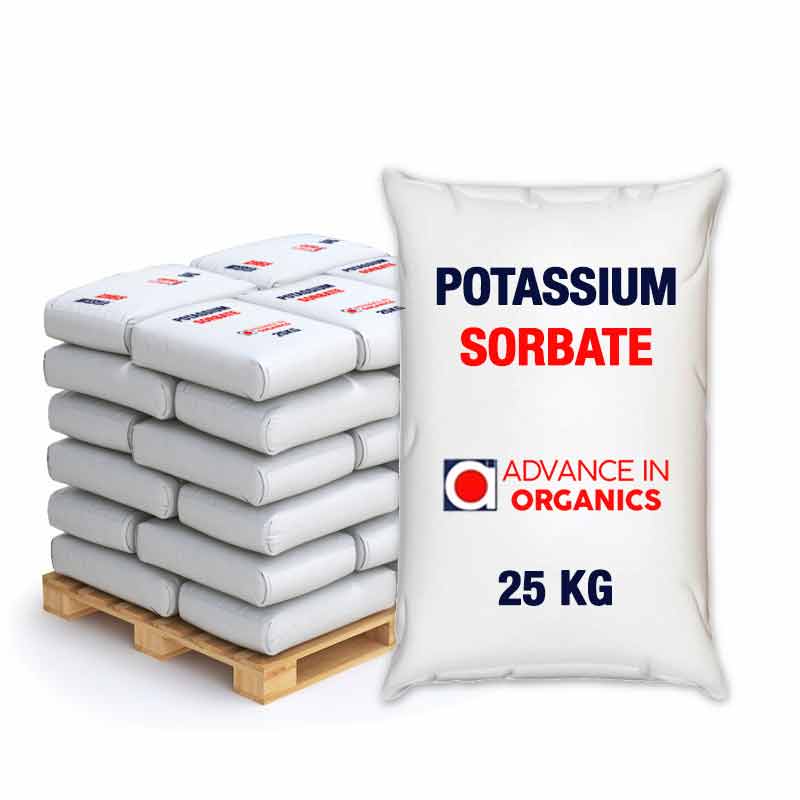
Potassium Sorbate is commonly supplied in sealed packaging designed to protect the material against moisture and contamination.
Common commercial packaging may include:
- 25 kg bags
- 25 kg lined bags
- Other manufacturer-approved packaging formats
Actual packaging availability should be confirmed at the time of enquiry.
When requesting Potassium Sorbate, customers should specify:
- Required quantity in kilograms or metric tonnes
- Preferred packaging size
- Intended application
- Required grade
- Delivery location
- Any special quality or documentation requirements
Providing this information helps establish the appropriate supply requirements.
Storage Requirements for Potassium Sorbate
Proper storage helps maintain the quality and performance of Potassium Sorbate.
Recommended storage practices include:
- Store in a cool, dry and well-ventilated area.
- Keep the product in its original sealed packaging.
- Protect it from moisture and excessive humidity.
- Avoid direct sunlight and excessive heat.
- Keep away from incompatible chemicals, particularly strong oxidising agents.
- Avoid contamination by water, dirt or other materials.
- Use clean and dry handling equipment.
- Follow the manufacturer’s recommended storage conditions and shelf life.
For food-grade material, storage areas should also meet appropriate hygiene and food safety requirements.
Safety and Handling Precautions
Potassium Sorbate is widely used in permitted food and cosmetic applications, but concentrated powder should still be handled responsibly.
Dust may cause irritation, particularly to the eyes and respiratory system.
Recommended precautions include:
- Wear suitable protective gloves.
- Use safety goggles when handling the powder.
- Avoid breathing airborne dust.
- Work in a well-ventilated area.
- Avoid unnecessary skin and eye contact.
- Wash hands after handling.
- Keep containers properly labelled.
- Store away from food and incompatible chemicals.
- Follow the product-specific Safety Data Sheet (SDS).
In case of eye contact, rinse cautiously with clean water for several minutes. If irritation persists, seek medical advice. If dust inhalation causes respiratory discomfort, move to fresh air and follow the SDS first-aid guidance.
Always consult the manufacturer’s SDS for the product’s exact hazard classification, first-aid instructions and emergency procedures.
Regulatory and Quality Considerations in Kenya and East Africa
Businesses using Potassium Sorbate in food, beverages, cosmetics and pharmaceutical products must ensure compliance with the relevant regulatory requirements.
Food and Beverage Manufacturers
Confirm that:
- Potassium Sorbate is permitted for the intended food category.
- The product meets the applicable food additive purity requirements.
- The concentration is within the permitted maximum level.
- Ingredient declarations and product labelling meet applicable rules.
- The finished product complies with food safety requirements.
E202 is a recognised food additive designation, but permitted use levels and conditions vary by product category and jurisdiction.
Pharmaceutical Manufacturers
Confirm that the material meets the required quality specification and is suitable for the intended pharmaceutical preparation.
Cosmetic Manufacturers
Check the applicable cosmetic ingredient restrictions, preservative requirements and permitted concentrations in the target market.
Kenya and Regional Markets
Businesses supplying products in Kenya, Uganda and Tanzania should confirm the relevant national and regional food safety, standards, import and labelling requirements.
In Kenya, relevant authorities may include the Kenya Bureau of Standards (KEBS) and the applicable food safety and public health authorities.
Factors to Consider Before Buying Potassium Sorbate
Choosing the correct Potassium Sorbate is important for manufacturing quality, preservation performance and regulatory compliance.
Intended Application
Indicate whether you need it for beverages, food processing, bakery, dairy, cosmetics, pharmaceuticals or another application.
Required Grade
Select food grade, pharmaceutical grade or industrial grade according to your intended use.
Purity and Quality
Check the assay and other relevant quality parameters using the manufacturer’s COA.
Product pH
Since Potassium Sorbate works best in acidic formulations, assess the pH of your finished product before selecting a preservative system.
Preservation Requirements
Identify the microorganisms you need to control and consider whether additional preservation measures are required.
Packaging and Quantity
Specify the quantity and preferred packaging size to help establish suitable supply arrangements.
Technical Documentation
Depending on your application, request:
- Technical Data Sheet (TDS)
- Safety Data Sheet (SDS)
- Certificate of Analysis (COA)
- Relevant food-grade or pharmaceutical documentation
Delivery and Supply Arrangements
Confirm the required delivery location, availability, lead time and commercial terms before placing an order.
Why Choose Olinc Chemical Suppliers?
Olinc Chemical Suppliers serves customers seeking industrial and specialty chemical products in Nairobi and the wider Kenyan market.
When enquiring about Potassium Sorbate, customers can provide their intended application, required grade and quantity so that the relevant product details can be established.
Our customer enquiry support focuses on:
- Product information and identification
- Guidance on selecting the appropriate grade
- Information on product specifications and quality documentation
- Packaging and quantity enquiries
- Supply enquiries for customers in Nairobi and other locations in Kenya
Whether you are a beverage manufacturer, food processor, bakery, dairy producer, cosmetics manufacturer or industrial user, contact Olinc Chemical Suppliers to discuss your Potassium Sorbate requirements.
Frequently Asked Questions About Potassium Sorbate
What is Potassium Sorbate mainly used for?
Potassium Sorbate is mainly used as a preservative to inhibit mould and yeast growth in suitable food and beverage products. It is also used in selected cosmetics, personal-care and pharmaceutical formulations.
What is the CAS number of Potassium Sorbate?
The CAS number of Potassium Sorbate is 24634-61-5.
What is the food additive number for Potassium Sorbate?
Potassium Sorbate is identified as E202 or INS 202 in relevant food additive systems.
Is Potassium Sorbate water-soluble?
Yes. Potassium Sorbate is freely soluble in water, making it suitable for many liquid and aqueous formulations.
Can Potassium Sorbate be used in juice manufacturing?
Yes. It is used in certain fruit juice and beverage formulations to help inhibit mould and yeast growth, subject to the applicable food regulations and product requirements.
Can Potassium Sorbate be used in soft drinks?
Yes. It can be used in suitable acidic soft drink formulations where permitted. The correct concentration depends on the beverage type, pH and applicable regulations.
Can Potassium Sorbate be used in bakery products?
Yes. It is used in selected bakery applications, particularly where controlling mould growth is important. Its suitability depends on the product formulation and processing conditions.
Can Potassium Sorbate be used in yoghurt and cheese?
It may be used in certain permitted dairy and cheese applications. Manufacturers must confirm the approved use and concentration for the specific product category.
Can Potassium Sorbate be used in cosmetics?
Yes. It is used in selected cosmetic formulations as part of a preservative system, especially in products with suitable pH conditions.
Does Potassium Sorbate kill all bacteria?
No. Its main preservative activity is against many moulds and yeasts. It is not a universal disinfectant or sterilising agent.
What is the difference between Potassium Sorbate and Sodium Benzoate?
Both are preservatives, but they have different chemical identities and performance characteristics. Potassium Sorbate is particularly valued for controlling many moulds and yeasts, while Sodium Benzoate is commonly used in suitable acidic products to control certain yeasts, moulds and bacteria.
Is Potassium Sorbate safe for food use?
Food-grade Potassium Sorbate is permitted for specified food applications in many regulatory systems when used within the applicable limits. Manufacturers must follow the requirements for their particular product and market.
What packaging is available?
Common commercial packaging includes 25 kg bags, although actual packaging options should be confirmed when making an enquiry.
How should Potassium Sorbate be stored?
Store it in sealed packaging in a cool, dry place, protected from moisture, heat and contamination.
What documents should I request when buying Potassium Sorbate?
Depending on your application, request the Technical Data Sheet, Safety Data Sheet and Certificate of Analysis. Food and pharmaceutical manufacturers may require additional grade-specific compliance documents.
Where can I buy Potassium Sorbate in Kenya?
You can contact Olinc Chemical Suppliers in Nairobi, Kenya, to enquire about Potassium Sorbate, including its available grade, specifications, packaging and supply arrangements.
Request a Quotation for Potassium Sorbate in Kenya
Are you looking for Potassium Sorbate in Nairobi, Kenya, Uganda or Tanzania for food processing, beverage production, bakery manufacturing, dairy processing, cosmetics or pharmaceutical applications?
Olinc Chemical Suppliers welcomes enquiries from manufacturers, distributors, wholesalers and other commercial customers.
When contacting us, kindly indicate:
- Product: Potassium Sorbate
- Required grade
- Quantity required
- Intended application
- Delivery location
- Any required specifications or documentation
Contact Olinc Chemical Suppliers today for Potassium Sorbate product and supply enquiries.
Olinc Chemical Suppliers – Contact Details
- Location: Enterprise Road, Avon Business Center, Nairobi, Kenya
- Phone: 0793062849
- Alternative phone: 0743657810
- Email: sales@olincinchemicals.com
- Website: www.olincchemicalsl.com
Contact us to discuss your Potassium Sorbate requirements and obtain information about the appropriate grade and product specifications for your business.


Reviews
There are no reviews yet.