
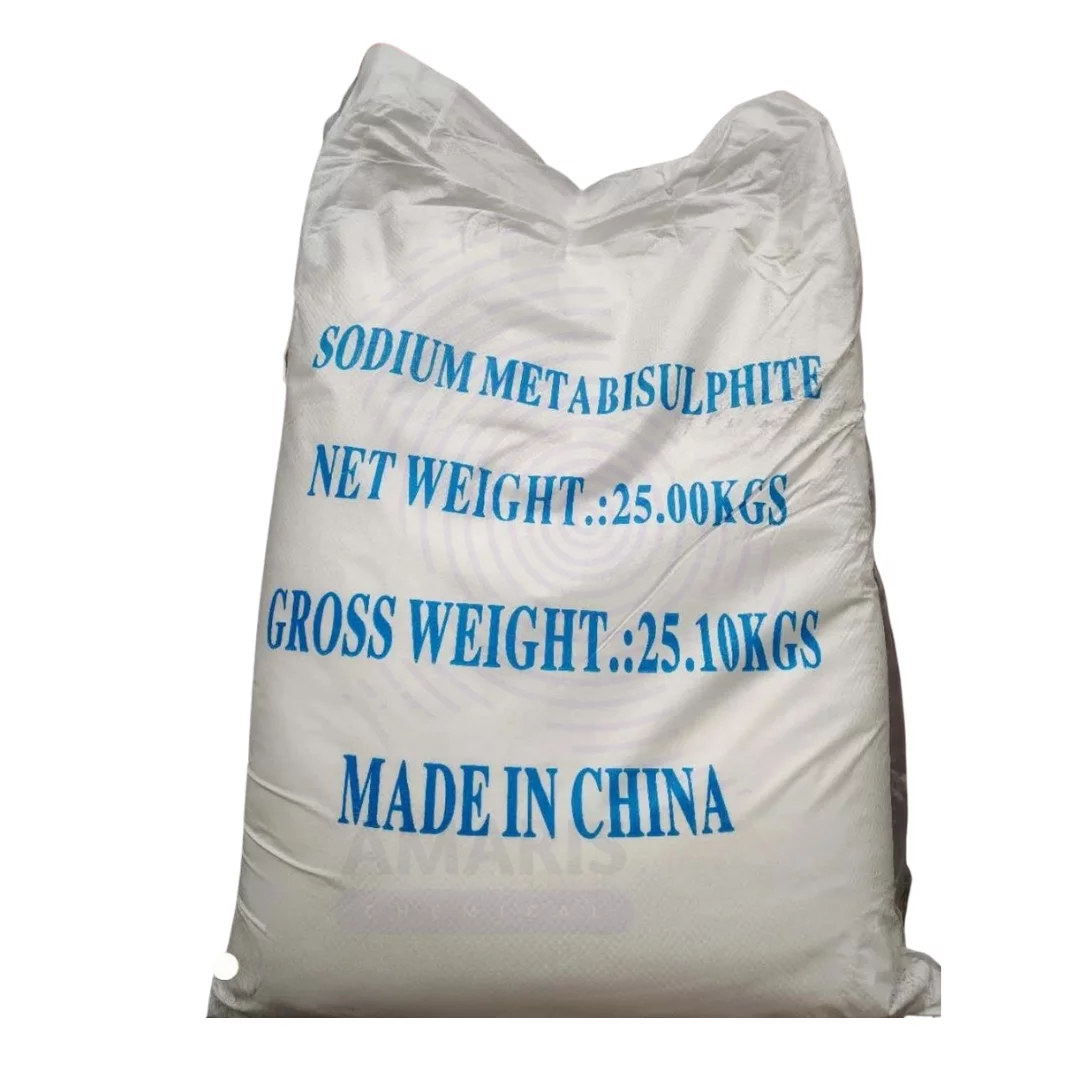
Sodium Metabisulphite Supplier in Nairobi, Kenya, Tanzania and Uganda
Olinc Chemical Suppliers supplies Sodium Metabisulphite for industrial and commercial applications in Nairobi, Kenya and across East Africa, including Tanzania and Uganda.
Sodium Metabisulphite, commonly abbreviated as SMBS, is a versatile inorganic chemical widely used as a reducing agent, antioxidant, preservative and dechlorination agent. It is particularly valued for its ability to remove residual chlorine, prevent oxidation, control unwanted chemical reactions and protect products from deterioration.
It plays an important role in water treatment, food and beverage processing, mining, textile manufacturing, industrial cleaning, pharmaceutical production and various chemical manufacturing processes.
Whether you are a water treatment company, food manufacturer, mining operator, textile processor or industrial chemical formulator, Sodium Metabisulphite can be an important raw material for your operations.
At Olinc Chemical Suppliers, we welcome enquiries from manufacturers, distributors, contractors and other commercial buyers looking for Sodium Metabisulphite.
Contact our sales team for product availability, current prices, specifications, packaging and bulk order enquiries.
What Is Sodium Metabisulphite?
Sodium Metabisulphite is an inorganic sodium salt of metabisulphurous acid. It is commonly supplied as a white crystalline powder with a slight sulphurous odour.
It is known for its strong reducing and antioxidant properties.
When dissolved in water, Sodium Metabisulphite forms bisulphite species and can release sulphur dioxide under suitable conditions. These properties make it useful in industrial processes where oxidation, residual chlorine and unwanted colour changes need to be controlled.
One of its major industrial applications is water treatment, where it is used to neutralise residual chlorine before water enters sensitive processes such as reverse osmosis systems.
In food processing, appropriately certified food-grade Sodium Metabisulphite is used as a preservative and antioxidant in applications permitted by food regulations.
It is also used in mining to support certain mineral processing operations, including cyanide destruction in appropriately designed treatment systems.
Because of its versatility, Sodium Metabisulphite is an important chemical for many manufacturing and industrial businesses.
Sodium Metabisulphite Chemical Identification
| Property | Description |
|---|---|
| Product name | Sodium Metabisulphite |
| Chemical name | Sodium Disulphite |
| Common abbreviation | SMBS |
| Alternative spelling | Sodium Metabisulfite |
| Chemical formula | Na₂S₂O₅ |
| CAS number | 7681-57-4 |
| Molecular weight | 190.10 g/mol |
| Appearance | White crystalline powder |
| Odour | Slight sulphurous odour |
| Solubility | Soluble in water |
| Chemical classification | Inorganic sulphite salt |
| Main functions | Reducing agent, antioxidant and dechlorination agent |
| Common grades | Industrial grade and food grade |
Important: Sodium Metabisulphite is different from Sodium Bisulphite, Sodium Sulphite and Sodium Hydrosulphite. Although they share some applications, they have different chemical compositions and should not automatically be substituted for one another.
Properties and Characteristics of Sodium Metabisulphite
Understanding the properties of Sodium Metabisulphite helps buyers identify its suitability for different industrial applications.
A. Strong reducing properties
Sodium Metabisulphite acts as a reducing agent, helping convert certain oxidising substances into less oxidised forms. This is useful in industrial water treatment, chemical manufacturing and mineral processing.
B. Effective dechlorination agent
One of its important applications is removing residual chlorine from treated water. This is particularly useful in water treatment systems where chlorine can damage sensitive membranes and interfere with subsequent processing.
C. Antioxidant properties
Sodium Metabisulphite helps limit oxidation in suitable formulations, protecting certain products against unwanted colour changes and deterioration.
D. Preservative applications
Food-grade Sodium Metabisulphite is used in certain food and beverage applications to help inhibit oxidation and microbial activity, subject to permitted limits and regulations.
E. Water solubility
It dissolves in water, making it convenient for preparing solutions used in industrial treatment and manufacturing processes.
F. Sulphur dioxide release
When exposed to acids, Sodium Metabisulphite can release sulphur dioxide gas. This is an important consideration for storage, handling and chemical compatibility.
G. Versatile industrial performance
It serves different purposes depending on the formulation, dosage, operating conditions and grade selected.
Main Industrial Applications of Sodium Metabisulphite
Sodium Metabisulphite has applications in several industries. Its main value comes from its ability to reduce oxidising substances, neutralise chlorine and protect suitable products against oxidation.
A. Water Treatment and Wastewater Treatment
Water treatment is one of the major applications of Sodium Metabisulphite.
It is commonly used as a dechlorination chemical to remove residual chlorine from water before the water enters sensitive treatment equipment.
Chlorine is widely used for disinfection, but excessive residual chlorine can damage reverse osmosis membranes and interfere with certain industrial processes.
Sodium Metabisulphite helps neutralise residual chlorine, making it useful in water treatment systems.
Benefits in water treatment include:
-
Removes residual chlorine from treated water.
-
Protects reverse osmosis membranes from chlorine damage.
-
Helps control oxidising substances in water.
-
Supports industrial wastewater treatment.
-
Used in selected heavy-metal reduction processes.
-
Helps remove excess oxidising agents from industrial water systems.
Common applications include:
-
Reverse osmosis (RO) water treatment plants.
-
Industrial water purification.
-
Wastewater treatment facilities.
-
Boiler feedwater preparation.
-
Cooling water treatment.
-
Textile processing water.
-
Municipal and industrial water treatment.
For RO plant operators, Sodium Metabisulphite is particularly important where chlorine removal is required before water passes through chlorine-sensitive membranes.
Important: It is a dechlorination chemical, not a disinfectant. It should not be used as a substitute for microbial disinfection.
B. Food and Beverage Manufacturing
Food-grade Sodium Metabisulphite is used as a preservative and antioxidant in selected food and beverage applications.
It helps prevent oxidation, which can cause unwanted colour changes, deterioration and loss of product quality.
It is also used to inhibit certain enzymatic browning reactions and control microorganisms in permitted applications.
Benefits in food processing include:
-
Helps prevent oxidation.
-
Reduces enzymatic browning in suitable products.
-
Helps maintain colour and appearance.
-
Supports preservation of certain food products.
-
Helps protect selected beverages against unwanted oxidation.
-
Supports product stability when used within permitted limits.
Common applications include:
-
Dried fruits.
-
Fruit processing.
-
Fruit juices.
-
Wine production.
-
Selected beverage manufacturing.
-
Potato processing.
-
Food ingredient manufacturing.
-
Selected starch-processing applications.
Important for food manufacturers: Sodium Metabisulphite is also known as food additive E223. Its use is regulated, and permitted levels and labelling requirements depend on the food category and applicable regulations.
Some people are sensitive to sulphites and may experience adverse reactions. Food manufacturers must declare sulphites where required.
Only certified food-grade Sodium Metabisulphite should be used in food and beverage manufacturing. Industrial grade is not suitable as a substitute.
C. Mining and Mineral Processing
Sodium Metabisulphite plays an important role in certain mineral processing operations, particularly in gold mining.
It is used in specialised processes involving the treatment of cyanide-containing solutions and the reduction of certain metal species.
One important application is cyanide destruction in gold processing operations using suitable treatment systems.
Benefits in mining include:
-
Supports cyanide detoxification processes.
-
Used in selected gold-processing operations.
-
Helps reduce certain oxidised metal species.
-
Supports wastewater treatment in mining operations.
-
Useful in controlled mineral-processing chemical reactions.
Common applications include:
-
Gold mining.
-
Mineral processing.
-
Cyanide detoxification.
-
Mining wastewater treatment.
-
Selected metal recovery operations.
Mining companies should establish dosage and treatment conditions through process testing and qualified technical guidance.
D. Textile Manufacturing and Fabric Processing
The textile industry uses Sodium Metabisulphite in selected bleaching, reducing and finishing processes.
It can help remove residual oxidising agents and support certain textile treatment operations.
Benefits include:
-
Helps neutralise residual oxidising chemicals.
-
Supports selected textile bleaching processes.
-
Helps control unwanted oxidation.
-
Used in wool and jute processing.
-
Supports colour correction and fabric finishing.
-
Helps improve consistency in selected processing operations.
Common applications include:
-
Wool processing.
-
Jute processing.
-
Textile bleaching.
-
Fabric finishing.
-
Textile washing.
-
Dyeing operations.
-
Garment manufacturing.
It is particularly useful where residual oxidising chemicals need to be neutralised after a treatment process.
E. Paper and Pulp Manufacturing
Sodium Metabisulphite is used in paper and pulp manufacturing as a reducing agent and antichlor chemical.
It can help neutralise residual chlorine-based chemicals and support selected pulp-processing operations.
Applications include:
-
Paper pulp processing.
-
Recycled paper manufacturing.
-
Groundwood pulp bleaching.
-
Residual chlorine removal.
-
Paper manufacturing wastewater treatment.
It helps manufacturers manage unwanted oxidising residues during selected stages of paper production.
F. Pharmaceutical and Chemical Manufacturing
Sodium Metabisulphite is used in selected pharmaceutical and chemical manufacturing processes because of its reducing and antioxidant properties.
Depending on the formulation and required grade, it can help protect certain ingredients from oxidation.
Applications include:
-
Selected pharmaceutical formulations.
-
Chemical intermediate manufacturing.
-
Antioxidant formulations.
-
Reducing-agent applications.
-
Selected laboratory processes.
Pharmaceutical manufacturers must use material that meets the required pharmacopoeial and regulatory specifications.
G. Leather Processing and Tanning
Sodium Metabisulphite is used in certain leather-processing operations.
It can assist in the solubilisation of tanning extracts and in selected reducing and bleaching processes.
Applications include:
-
Leather tanning.
-
Hide and skin processing.
-
Selected leather bleaching operations.
-
Tanning chemical formulations.
-
Leather-processing wastewater treatment.
H. Detergent and Cleaning Chemical Manufacturing
Sodium Metabisulphite can be used in selected cleaning and detergent formulations because of its reducing properties.
It is also used in the production of certain cleaning agents, detergents and soaps.
Applications include:
-
Industrial cleaning formulations.
-
Selected detergent manufacturing processes.
-
Specialised reducing formulations.
-
Chemical manufacturing.
-
Cleaning of certain industrial process systems.
Its compatibility with other ingredients must be evaluated before it is incorporated into a formulation.
I. Photography and Film Processing
Sodium Metabisulphite has traditional applications in photographic chemical manufacturing and film processing.
It can function as an antioxidant and reducing agent in selected photographic developer and fixing-bath formulations.
Although digital imaging has reduced demand for these applications, specialised photographic processing still uses sulphite-based chemicals.
The applications above are consistent with manufacturer product information and safety documentation.
INEOS+3
5. Grades of Sodium Metabisulphite
Selecting the correct grade is important because different industries have different purity, quality and regulatory requirements.
| Grade | Main applications |
|---|---|
| Industrial grade | Water treatment, mining, textile processing and chemical manufacturing |
| Technical grade | Industrial processing and specialised chemical applications |
| Food grade | Food preservation and permitted food processing |
| Pharmaceutical grade | Selected pharmaceutical formulations requiring appropriate certification |
Which grade should you choose?
Industrial grade: Suitable for many industrial applications, including dechlorination, wastewater treatment, mining and chemical processing, provided the specification meets the process requirements.
Food grade: Required for food and beverage manufacturing. Buyers should request the applicable food-grade certification and product documentation.
Pharmaceutical grade: Used for selected pharmaceutical applications where strict quality and purity requirements apply.
Never assume that industrial-grade Sodium Metabisulphite is suitable for food or pharmaceutical production.
6. Technical Specifications of Sodium Metabisulphite
Below is an indicative technical specification table for commonly available commercial Sodium Metabisulphite.
| Parameter | Typical specification |
|---|---|
| Product name | Sodium Metabisulphite |
| Chemical formula | Na₂S₂O₅ |
| CAS number | 7681-57-4 |
| Molecular weight | 190.10 g/mol |
| Appearance | White crystalline powder |
| Purity | Commonly 98% minimum |
| Assay as SO₂ | Approximately 65–67% |
| Solubility | Soluble in water |
| pH | Acidic in aqueous solution |
| Odour | Slight sulphurous odour |
| Main chemical function | Reducing agent and antioxidant |
Some high-purity food-grade specifications require a minimum assay of 98.7% Sodium Metabisulphite and 66.5% available SO₂. Other commercial specifications vary by manufacturer and grade.
INEOS+1
Please note: These are reference specifications, not a guaranteed Olinc product specification. Actual purity, moisture, iron, chloride, heavy metals and other parameters should be confirmed through the manufacturer’s TDS and batch COA.
7. How Does Sodium Metabisulphite Work?
Sodium Metabisulphite works mainly through reduction and antioxidant reactions.
When dissolved in water, it forms bisulphite-related species that participate in chemical reactions with oxidising substances.
Example 1: Chlorine removal
When used in water treatment, Sodium Metabisulphite reacts with free chlorine, converting it into chloride ions while being oxidised mainly to sulphate.
This helps reduce residual chlorine before water enters reverse osmosis membranes or other sensitive equipment.
Example 2: Food preservation
In suitable food formulations, sulphite species help limit oxidation and inhibit certain browning reactions, protecting product quality.
Example 3: Mining applications
In selected gold-processing systems, Sodium Metabisulphite participates in chemical reduction reactions used in cyanide detoxification.
These different reactions explain why the product has such a wide range of industrial applications.
Sodium Metabisulphite Dosage and Usage
The correct dosage depends on the application, water chemistry, concentration of the substance being treated and the purity of the Sodium Metabisulphite.
There is no single dosage that works for every industrial application.
Dosage for Reverse Osmosis Water Treatment
In RO plants, Sodium Metabisulphite is commonly used to neutralise residual chlorine before water reaches the RO membranes.
The dosage depends on:
-
Free chlorine concentration.
-
Water flow rate.
-
Product purity.
-
Required residual chlorine level.
-
Other oxidising substances present.
For a theoretical starting calculation, approximately 1.34 mg of pure Sodium Metabisulphite is required per 1 mg of chlorine expressed as Cl₂.
Actual dosing should account for product purity, water chemistry and system requirements, and should be verified through testing.
Dosage in Wastewater Treatment
Dosage depends on the concentration and type of oxidising substances being treated.
Industrial wastewater containing chromium or other oxidised metals requires process-specific pH control, reaction time and treatment monitoring.
Dosage in Food Processing
Food-grade Sodium Metabisulphite must be used according to the permitted limits for the particular food category and applicable regulations.
Dosage in Textile Processing
The required amount depends on the fabric, processing stage, residual oxidising chemicals and the desired treatment outcome.
Dosage in Mining
Mining applications require specialised process calculations based on cyanide concentration, mineral composition, pH and treatment conditions.
For all applications, consult the supplier’s TDS and conduct suitable trials before full-scale use.
Packaging and Storage of Sodium Metabisulphite
Sodium Metabisulphite is generally supplied as a dry crystalline powder in sealed industrial packaging.
Common commercial packaging options include:
-
25 kg bags.
-
50 kg bags, depending on supplier availability.
-
Larger bulk packaging for industrial customers, subject to confirmation.
Storage recommendations
To maintain product quality:
-
Store in a cool, dry and well-ventilated area.
-
Keep packaging tightly sealed.
-
Protect the chemical from moisture.
-
Avoid exposure to excessive heat.
-
Keep away from acids and incompatible chemicals.
-
Store away from strong oxidising agents.
-
Avoid contamination with other substances.
-
Follow the manufacturer’s recommended shelf life.
Sodium Metabisulphite can release sulphur dioxide when exposed to acids or moisture under certain conditions. Proper storage and ventilation are therefore important.
Safety and Handling Information
Sodium Metabisulphite should be handled carefully and according to its Safety Data Sheet.
Although widely used in industrial and food-processing applications, it can cause serious eye damage and may be harmful if swallowed.
Recommended precautions:
-
Wear suitable chemical-resistant gloves.
-
Use chemical safety goggles and appropriate face protection.
-
Avoid inhaling dust.
-
Handle in a well-ventilated area.
-
Avoid contact with eyes and skin.
-
Do not eat, drink or smoke while handling the product.
-
Wash hands after handling.
-
Keep away from acids.
-
Keep packaging sealed when not in use.
Contact with acids can release sulphur dioxide gas, which is hazardous when inhaled. People with sulphite sensitivity or certain respiratory conditions may be particularly vulnerable.
In case of eye exposure, rinse cautiously with clean water immediately and obtain urgent medical attention. If dust is inhaled, move to fresh air and seek medical assistance if symptoms occur.
Always use the current manufacturer’s SDS for detailed first aid, spill management, fire response and disposal instructions.
Difference Between Sodium Metabisulphite and Similar Chemicals
Customers sometimes confuse Sodium Metabisulphite with other sulphur-based industrial chemicals.
Understanding their differences helps buyers select the correct product.
| Chemical | Chemical formula | Main function |
|---|---|---|
| Sodium Metabisulphite | Na₂S₂O₅ | Reducing agent, antioxidant and dechlorination |
| Sodium Bisulphite | NaHSO₃ | Reducing agent and dechlorination |
| Sodium Sulphite | Na₂SO₃ | Reducing agent and oxygen scavenger |
| Sodium Hydrosulphite | Na₂S₂O₄ | Strong reducing and bleaching agent |
| Sodium Thiosulphate | Na₂S₂O₃ | Dechlorination and specialised chemical processing |
| Sodium Sulphate | Na₂SO₄ | Industrial salt and manufacturing raw material |
Sodium Metabisulphite vs Sodium Hydrosulphite
These are particularly important to distinguish.
-
Sodium Metabisulphite is commonly used for chlorine removal, antioxidant applications, food preservation and selected mining processes.
-
Sodium Hydrosulphite is a stronger reducing agent commonly used in textile dyeing, paper bleaching and colour removal.
They have different chemical properties and are not direct substitutes.
Industries That Purchase Sodium Metabisulphite
Olinc Chemical Suppliers targets commercial and industrial customers requiring Sodium Metabisulphite for manufacturing and processing.
Our potential customer groups include:
-
Water treatment companies.
-
Reverse osmosis plant operators.
-
Wastewater treatment facilities.
-
Gold mining companies.
-
Mineral processing companies.
-
Food and beverage manufacturers.
-
Fruit processing companies.
-
Textile manufacturers.
-
Paper and pulp manufacturers.
-
Leather processing companies.
-
Pharmaceutical manufacturers.
-
Industrial chemical manufacturers.
-
Detergent and cleaning chemical producers.
-
Laboratory and chemical processing facilities.
Whether you require Sodium Metabisulphite for regular industrial consumption or a specific manufacturing project, contact Olinc for a quotation.
Why Buy Sodium Metabisulphite from Olinc Chemical Suppliers?
Choosing a reliable chemical supplier is important for maintaining consistent production and avoiding unnecessary delays.
At Olinc Chemical Suppliers, we understand the needs of industrial and commercial customers who depend on quality chemical raw materials.
Here is why you should contact us for your Sodium Metabisulphite requirements:
1. Industrial chemical supply
We deal in a range of industrial chemicals serving water treatment, manufacturing, mining, cleaning and other processing industries.
2. Competitive quotations
Contact us for current Sodium Metabisulphite prices based on your required quantity, grade and packaging.
3. Different application requirements
We welcome enquiries from customers in different industries and encourage buyers to specify their intended application so that the appropriate grade can be established.
4. Bulk order enquiries
We welcome enquiries from manufacturers, distributors, contractors and businesses requiring commercial quantities.
5. Convenient customer support
Our sales team is available to discuss product specifications, availability, quotations and ordering arrangements.
Sodium Metabisulphite Supplier in Kenya, Tanzania and Uganda
Olinc Chemical Suppliers welcomes Sodium Metabisulphite enquiries from customers across Kenya and the wider East African region.
Sodium Metabisulphite Supplier in Nairobi, Kenya
Are you searching for a Sodium Metabisulphite supplier in Nairobi?
Olinc Chemical Suppliers serves industrial and commercial customers in Nairobi looking for Sodium Metabisulphite for water treatment, mining, food processing, textile manufacturing and other industrial applications.
Whether you operate a reverse osmosis plant, manufacture food products or require chemicals for industrial processing, contact us for availability, specifications and pricing.
Our business location is Enterprise Road, Avon Business Center, Nairobi, Kenya.
Sodium Metabisulphite Supplier in Tanzania
Businesses in Tanzania looking for Sodium Metabisulphite can contact Olinc Chemical Suppliers for product and supply enquiries.
We welcome enquiries from customers in Dar es Salaam, Arusha, Mwanza, Dodoma and other commercial and industrial centres.
Contact us to discuss your required grade, quantity, packaging and delivery arrangements to Tanzania.
Sodium Metabisulphite Supplier in Uganda
Olinc Chemical Suppliers also welcomes Sodium Metabisulphite enquiries from Uganda.
We cater to enquiries from water treatment companies, mining operations, food manufacturers, textile processors and other industrial buyers in Kampala, Jinja, Entebbe and surrounding areas.
Contact our sales team to discuss your requirements and confirm available supply arrangements to Uganda.
How to Order Sodium Metabisulphite from Olinc Chemical Suppliers
Ordering is straightforward.
Step 1: Contact our sales team
Send us an enquiry indicating that you require Sodium Metabisulphite.
Step 2: Specify your requirements
Tell us the quantity, grade and intended application.
Step 3: Request a quotation
Our sales team will assist with a quotation based on confirmed availability and your requirements.
Step 4: Confirm your order
Once the price, quantity and supply arrangements have been agreed upon, you can proceed with your purchase.
Step 5: Arrange delivery or collection
Confirm the available delivery or collection arrangements with our team.
Looking for Sodium Metabisulphite in Nairobi, Kenya, Tanzania or Uganda?
Contact Olinc Chemical Suppliers for current prices, product specifications, packaging and bulk order enquiries.
WhatsApp / Phone: 0793062849
Alternative phone: 0743657810
sales@olincinchemicals.com
Enterprise Road, Avon Business Center, Nairobi, Kenya
Enquire on WhatsApp
Frequently Asked Questions About Sodium Metabisulphite
1. What is Sodium Metabisulphite used for?
Sodium Metabisulphite is used in water treatment, food preservation, mining, textile processing, paper manufacturing, pharmaceutical production and chemical manufacturing. Its main functions include dechlorination, oxidation control and chemical reduction.
2. What is another name for Sodium Metabisulphite?
It is also known as Sodium Metabisulfite, Sodium Pyrosulphite, Sodium Disulphite and SMBS.
3. What is the CAS number for Sodium Metabisulphite?
Its CAS number is 7681-57-4.
4. What is the chemical formula of Sodium Metabisulphite?
Its chemical formula is Na₂S₂O₅.
5. Is Sodium Metabisulphite soluble in water?
Yes. It dissolves in water and forms bisulphite-related species that provide its reducing and dechlorination properties.
6. Can Sodium Metabisulphite remove chlorine from water?
Yes. It is widely used to neutralise residual chlorine in industrial water treatment systems, especially before reverse osmosis membranes.
7. Is Sodium Metabisulphite used in RO plants?
Yes. It is commonly used in reverse osmosis plants to remove residual chlorine that could otherwise damage chlorine-sensitive membranes.
8. Is Sodium Metabisulphite used in food processing?
Yes. Certified food-grade Sodium Metabisulphite is used as a preservative and antioxidant in permitted food applications. It is identified as food additive E223.
9. What is the difference between food-grade and industrial-grade Sodium Metabisulphite?
Food-grade material must meet relevant food safety and purity requirements. Industrial grade is intended for industrial applications and should not be used in food manufacturing.
10. Can Sodium Metabisulphite be used in gold mining?
Yes. It is used in selected gold-processing operations, particularly cyanide detoxification and treatment of mining wastewater.
11. Is Sodium Metabisulphite used in textile manufacturing?
Yes. It is used in selected textile bleaching, reducing, finishing and residual oxidising-agent removal processes.
12. What is the typical purity of Sodium Metabisulphite?
Common industrial specifications are around 98% minimum, while some food-grade specifications require 98.7% or higher. Actual purity depends on the manufacturer and grade.
13. What packaging is available for Sodium Metabisulphite?
Common commercial packaging includes 25 kg and 50 kg bags, depending on supplier availability. Larger bulk packaging may also be available.
14. How should Sodium Metabisulphite be stored?
Store it in a cool, dry, well-ventilated location in tightly sealed packaging. Keep it away from acids, moisture and incompatible chemicals.
15. Is Sodium Metabisulphite dangerous?
It requires appropriate handling. Dust can cause irritation, eye exposure can cause serious damage, and contact with acids can release hazardous sulphur dioxide gas.
16. Is Sodium Metabisulphite the same as Sodium Hydrosulphite?
No. Sodium Metabisulphite has the formula Na₂S₂O₅, while Sodium Hydrosulphite has the formula Na₂S₂O₄. They have different properties and applications.
17. Where can I buy Sodium Metabisulphite in Nairobi, Kenya?
You can contact Olinc Chemical Suppliers, Enterprise Road, Avon Business Center, Nairobi, for product availability and quotations.
18. Does Olinc Chemical Suppliers serve customers in Tanzania and Uganda?
Yes. We welcome enquiries from Tanzania and Uganda and can discuss supply and delivery arrangements based on the customer’s location and order requirements.
Reviews
There are no reviews yet.