
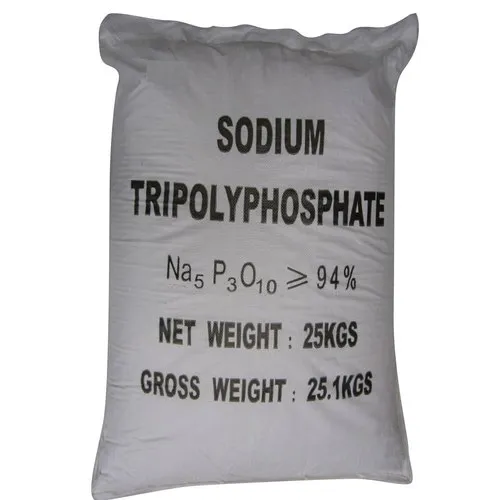
STPP (Sodium Tripolyphosphate) Supplier in Kenya | Olinc Chemical Suppliers
STPP (Sodium Tripolyphosphate) is a versatile inorganic phosphate chemical widely used as a builder in detergent formulations. It improves cleaning performance by helping soften hard water, binding minerals such as calcium and magnesium, dispersing dirt and supporting the action of surfactants. It is commonly used in the manufacture of laundry detergents, washing powders, dishwashing products and industrial cleaning formulations.
Whether you are a detergent manufacturer, chemical formulator, distributor or industrial buyer, understanding the grade, specifications, applications and packaging of STPP will help you select the right material for your production needs.
What is STPP (Sodium Tripolyphosphate)?
Sodium Tripolyphosphate, commonly abbreviated as STPP, is a white inorganic phosphate salt with the chemical formula Na₅P₃O₁₀. It is generally supplied as a white powder or granular material and is valued for its water-softening, cleaning-support, dispersing and sequestrating properties.
In detergent manufacturing, STPP is known as a builder. A builder improves the performance of surfactants by reducing the effect of hardness minerals in water. This helps detergents clean more effectively, especially where water contains significant amounts of calcium and magnesium.
STPP is also used in selected industrial processes where mineral control, dispersion or water conditioning is required. Its suitability depends on the intended application, grade and applicable regulations.
Other Names of STPP
Customers may search for Sodium Tripolyphosphate using different chemical names, abbreviations and trade descriptions. These are some of the common names:
-
Sodium Tripolyphosphate
-
Sodium Triphosphate
-
STPP
-
Pentasodium Triphosphate
-
Pentasodium Tripolyphosphate
-
Sodium Triphosphate Pentabasic
-
Tripolyphosphate Sodium Salt
-
Sodium Polyphosphate (a broader term; not always the same substance)
-
Triphosphoric Acid, Pentasodium Salt
-
Pentasodium Salt of Triphosphoric Acid
-
E451(i) – food additive designation for sodium triphosphate
-
INS 451(i) – international food additive designation
Important: STPP should not be confused with other phosphate chemicals such as sodium hexametaphosphate (SHMP), tetrasodium pyrophosphate (TSPP) or trisodium phosphate (TSP). They have different chemical structures and are not automatically interchangeable in formulations.
Chemical Identity and Basic Information
| Property | Information |
|---|---|
| Product name | Sodium Tripolyphosphate |
| Common abbreviation | STPP |
| Chemical formula | Na₅P₃O₁₀ |
| CAS number | 7758-29-4 |
| Molecular weight | Approximately 367.86 g/mol |
| Appearance | White powder or granules |
| Odour | Odourless |
| Chemical type | Inorganic phosphate salt |
| Water solubility | Soluble in water |
| Typical function | Detergent builder, water softener and dispersing agent |
| Food additive code | E451(i), where applicable |
The precise appearance, purity, particle size, moisture content and other specifications depend on the manufacturer and grade. Always confirm the product’s technical data sheet (TDS) and certificate of analysis (COA) before purchasing for a controlled production process.
Main Uses and Applications of STPP
STPP is used in several industries because of its ability to bind hardness ions, improve cleaning performance and help disperse particles.
Detergent and Washing Powder Manufacturing
One of the largest applications of STPP is the manufacture of laundry detergents and washing powders.
In detergent formulations, STPP acts as a builder by helping control calcium and magnesium ions found in hard water. These minerals can interfere with surfactants and reduce cleaning efficiency.
STPP helps detergent manufacturers to:
-
Improve washing performance in hard water.
-
Reduce the effects of calcium and magnesium ions.
-
Support the removal of dirt and oily soils.
-
Help prevent loosened soil from redepositing onto fabrics.
-
Improve the overall effectiveness of detergent formulations.
-
Support the performance of surfactants and other detergent ingredients.
It is therefore an important raw material for manufacturers of powdered laundry detergents and some other cleaning products.
Liquid Detergents and Cleaning Formulations
STPP may be used in selected liquid cleaning formulations where its solubility and compatibility are suitable.
Its functions can include:
-
Binding hardness minerals.
-
Supporting cleaning performance.
-
Helping manage mineral deposits.
-
Improving the performance of selected detergent ingredients.
However, STPP is more commonly associated with powdered detergent formulations. Its suitability in liquid products should be tested because concentration, pH, storage conditions and formulation ingredients can affect stability.
Dishwashing Detergents
STPP is used in certain dishwashing and automatic dishwasher detergent formulations.
It helps manage water hardness, which can contribute to mineral deposits, spots and reduced cleaning performance. It may also support the removal of food residues and help maintain cleaning efficiency.
The exact formulation depends on whether the product is intended for manual dishwashing or automatic dishwashing.
Industrial and Institutional Cleaning
STPP is used in selected heavy-duty cleaning products for factories, commercial facilities and institutional cleaning operations.
Its applications may include:
-
Industrial detergents.
-
Equipment and surface cleaning formulations.
-
Commercial laundry products.
-
Selected degreasing formulations.
-
Cleaning products designed for hard-water conditions.
Water Treatment and Water Conditioning
STPP can help control certain dissolved metal ions, particularly calcium and magnesium, through sequestration and related phosphate interactions.
It may be used in selected water-conditioning processes to help manage mineral-related deposits. Its application must be designed around the water chemistry, treatment objective and relevant environmental requirements.
STPP should not be assumed to replace a complete water-treatment programme or a dedicated scale inhibitor without technical assessment.
Ceramics and Ceramic Manufacturing
STPP is used as a dispersing or deflocculating agent in selected ceramic processes.
It can help improve the dispersion of fine particles in ceramic slurries, including clay-based systems. This may help manufacturers manage slurry flow properties and processing consistency.
Potential applications include:
-
Ceramic slurry preparation.
-
Tile manufacturing.
-
Clay and mineral processing.
-
Selected porcelain and ceramic production processes.
Textile Processing
STPP may be used in selected textile-processing and textile-cleaning operations.
Its role can include water conditioning and helping control the effects of hardness minerals during washing and processing. The actual suitability depends on the textile process and formulation.
Food Processing – Food Grade Only
Food-grade STPP is used as a food additive in certain regulated food applications. It may function as a sequestrant, emulsifying salt, moisture-retention agent or stabiliser, depending on the food product and applicable regulations.
Examples of regulated applications may include selected processed meat, seafood and other food products.
Important: Industrial or detergent-grade STPP must never be used in food production. Food applications require the correct food-grade material, supplier documentation and compliance with the relevant food-additive standards and local regulations.
How STPP Works in Detergent Manufacturing
STPP is particularly valuable in detergent production because it performs several functions at the same time.
1. Water softening
Hard water contains dissolved calcium and magnesium ions. These minerals can reduce the effectiveness of some detergent ingredients. STPP binds these ions, helping reduce their interference with the cleaning process.
2. Builder action
STPP supports surfactants, which are the ingredients responsible for loosening and removing dirt, grease and oils. It helps the surfactants perform more effectively.
3. Dirt dispersion
During washing, dirt and other particles are loosened from surfaces and fabrics. STPP can help keep some of these particles dispersed in the wash water, reducing the risk of them settling back onto the cleaned material.
4. Mineral deposit control
By interacting with hardness minerals, STPP can help reduce certain mineral-related cleaning problems. The results depend on the water composition, detergent formulation and washing conditions.
For detergent manufacturers, these combined functions make STPP a useful formulation ingredient rather than simply another phosphate powder.
STPP Grades and Types
When buying STPP, it is important to select a grade suitable for your intended application. The product name may be the same, but the specifications and permitted uses can differ.
Industrial Grade STPP
Industrial-grade STPP is used in industrial processes and selected manufacturing applications. Depending on its specification, it may be suitable for detergent production, water conditioning, ceramics and other industrial formulations.
Detergent Grade STPP
Detergent-grade STPP is commonly used in the manufacture of washing powders and other cleaning products.
Buyers should check the active phosphate content, purity, water-insoluble matter, moisture, particle size and other requirements specified by their detergent formulation.
Food Grade STPP
Food-grade STPP is manufactured and documented for permitted food applications. It must meet the relevant food-grade purity and regulatory requirements.
Do not select industrial-grade material for food production simply because the chemical name and formula are the same.
Technical or Special-Purpose Grade
Some suppliers offer STPP with specifications suited to particular industrial processes. Always compare the actual COA and TDS rather than relying on the grade name alone.
Anhydrous STPP
Commercial STPP is generally supplied in its anhydrous form. Confirm the chemical identity and moisture specification on the supplier’s documentation if the water content is important to your process.
Typical Technical Specifications of STPP
The following are common parameters buyers and manufacturers may check when sourcing Sodium Tripolyphosphate. Exact acceptance limits vary by grade, manufacturer and application.
| Parameter | What the buyer should check |
|---|---|
| Appearance | White powder or granules |
| STPP content / purity | Percentage of sodium tripolyphosphate |
| P₂O₅ content | Phosphate content, commonly used as a quality indicator |
| Water-insoluble matter | Amount of material that does not dissolve in water |
| Moisture | Water content of the supplied material |
| pH | Measured using the supplier’s stated test concentration |
| Bulk density | Important for storage, handling and formulation |
| Particle size | Powder or granular distribution |
| Iron content | Relevant to some sensitive applications |
| Heavy metals | Particularly important for food-grade material |
| Fluoride and other impurities | Check where required by the application |
For consistent manufacturing, request the Certificate of Analysis (COA) and Technical Data Sheet (TDS) for the actual product being supplied. These documents help you verify that the material meets your process requirements.
STPP Powder vs STPP Granules
STPP may be supplied in powder or granular form, depending on the manufacturer and product specification.
| Feature | STPP Powder | STPP Granules |
|---|---|---|
| Physical form | Fine white powder | Larger white particles or granules |
| Handling | Can create more dust | Often easier to handle with less dust |
| Dissolution | Generally dissolves readily when properly mixed | Dissolution depends on granule size and product properties |
| Typical consideration | Fine blending and formulation | Handling, dosing and product-flow characteristics |
| Selection | Based on production process | Based on production process |
Neither form is automatically better. Choose the form that works with your mixing equipment, production method and required dissolution characteristics.
Benefits of Using STPP
STPP offers several practical advantages in suitable formulations:
-
Improved detergent performance: Helps surfactants work more effectively in hard water.
-
Water-hardness management: Binds calcium and magnesium ions.
-
Better soil dispersion: Helps keep loosened dirt suspended in wash water.
-
Versatile industrial use: Suitable for several applications beyond detergent production, subject to grade.
-
Formulation support: Performs multiple functions in one ingredient.
-
Useful processing properties: Can assist with dispersion in selected ceramic and mineral-processing applications.
-
Established industrial raw material: Widely recognised by detergent and chemical manufacturers.
Difference Between STPP and Other Phosphate Chemicals
STPP is sometimes confused with other sodium phosphate products. They are chemically different and perform different roles.
| Chemical | Full name | Main uses |
|---|---|---|
| STPP | Sodium Tripolyphosphate | Detergent builder, water conditioning and selected industrial uses |
| SHMP | Sodium Hexametaphosphate | Sequestrant, dispersant and water-treatment applications |
| TSPP | Tetrasodium Pyrophosphate | Detergents, cleaning formulations and selected food applications |
| TSP | Trisodium Phosphate | Heavy-duty cleaning, degreasing and industrial applications |
| MSP | Monosodium Phosphate | Buffering, food and industrial applications |
| DSP | Disodium Phosphate | Buffering, food and industrial applications |
STPP vs SHMP
Both STPP and SHMP are phosphate-based chemicals that can help manage metal ions and mineral-related problems. However, their chemical structures and performance differ. STPP is widely associated with detergent building, while SHMP is often selected for sequestration and dispersion applications.
STPP vs TSP
STPP is mainly valued as a detergent builder and sequestrant. Trisodium phosphate is more commonly associated with alkalinity and heavy-duty cleaning. They should not be substituted for one another without checking the formulation requirements.
STPP vs TSPP
Tetrasodium pyrophosphate and sodium tripolyphosphate are both sodium phosphate salts, but they have different structures and properties. A formulation designed for STPP may not perform the same way with TSPP.
STPP Packaging and Supply Options
STPP is commonly traded in bulk packaging for industrial and manufacturing customers. Packaging options vary depending on the supplier and shipment.
Possible packaging formats include:
-
25 kg bags.
-
50 kg bags.
-
Palletised bags.
-
Jumbo bags or bulk bags for larger requirements.
Packaging may be woven polypropylene, lined bags or other moisture-protective packaging depending on the manufacturer.
When requesting a quotation from Olinc Chemical Suppliers, indicate your required quantity and preferred packaging. This helps us advise on suitable supply options and pricing.
How to Store STPP
Correct storage helps maintain the quality of Sodium Tripolyphosphate.
-
Store in a cool, dry and well-ventilated area.
-
Keep bags sealed when not in use.
-
Protect the material from moisture and water.
-
Store away from incompatible materials and contaminants.
-
Keep packaging off wet floors and protect it from rain.
-
Avoid unnecessary handling that may damage bags.
-
Follow the manufacturer’s storage recommendations.
STPP can absorb moisture under unsuitable storage conditions, which may cause caking and handling difficulties. Keep the product in its original packaging where practical.
Handling and Safety Precautions
STPP is an industrial chemical raw material and should be handled responsibly.
Recommended precautions include:
-
Wear suitable gloves and safety goggles when handling.
-
Avoid breathing dust during opening, weighing and mixing.
-
Use appropriate ventilation or dust-control measures.
-
Avoid contact with eyes.
-
Wash hands after handling.
-
Keep away from food, drinks and food-preparation areas unless handling a properly controlled food-grade operation.
-
Consult the product’s Safety Data Sheet (SDS) before use.
If dust enters the eyes, rinse cautiously with clean water and seek medical advice if irritation continues. Follow the SDS for first aid, spill response and disposal instructions.
Environmental consideration: STPP contains phosphorus. Releases into rivers, lakes and other waterways can contribute to nutrient pollution and eutrophication. Avoid uncontrolled discharge and follow applicable wastewater-treatment and environmental requirements.
14. Factors to Consider Before Buying STPP
Before placing an order, consider the following:
-
Intended application: Are you manufacturing washing powder, industrial cleaners, ceramics or using it for another process?
-
Required grade: Do you need detergent, industrial or food grade?
-
Product form: Does your process require powder or granules?
-
Purity and specification: Does the product meet your formulation or process requirements?
-
Packaging: Do you need 25 kg bags, 50 kg bags or bulk packaging?
-
Quantity: Are you buying for a small production run or regular industrial consumption?
-
Documentation: Do you require a COA, TDS or SDS?
-
Regulatory suitability: For food or other regulated applications, confirm that the grade and documentation meet the applicable standards.
Providing these details when requesting a quotation makes it easier to identify the appropriate product.
15. STPP Supplier in Nairobi, Kenya, Uganda and Tanzania
Olinc Chemical Suppliers welcomes enquiries from manufacturers, wholesalers, distributors and industrial buyers looking for Sodium Tripolyphosphate (STPP) in Nairobi, Kenya and across East Africa.
We understand that manufacturers need dependable raw materials with suitable specifications, practical packaging and competitive quotations. Whether you require STPP for detergent manufacturing, industrial cleaning, water conditioning or another suitable application, contact us with your requirements.
Why enquire with Olinc Chemical Suppliers?
-
Chemical supply based in Nairobi, Kenya.
-
Enquiries from customers in Kenya, Uganda and Tanzania.
-
Support in identifying suitable chemical grades for your application.
-
Quotations based on required quantities and packaging.
-
Assistance with product specifications and available documentation.
Request an STPP quotation
To help us respond accurately, share:
-
Product: Sodium Tripolyphosphate (STPP).
-
Required grade: Detergent, industrial or food grade.
-
Quantity required: For example, 25 kg, 500 kg, 1 tonne or more.
-
Packaging preference.
-
Delivery location.
-
Any specific technical specification or documentation required.
Contact Olinc Chemical Suppliers:
-
WhatsApp/Phone: 0793062849
-
Email: sales@olincinchemicals.com
-
Location: Enterprise Road, Avon Business Center, Nairobi, Kenya
-
Website: www.olincinchemicalsl.com
Contact us for current STPP pricing, available grades, packaging options and bulk supply enquiries
Frequently Asked Questions About STPP
What does STPP stand for?
STPP stands for Sodium Tripolyphosphate. It is an inorganic phosphate salt with the chemical formula Na₅P₃O₁₀, widely used in detergent manufacturing and other industrial applications.
What is STPP used for?
STPP is mainly used in washing powder and detergent manufacturing as a builder and water-softening agent. It is also used in selected dishwashing products, industrial cleaners, water-conditioning processes, ceramics and regulated food applications when food-grade material is used.
What is the full chemical name of STPP?
The full chemical name is Sodium Tripolyphosphate. It is also known as Pentasodium Triphosphate and Pentasodium Tripolyphosphate.
What is the CAS number of STPP?
The CAS number for Sodium Tripolyphosphate is 7758-29-4.
Why is STPP added to washing powder?
STPP is added to washing powder to help soften hard water, bind calcium and magnesium ions, support surfactant performance and help disperse dirt during washing.
Is STPP a surfactant?
No. STPP is not a surfactant. It is a detergent builder. It supports the performance of surfactants by helping manage water hardness and improve cleaning conditions.
Is STPP soluble in water?
Yes. STPP is soluble in water. Its dissolution behaviour can depend on the product specification, water temperature, concentration and mixing conditions.
What is the difference between STPP and SHMP?
STPP is Sodium Tripolyphosphate, while SHMP is Sodium Hexametaphosphate. Both are phosphate chemicals, but they have different chemical structures and applications. STPP is widely used as a detergent builder, while SHMP is commonly used as a sequestrant and dispersant.
Can STPP be used in liquid soap?
STPP can be used in selected liquid cleaning formulations where the formulation is compatible with it. However, it is more commonly used in powdered detergents. Compatibility, solubility, pH and storage stability should be tested before production.
What is the difference between detergent-grade and food-grade STPP?
Detergent-grade STPP is intended for cleaning and industrial formulations. Food-grade STPP must meet the relevant food-additive purity and regulatory requirements. The two grades should not be treated as interchangeable.
Is STPP the same as sodium phosphate?
STPP is one specific type of sodium phosphate compound. However, the term sodium phosphate can refer to several different chemicals, including monosodium phosphate, disodium phosphate and trisodium phosphate.
What packaging is available for STPP?
STPP is commonly supplied in industrial bags, including 25 kg and 50 kg packaging, depending on supplier availability. Bulk packaging may also be available for larger orders.
How do I know whether I am buying quality STPP?
Check the supplier’s COA and TDS. Important parameters include purity, P₂O₅ content, moisture, water-insoluble matter, pH and particle size. For food-grade applications, also confirm the required food-grade documentation and regulatory compliance.
Where can I buy STPP in Nairobi, Kenya?
You can enquire about Sodium Tripolyphosphate from Olinc Chemical Suppliers, based at Avon Business Center, Enterprise Road, Nairobi. Contact us on 0793062849 for current pricing, available grades and packaging options.
Can I order STPP from Uganda or Tanzania?
Yes. Olinc Chemical Suppliers welcomes enquiries from customers in Uganda and Tanzania. Contact us with your required quantity and delivery location to discuss available supply and delivery arrangements.

Reviews
There are no reviews yet.