
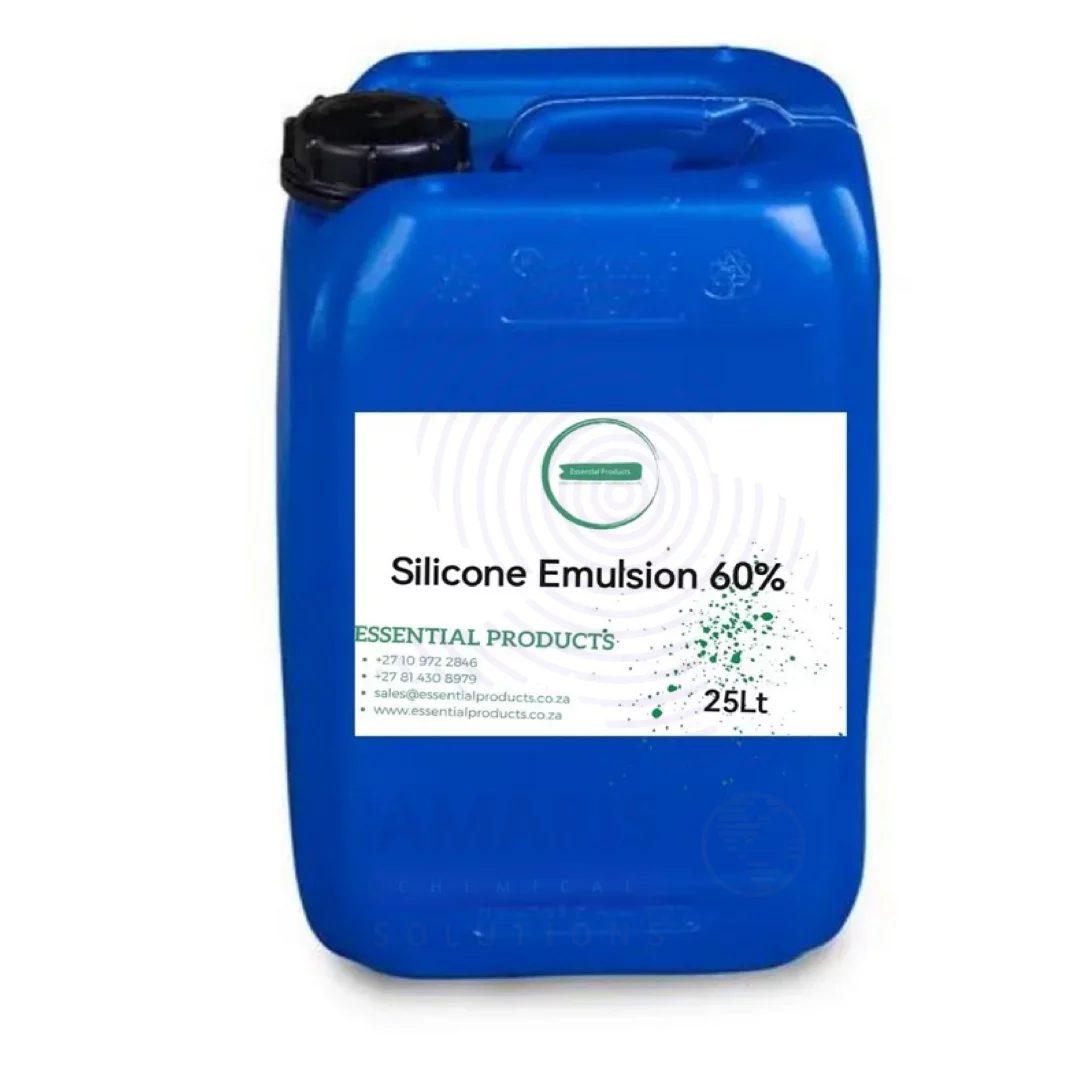
60% Silicone Emulsion Supplier in Kenya | Olinc Chemical Suppliers
Are you looking for a reliable supplier of 60% Silicone Emulsion in Nairobi, Kenya? Olinc Chemical Suppliers supplies industrial chemicals for manufacturing, surface treatment, textile processing, cleaning formulations and other commercial applications. Contact us to enquire about silicone emulsion for your production requirements, including current availability, packaging and pricing.
Silicone Emulsion 60% is a silicone-based formulation in which silicone material is dispersed in a liquid medium, commonly water, with the help of emulsifying agents. Depending on its formulation, it can provide useful properties such as lubrication, surface conditioning, water repellency, gloss enhancement, release performance and reduced friction.
The product is used in various industrial and commercial formulations, but not every silicone emulsion is suitable for every application. The correct choice depends on the silicone chemistry, emulsion type, stability, compatibility and performance requirements.
At Olinc Chemical Suppliers, we welcome enquiries from manufacturers, formulators, textile processors, cleaning-product producers and other businesses seeking silicone emulsion in Nairobi and other parts of Kenya, Uganda and Tanzania.
What Is 60% Silicone Emulsion?
Silicone emulsion is a dispersion of silicone material in a liquid carrier, often water. It is commonly used where the benefits of silicone are needed in a form that can be incorporated into an aqueous formulation or applied to a compatible surface.
The term 60% silicone emulsion generally indicates a product with approximately 60% silicone-related content or active material, but the exact basis of the percentage must be confirmed from the manufacturer’s technical data sheet. It may refer to silicone solids, active silicone or another defined measure.
Silicone-based materials are valued for their ability to provide lubrication, surface slip, water repellency, gloss, conditioning and release properties. Depending on its composition, a silicone emulsion may be used as an additive, surface treatment or component of a finished formulation.
Before purchasing, confirm whether the product is non-ionic, anionic, cationic or another emulsion type, where relevant. This matters because compatibility with other ingredients and the intended application can vary significantly.
60% Silicone Emulsion Product Specifications
| Property | Description |
|---|---|
| Product name | Silicone Emulsion 60% |
| Product category | Silicone-based industrial formulation |
| General form | Liquid emulsion |
| Silicone content | Approximately 60%, subject to the manufacturer’s specification |
| Carrier | Often water-based; confirm the product specification |
| Appearance | Commonly a milky or translucent liquid, depending on formulation |
| Solubility | Typically dispersible in water, but dilution behaviour varies |
| Ionic character | Must be confirmed with the supplier |
| Main functions | May include lubrication, conditioning, gloss, release and surface treatment |
| Applications | Depend on the exact formulation and technical grade |
| Packaging | Confirm available sizes and containers with Olinc Chemical Suppliers |
| Storage | Follow the manufacturer’s label and Safety Data Sheet (SDS) |
These are general product-category descriptions, not a verified specification for a particular manufacturer’s product. Request the Technical Data Sheet (TDS) and Safety Data Sheet (SDS) to confirm the actual product properties.
Common Names and Search Terms for Silicone Emulsion
Customers may use different terms when searching for this product. Relevant names and related search phrases include:
- Silicone Emulsion 60%
- 60% Silicone Emulsion
- Silicone Oil Emulsion
- Silicone Emulsion Concentrate
- Silicone-Based Emulsion
- Water-Based Silicone Emulsion
- Silicone Emulsion for Industrial Use
- Silicone Emulsion for Surface Treatment
- Silicone Emulsion for Textile Processing
- Silicone Emulsion for Polish Formulations
These names are not always interchangeable. Silicone oil emulsion, silicone rubber emulsion, silicone defoamer and silicone textile softener can have different compositions and intended functions. Confirm the exact grade before ordering.
Uses of 60% Silicone Emulsion
The applications of silicone emulsion depend on the manufacturer’s formulation. The following are common application areas for suitable silicone emulsions.
Textile Processing and Fabric Finishing
Certain silicone emulsions are used in textile finishing to improve the feel and surface properties of fabrics. Depending on the formulation, they may help produce a softer, smoother or silkier finish.
Potential applications include:
- Fabric finishing and conditioning.
- Improving surface slip and handle.
- Selected textile lubrication processes.
- Finishing treatments for compatible textile materials.
Textile processors should confirm whether the product is designed for their fibre type, application method and finishing requirements. Not every general-purpose silicone emulsion is suitable for textile finishing.
Polishes and Surface-Care Products
Some silicone emulsions are incorporated into polish and surface-care formulations because they can provide gloss, lubrication and surface conditioning.
Potential applications include:
- Selected furniture polish formulations.
- Surface-care products.
- Certain automotive-care formulations.
- Plastic and vinyl surface treatments, where compatible.
The finished product’s appearance, durability, spreadability and stability depend on the silicone type and the other ingredients in the formulation.
For automotive or furniture applications, confirm that the emulsion is specifically designed for the intended surface. A product suitable for one material may leave unwanted residue or interfere with later coating or bonding on another.
Industrial Lubrication
Suitable silicone emulsions can be used in certain processes where reduced friction or improved surface slip is required.
Depending on the formulation, they may be applied to compatible surfaces or incorporated into industrial products that require lubricating or conditioning properties.
Before use, assess temperature conditions, material compatibility, drying behaviour and whether the application requires a silicone emulsion or a different type of silicone lubricant.
Mould Release and Manufacturing
Some silicone-based emulsions are used as release agents to help reduce adhesion between a product and a mould or manufacturing surface.
Potential uses may include selected manufacturing and moulding operations where the product has been specifically designed and tested for release performance.
The appropriate grade depends on the mould material, substrate, production process and finish required. Silicone contamination can affect subsequent painting, printing, coating or bonding, so the product should be tested before large-scale application.
Construction and Surface Treatment
Certain specialised silicone emulsions are used in construction-related surface treatments and formulations. Depending on their chemistry, silicone products may contribute to water repellency or surface protection.
However, not every silicone emulsion is a suitable masonry water repellent or construction additive. For concrete, mortar, masonry and other building materials, select a product whose manufacturer explicitly identifies the intended application.
Cleaning and Detergent Formulations
Some silicone emulsions are used as ingredients in selected cleaning, finishing and surface-care formulations. Their function may include gloss enhancement, surface conditioning or other effects specific to the formulation.
They should not automatically be treated as defoamers. If the objective is foam control, confirm that the product is a silicone antifoam or defoamer designed for the process.
Paper, Packaging and Other Industrial Processes
Certain silicone formulations are used in paper processing, release coatings and specialised industrial applications where controlled release or surface properties are required.
The suitability of 60% silicone emulsion for these applications depends on its chemistry and the requirements of the production process. Buyers should obtain the manufacturer’s application guidance before selecting the product.
Benefits of Silicone Emulsion
When the formulation is suitable for the intended application, silicone emulsion may offer several advantages.
Surface lubrication: Certain formulations improve slip and reduce friction between compatible surfaces.
Surface conditioning: Some grades improve the feel or handling characteristics of fabrics and other materials.
Gloss enhancement: Selected silicone emulsions can contribute to shine in polish and surface-care products.
Potential water repellency: Specialised grades can help reduce wetting or water absorption on appropriate surfaces.
Release performance: Suitable products can reduce adhesion in selected moulding and manufacturing operations.
Water-based formulation options: Many silicone emulsions can be incorporated into compatible aqueous systems, subject to the manufacturer’s instructions.
These benefits depend on the product’s chemistry, concentration, application method and compatibility with other materials.
How to Choose the Right Silicone Emulsion 60%
Before purchasing silicone emulsion, consider the following factors.
Silicone Type and Composition
Determine whether the product is based on silicone oil, modified silicone or another silicone material. Different formulations provide different performance characteristics.
Confirmed 60% Content
Ask what the stated 60% represents. The manufacturer’s specification should clarify the active content or solids measurement and any relevant testing method.
Emulsion Type
The ionic character and emulsifying system may affect compatibility with other ingredients. This is particularly important when blending silicone emulsion into detergents, textile formulations, polishes or other water-based products.
Intended Application
Explain whether you require the product for textiles, polish, mould release, lubrication, construction or another purpose. The intended use helps determine which grade should be evaluated.
Compatibility and Stability
If adding the product to an existing formulation, conduct a small compatibility test before production. Check for separation, coagulation, viscosity changes and other signs of instability.
Technical Documentation
Request the manufacturer’s TDS and SDS. Where appropriate, also request a Certificate of Analysis (COA) for the specific batch.
Packaging and Storage
Packaging availability depends on the supplier, product and order quantity. Contact Olinc Chemical Suppliers to confirm the current container sizes and quantities available for Silicone Emulsion 60%.
For storage:
- Follow the manufacturer’s recommended temperature range.
- Keep the container tightly closed and properly labelled.
- Protect the product from contamination.
- Avoid freezing or excessive heat if prohibited by the product specification.
- Follow instructions for mixing, dilution and agitation.
- Check the recommended shelf life and conditions before use.
Do not assume that every silicone emulsion can be stored or diluted in the same way. Follow the supplier’s instructions for the specific formulation.
Safety and Handling
Silicone emulsions are not all classified the same way. Their hazards depend on the silicone material, carrier, emulsifiers, preservatives and other ingredients.
Before handling:
- Read the product label and SDS.
- Use suitable gloves and eye protection as indicated by the SDS.
- Avoid splashes and unnecessary contact with skin and eyes.
- Use appropriate ventilation where required.
- Clean spills according to the manufacturer’s guidance.
- Keep containers away from incompatible materials.
- Dispose of unused product and containers according to applicable local requirements.
Even when an emulsion is water-based, it should not automatically be assumed harmless or suitable for food-contact, cosmetic or personal-care applications.
Frequently Asked Questions About 60% Silicone Emulsion
What is 60% silicone emulsion used for?
Depending on its formulation, it may be used in textile finishing, surface-care products, selected industrial lubrication processes, mould release and specialised surface treatments.
What does 60% mean in silicone emulsion?
It generally refers to a stated silicone content or concentration, but the exact basis varies by manufacturer. Confirm whether the figure represents active silicone, solids or another defined measure.
Is silicone emulsion water-based?
Many silicone emulsions use water as the continuous phase, but the exact formulation must be confirmed from the product specification.
Can silicone emulsion be diluted with water?
Some products can be diluted with water, but dilution suitability and the correct procedure depend on the emulsion’s chemistry. Follow the manufacturer’s instructions and test compatibility first.
Can silicone emulsion be used in textile manufacturing?
Certain grades are formulated for textile finishing and conditioning. Confirm that the specific product is suitable for your fabric type and production process.
Is silicone emulsion the same as silicone oil?
No. Silicone oil is a silicone-based material, while silicone emulsion is a dispersion of silicone material in a liquid medium. Their handling, application and performance can differ.
Is silicone emulsion 60% the same as silicone defoamer?
Not necessarily. A silicone defoamer is designed specifically to control foam. A general-purpose silicone emulsion may not provide the required defoaming performance.
What packaging sizes are available?
Packaging depends on current supply arrangements. Contact Olinc Chemical Suppliers to confirm available sizes and quantities.
How can I obtain a price for silicone emulsion in Kenya?
Contact Olinc Chemical Suppliers with the required quantity, intended application and delivery location to request a current quotation.
Can Olinc Chemical Suppliers handle enquiries from Uganda and Tanzania?
Yes. Buyers can contact Olinc to discuss their requirements and confirm availability, delivery arrangements and applicable supply terms for their location.
Why Enquire from Olinc Chemical Suppliers?
Olinc Chemical Suppliers serves businesses looking for industrial chemicals and formulation ingredients in Nairobi, Kenya. We welcome enquiries from manufacturers, processors, maintenance teams and other commercial customers seeking a suitable chemical product for their specific requirements.
When enquiring about silicone emulsion, provide the product name, required concentration, application and quantity. This helps establish whether the available product specification matches your needs.
Request a Quote for 60% Silicone Emulsion
Looking for a 60% Silicone Emulsion supplier in Nairobi, Kenya? Contact Olinc Chemical Suppliers to enquire about current availability, technical specifications, packaging and pricing.
Olinc Chemical Suppliers
Location: Avon Business Center, Enterprise Road, Nairobi, Kenya
Phone/WhatsApp: 0793062849
Email: sales@olincinchemicals.com
Website: www.olincinchemicalsl.com
Contact us with your requirements for silicone emulsion and ask about supply enquiries across Kenya, Uganda and Tanzania.

Reviews
There are no reviews yet.