
Acetone Supplier in Kenya | Industrial-Grade Acetone – Olinc Chemical Suppliers
Are you looking for a reliable Acetone supplier in Nairobi, Kenya, for manufacturing, industrial processing, paint production, laboratory work or commercial cleaning applications? Olinc Chemical Suppliers provides product enquiries for Acetone, a widely used organic solvent valued for its excellent dissolving ability, rapid evaporation and compatibility with many industrial formulations.
Acetone is one of the most commonly used solvents in chemical manufacturing and processing. It is particularly useful in applications where manufacturers need a solvent that can dissolve a wide range of organic materials, remove certain residues, assist in surface preparation and evaporate relatively quickly without leaving significant solvent residue when used appropriately.
Also known as Dimethyl Ketone, 2-Propanone or Propanone, Acetone is used in the production of paints, coatings, adhesives, cleaning formulations, printing materials, plastics, pharmaceuticals and cosmetics. It is also used in laboratories and various industrial maintenance operations.
Whether you are a manufacturer, distributor, laboratory, paint producer or industrial user, understanding the grade, purity, specifications and intended application of Acetone is important when selecting the right product.
At Olinc Chemical Suppliers, we welcome enquiries from businesses in Nairobi and other parts of Kenya, as well as customers in Uganda and Tanzania seeking information about Acetone supply.
What Is Acetone?
Acetone is a colourless, volatile and highly flammable organic liquid belonging to the ketone family of organic compounds. It has a characteristic sweetish, pungent odour and is widely recognised for its ability to dissolve many organic substances.
It is a simple ketone with a carbonyl group located between two methyl groups. Its chemical structure gives it useful solvent properties, making it suitable for numerous industrial and commercial applications.
Acetone evaporates quickly at ordinary room temperatures. This characteristic makes it useful in manufacturing processes where a solvent needs to evaporate after performing its function.
Another important property is its miscibility with water. Acetone mixes completely with water and is also compatible with many common organic solvents.
Chemical identity of Acetone
| Property | Description |
|---|---|
| Product name | Acetone |
| Chemical name | Propanone |
| Other names | Dimethyl Ketone, 2-Propanone |
| Chemical formula | C₃H₆O |
| Structural formula | CH₃COCH₃ |
| CAS number | 67-64-1 |
| EC number | 200-662-2 |
| Molecular weight | 58.08 g/mol |
| Chemical family | Ketones |
| Physical state | Liquid |
| Appearance | Clear, colourless liquid |
| Odour | Characteristic sweetish, pungent odour |
| Water solubility | Completely miscible |
| Main function | Organic solvent |
These identifiers help customers confirm that they are enquiring about the correct chemical rather than another solvent with a similar application.
Other Names and Synonyms of Acetone
Acetone is sold and referenced under several chemical and commercial names. Customers searching for the product may use different names depending on their industry, supplier or technical documentation.
Common alternative names include:
- Acetone
- Propanone
- 2-Propanone
- Propan-2-one
- Dimethyl Ketone
- Methyl Ketone
- Beta-Ketopropane
- Pyroacetic Ether
The most widely recognised alternatives are Dimethyl Ketone, Propanone and 2-Propanone.
When requesting quotations or technical documentation, customers should use the CAS number 67-64-1 to help confirm the chemical identity.
Physical and Chemical Properties of Acetone
Acetone’s physical and chemical characteristics explain why it is useful in manufacturing, cleaning and solvent-based formulations.
Important physical properties
Appearance: Acetone is normally supplied as a clear, colourless liquid. A change in appearance may indicate contamination or an issue with product quality.
Volatility: It evaporates readily at room temperature. This makes it suitable for applications requiring relatively fast drying.
Solubility: Acetone is completely miscible with water and mixes with many organic solvents, making it useful in different solvent systems.
Boiling point: Its boiling point is approximately 56.1°C at normal atmospheric pressure. This relatively low boiling point contributes to its rapid evaporation.
Density: Its density is approximately 0.79 g/cm³ at room temperature, meaning it is lighter than water.
Flash point: Acetone has a very low flash point, approximately -20°C, making it highly flammable even under ordinary environmental conditions.
Solvent strength: It dissolves many organic substances, including certain resins, oils, greases, coatings and adhesives. However, compatibility depends on the exact material.
Typical technical reference values
| Parameter | Typical value |
|---|---|
| Boiling point | Approximately 56.1°C |
| Density | Approximately 0.79 g/cm³ |
| Flash point | Approximately -20°C |
| Melting point | Approximately -94.7°C |
| Molecular weight | 58.08 g/mol |
| Water solubility | Completely miscible |
| Vapour pressure | Relatively high at room temperature |
These are general reference values, not a guaranteed product specification. Actual specifications should be confirmed against the supplier’s Technical Data Sheet (TDS) and Certificate of Analysis (COA).
Main Industrial and Commercial Uses of Acetone
Acetone is used in a wide range of industries because of its ability to dissolve many organic materials and evaporate relatively quickly.
Paints, coatings and paint manufacturing
Acetone is used as a solvent in selected paint, coating and finishing applications. It can help dissolve or reduce the viscosity of compatible resins and other formulation ingredients.
Applications include:
- Selected industrial paint formulations.
- Coating and finishing processes.
- Cleaning of compatible application equipment.
- Removal of certain uncured paint and coating residues.
- Preparation and cleaning of suitable surfaces before coating.
Manufacturers must check compatibility before using Acetone in a particular paint system. It is not suitable for every paint or coating formulation, and excessive solvent use may affect drying, film formation and final coating performance.
Adhesives and glue manufacturing
Acetone is used in certain adhesive formulations and manufacturing processes as a solvent for compatible polymeric materials.
It may assist with:
- Dissolving selected adhesive resins.
- Preparing solvent-based adhesive formulations.
- Cleaning suitable tools and equipment.
- Removing certain adhesive residues.
- Supporting manufacturing processes involving compatible polymers.
The suitability of Acetone depends on the adhesive chemistry and the materials being bonded.
Industrial cleaning and degreasing
Acetone is used for selected industrial cleaning tasks because it can dissolve certain oils, grease, resins, adhesives and organic residues.
Possible applications include:
- Cleaning compatible metal components.
- Removing certain oil and grease deposits.
- Cleaning selected manufacturing equipment.
- Removing certain adhesive residues.
- Cleaning suitable tools and production surfaces.
It should only be used on materials that are compatible with Acetone. It can damage or dissolve many plastics, rubber materials, painted surfaces and protective finishes.
Pharmaceutical manufacturing
Acetone is used as a solvent and processing aid in certain pharmaceutical manufacturing operations.
Depending on the applicable manufacturing process, it may be used in:
- Chemical synthesis.
- Extraction and purification processes.
- Processing of pharmaceutical ingredients.
- Laboratory and analytical procedures.
- Cleaning of compatible equipment.
Pharmaceutical applications require the appropriate documented grade and compliance with the relevant quality standards. Industrial-grade Acetone should not automatically be used in pharmaceutical production.
Cosmetics and personal-care manufacturing
Acetone has applications in certain cosmetic and personal-care products, including nail polish removers and selected solvent-based formulations.
It is particularly known for its ability to dissolve some nail coatings and remove nail polish.
Manufacturers producing cosmetic products should select Acetone that meets the relevant quality, purity and regulatory requirements. Industrial-grade solvent should not be assumed suitable for cosmetic or direct consumer use.
Printing and packaging industries
Acetone may be used in selected printing and packaging operations as a solvent or cleaning agent.
Applications include:
- Cleaning compatible printing equipment.
- Removing certain ink and resin residues.
- Processing selected solvent-based inks.
- Cleaning suitable manufacturing components.
Its use must be assessed against the equipment materials, ink chemistry and workplace safety requirements.
Plastics, rubber and polymer processing
Acetone is used in certain polymer-related processes because it can dissolve or affect particular polymers and resins.
Possible uses include:
- Processing compatible polymer materials.
- Cleaning selected manufacturing equipment.
- Preparing certain resin solutions.
- Laboratory testing and polymer research.
Acetone is not compatible with every plastic or rubber. Manufacturers should test material compatibility before using it in production.
Laboratory and research applications
Acetone is widely used in laboratories as a solvent, cleaning agent and processing chemical.
Depending on the required grade, applications include:
- Analytical sample preparation.
- Cleaning laboratory glassware.
- Solvent extraction procedures.
- Chemical synthesis.
- Research and development.
- Instrument and equipment cleaning where permitted.
Laboratories should select the appropriate analytical or reagent grade where purity and traceability are important.
Automotive and engineering applications
Acetone may be used in selected engineering and maintenance operations to remove certain organic residues and clean compatible components.
Possible uses include:
- Cleaning selected metal parts.
- Removing certain adhesive residues.
- Cleaning compatible tools.
- Surface preparation for approved processes.
It should not be used indiscriminately on vehicle paint, plastics, rubber seals or other sensitive components.
How Does Acetone Work as a Solvent?
Acetone works by interacting with and dissolving compatible substances at the molecular level.
Its carbonyl group gives it polarity, allowing it to interact with a variety of compounds. This makes it effective at dissolving many organic materials, including certain resins, oils, adhesives and coatings.
When Acetone is applied to a compatible material, it can:
- Wet the surface or material.
- Interact with the substances that can dissolve in it.
- Help loosen or dissolve compatible residues.
- Form a solution containing the dissolved material.
- Evaporate relatively quickly, leaving the dissolved material behind or allowing it to be removed during the process.
The speed of evaporation makes Acetone useful in applications where manufacturers want to minimise drying time. However, evaporation also creates flammable vapours, which must be controlled through proper ventilation and ignition prevention.
Different Grades of Acetone
Not all Acetone is manufactured or supplied for the same purpose. Different grades are designed to meet different purity, quality and documentation requirements.
Customers should select their grade based on the intended application rather than relying on the product name alone.
Industrial-grade Acetone
Industrial-grade Acetone is commonly used in manufacturing, cleaning, paint and coating operations, adhesives and other industrial processes.
Typical applications include:
- Industrial solvent applications.
- Paint and coating production.
- Cleaning compatible equipment.
- Adhesive manufacturing.
- Selected polymer processing.
The exact purity and impurity limits depend on the supplier’s specification.
Technical-grade Acetone
Technical-grade Acetone is intended for general technical and commercial applications where the required specifications are appropriate for the process.
It may be used in selected industrial cleaning, maintenance and manufacturing operations.
Laboratory or analytical-grade Acetone
Laboratory-grade and analytical-grade Acetone are manufactured to more specific purity and impurity requirements.
They may be required for:
- Laboratory testing.
- Analytical procedures.
- Research and development.
- Sample preparation.
- Chemical analysis.
The required grade depends on the analytical method and the level of contamination that can be tolerated.
Pharmaceutical-grade Acetone
Pharmaceutical-grade Acetone is subject to additional quality and documentation requirements for relevant pharmaceutical manufacturing processes.
Customers should confirm applicable pharmacopoeial specifications, impurity limits and supporting documentation before purchasing.
Important: Industrial, technical, laboratory, cosmetic and pharmaceutical grades are not automatically interchangeable. Always confirm the required grade, specification and intended use before ordering.
Typical Acetone Specifications
The specification of Acetone can vary depending on its grade, manufacturer and intended application.
Customers purchasing Acetone should consider the following parameters:
| Specification | What it tells the buyer |
|---|---|
| Assay / purity | Percentage of Acetone in the product |
| Appearance | Whether the liquid is clear and colourless |
| Water content | Amount of moisture present |
| Acidity | Level of acidic impurities |
| Non-volatile matter | Residue remaining after evaporation |
| Distillation range | Temperature range over which the product distils |
| Colour | Indicates whether the product meets the required appearance standard |
| Impurity profile | Presence of other chemical substances |
For high-purity applications, the buyer should request a current COA and TDS. These documents help confirm the actual product specifications instead of relying on generic industry values.
Acetone Packaging and Supply Considerations
Acetone is a volatile, highly flammable liquid. Its packaging must be compatible with the product and suitable for the applicable dangerous-goods transport requirements.
Depending on the supplier and order quantity, Acetone is commonly encountered in:
- Small approved chemical containers.
- 20-litre or 25-litre containers.
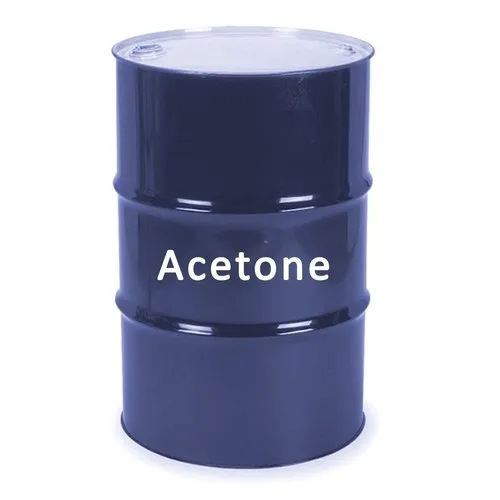
- Metal or compatible plastic drums.
- Larger industrial drums.
- Approved bulk liquid packaging for substantial industrial requirements.
The exact available packaging, container material and order quantity should be confirmed before placing an order.
Customers should also consider:
- Whether they need a small quantity for laboratory or maintenance use.
- Whether they require drums for regular manufacturing.
- Whether the packaging is suitable for flammable liquids.
- Whether the container is properly sealed and labelled.
- Whether the supplier can provide the relevant safety documentation.
Do not transfer Acetone into ordinary beverage bottles or unapproved containers.
Storage Requirements for Acetone
Proper storage is essential because Acetone evaporates easily and can form flammable vapour-air mixtures.
Recommended storage considerations include:
Store in a cool location: Keep Acetone away from excessive heat and direct sunlight.
Keep containers tightly closed: This helps reduce evaporation and limits the release of flammable vapours.
Use suitable storage areas: Store in a designated, well-ventilated chemical storage area designed for flammable liquids.
Keep away from ignition sources: Avoid flames, sparks, smoking, hot surfaces and equipment that may generate ignition.
Separate incompatible materials: Keep Acetone away from strong oxidising agents and other incompatible chemicals.
Use suitable containers: Containers should be compatible with Acetone and approved for flammable-liquid storage.
Control spills: Storage areas should have appropriate spill containment and access to suitable emergency equipment.
Acetone should be stored and handled in accordance with its current Safety Data Sheet (SDS), workplace procedures and applicable fire-safety requirements.
Safety Precautions When Handling Acetone
Acetone is highly flammable. Its vapours can travel and ignite when they encounter an ignition source. Safe handling is therefore essential in warehouses, factories, laboratories and workshops.
Personal protective equipment
Depending on the task and exposure assessment, appropriate protective equipment may include:
- Chemical-resistant gloves selected for Acetone exposure.
- Chemical splash goggles.
- Suitable protective clothing.
- Appropriate footwear.
- Respiratory protection where required by a competent risk assessment.
Not all glove materials provide equal protection. Select gloves using the manufacturer’s chemical-resistance data and the current SDS.
Ventilation
Use Acetone in a well-ventilated area or suitable local exhaust ventilation system.
Avoid breathing vapours. Do not use it in confined or poorly ventilated spaces without appropriate controls.
Fire prevention
- Keep Acetone away from flames, sparks and hot surfaces.
- Do not smoke near Acetone storage or handling areas.
- Use appropriate equipment for flammable-liquid environments.
- Follow approved procedures for bonding and grounding during bulk liquid transfer where required.
- Keep suitable fire-fighting equipment accessible.
First-aid considerations
Eye contact: Immediately flush the eyes cautiously with clean water for several minutes. Remove contact lenses if easy to do and continue rinsing. Obtain medical attention.
Skin contact: Remove contaminated clothing and wash the affected skin thoroughly with water. Seek medical advice if irritation or other symptoms develop.
Inhalation: Move the affected person to fresh air without exposing rescuers to vapour. Seek urgent medical assistance if breathing difficulties, dizziness, confusion or other significant symptoms occur.
Ingestion: Seek immediate medical or poison-centre advice. Do not induce vomiting unless instructed by a medical professional.
Always consult the product’s SDS for complete first-aid, fire-fighting and spill-response procedures.
Chemical Compatibility and Incompatibilities
Although Acetone is compatible with many solvents and materials, it can react dangerously with certain substances or damage certain surfaces.
Important compatibility considerations include:
- Strong oxidising agents: Avoid contact because hazardous reactions may occur.
- Certain acid mixtures: Some mixtures involving strong acids may create dangerous reaction conditions.
- Hydrogen peroxide: Acetone should not be casually mixed with hydrogen peroxide because hazardous reaction products can form under certain conditions.
- Certain plastics and rubber: Acetone can dissolve, soften or damage some polymer materials.
- Painted surfaces and coatings: It may remove or damage finishes.
- Heat and ignition sources: Vapour ignition can cause fire or flash fire.
Acetone should not be mixed with other chemicals unless the intended process has been professionally assessed and approved. <Cite refs=
Acetone Transportation and Hazard Classification
Acetone is classified as a flammable liquid for transportation.
Its commonly referenced dangerous-goods transport identification is:
| Transport detail | Classification |
|---|---|
| UN number | UN 1090 |
| Proper shipping name | Acetone |
| Transport hazard class | Class 3 – Flammable Liquid |
| Packing group | II |
| Hazard label | Flammable Liquid |
Transport classification and packaging requirements must be confirmed against the current SDS and the applicable transport regulations.
Factors to Consider When Buying Acetone in Kenya
Before purchasing Acetone, buyers should establish whether the product meets their intended manufacturing or processing requirements.
Consider the following:
1. Intended application
Identify whether you need Acetone for paint production, adhesive manufacturing, industrial cleaning, laboratory work, cosmetics or another application.
2. Required grade
Choose the appropriate industrial, technical, laboratory or pharmaceutical grade. Do not assume that all Acetone products meet the same quality standards.
3. Purity requirements
Check the required assay and impurity limits. A high-purity product may be necessary for certain applications, while other processes may have different requirements.
4. Technical documentation
Ask for the TDS and SDS. A COA may also be required to confirm the specification of a particular batch.
5. Packaging
Confirm whether you need smaller containers, drums or another approved packaging format.
6. Quantity
Provide the quantity required so that the supplier can advise on the appropriate packaging and supply arrangements.
7. Storage and transportation
Ensure that your workplace has suitable flammable-liquid storage facilities and that transport is arranged in accordance with dangerous-goods requirements.
Why Enquire About Acetone from Olinc Chemical Suppliers?
Olinc Chemical Suppliers serves customers seeking industrial and commercial chemical products in Nairobi, Kenya.
We welcome enquiries from:
- Paint and coating manufacturers.
- Adhesive and glue manufacturers.
- Chemical processing companies.
- Industrial cleaning businesses.
- Laboratories and research facilities.
- Printing and packaging businesses.
- Engineering and maintenance companies.
- Other commercial and manufacturing organisations.
When enquiring about Acetone, provide your required grade, quantity, packaging preference and intended application. This helps us respond with more relevant product and supply information.
Our goal is to help customers identify the appropriate chemical product for their requirements and obtain the technical information needed to make an informed purchasing decision.
Acetone Supplier in Nairobi, Kenya – Contact Olinc Chemical Suppliers
Are you searching for an Acetone supplier in Nairobi or elsewhere in Kenya?
Contact Olinc Chemical Suppliers for Acetone product enquiries, technical specifications, packaging information and supply arrangements.
We welcome enquiries from businesses in Nairobi, Mombasa, Thika, Nakuru, Eldoret, Kisumu and other parts of Kenya. Customers from Uganda and Tanzania are also welcome to enquire about supply requirements.
Contact Details
- Company: Olinc Chemical Suppliers
- Location: Enterprise Road, Avon Business Center, Nairobi, Kenya
- Phone / WhatsApp: 0793062849
- Alternative Phone: 0743657810
- Email: sales@olincinchemicals.com
- Website: www.olincchemicalsl.com
When contacting us, please specify:
- Product: Acetone
- Required grade or purity
- Quantity required
- Preferred packaging
- Delivery location
Contact Olinc Chemical Suppliers today for information about Acetone supply in Kenya.
Frequently Asked Questions About Acetone
What is Acetone used for?
Acetone is used as an organic solvent in paint and coating manufacturing, adhesives, industrial cleaning, printing, chemical processing, laboratories, pharmaceuticals and selected cosmetic applications.
What is the chemical formula of Acetone?
The chemical formula of Acetone is C₃H₆O. Its structural formula is CH₃COCH₃.
What is another name for Acetone?
Acetone is also known as Dimethyl Ketone, Propanone, 2-Propanone and Propan-2-one.
What is the CAS number of Acetone?
The CAS number of Acetone is 67-64-1. This identifier helps distinguish it from other industrial solvents.
Is Acetone soluble in water?
Yes. Acetone is completely miscible with water, meaning the two liquids can mix in all proportions.
Does Acetone evaporate quickly?
Yes. Acetone is highly volatile and evaporates relatively quickly at room temperature. Its boiling point is approximately 56.1°C.
Is Acetone used in paint manufacturing?
Yes. Acetone is used in selected paint and coating formulations, as well as in compatible equipment-cleaning and residue-removal processes. Its suitability depends on the resin and coating system.
Can Acetone be used for industrial cleaning?
Yes. It can dissolve certain oils, grease, adhesives and organic residues. However, it should only be used on surfaces and materials that are compatible with it.
Is Acetone flammable?
Yes. Acetone is highly flammable and produces vapours that can ignite easily. It must be kept away from heat, flames, sparks and other ignition sources.
What is the difference between industrial-grade and laboratory-grade Acetone?
Industrial-grade Acetone is intended for suitable manufacturing and industrial processes. Laboratory-grade or analytical-grade Acetone is produced to meet more specific purity and impurity requirements for laboratory applications.
What packaging is Acetone supplied in?
Acetone is commonly supplied in approved small chemical containers and larger drums, depending on the supplier and order quantity. Contact Olinc Chemical Suppliers to confirm current packaging options.
What documents should I request when purchasing Acetone?
Depending on the application, customers may request a Safety Data Sheet (SDS), Technical Data Sheet (TDS) and Certificate of Analysis (COA). These documents help verify the product’s safety information and technical specifications.
Where can I buy Acetone in Nairobi, Kenya?
You can contact Olinc Chemical Suppliers, located at Enterprise Road, Avon Business Center, Nairobi, Kenya, for Acetone product enquiries, specifications, packaging information and supply arrangements.
Does Acetone have a shelf life?
Acetone is generally chemically stable when stored correctly in suitable, tightly sealed containers. However, contamination, evaporation and storage conditions can affect product quality. Always follow the manufacturer’s recommended storage conditions and shelf-life guidance.
How do I request a quotation for Acetone?
Contact Olinc Chemical Suppliers by phone, WhatsApp or email. Include your required grade, quantity, packaging preference and delivery location so that your enquiry can be assessed.
Final Enquiry
Looking for Acetone in Kenya?
Whether you require Acetone for industrial manufacturing, paint production, adhesives, cleaning or laboratory applications, contact Olinc Chemical Suppliers for product information and supply enquiries.
Olinc Chemical Suppliers – Your Chemical Supply Enquiry Partner in Nairobi, Kenya.
Call or WhatsApp 0793062849 to enquire about Acetone today.


Reviews
There are no reviews yet.