
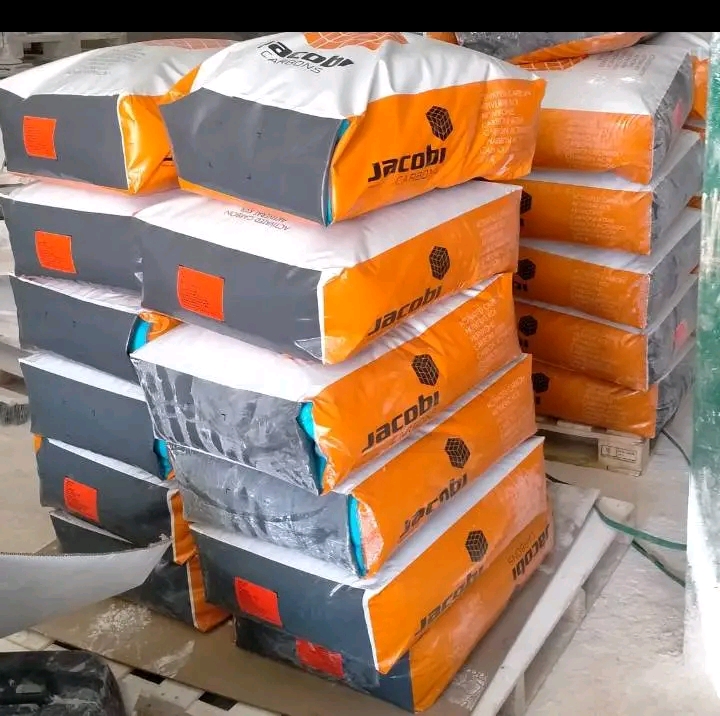
Activated Carbon Supplier in Nairobi, Kenya
Olinc Chemical Suppliers supplies activated carbon for industrial, commercial and water treatment applications in Nairobi, Kenya. Activated carbon is a highly porous carbon-based material specially processed to create a large internal surface area, enabling it to capture and retain certain dissolved substances, impurities, odours and unwanted organic compounds from liquids and gases.
Also known as activated charcoal or active carbon, this versatile material is widely used in water purification, wastewater treatment, industrial filtration, air purification, food processing and other manufacturing processes.
Activated carbon works through a process called adsorption, in which molecules attach to the surface of the carbon and the walls of its microscopic pores. This makes it useful in processes where ordinary filtration alone may not remove unwanted dissolved compounds, colour or odour.
At Olinc Chemical Suppliers, we help businesses identify the appropriate activated carbon grade according to their intended application, required particle size, adsorption performance and technical specifications.
Whether you operate a water treatment plant, manufacturing facility, filtration system or industrial processing operation, contact Olinc Chemical Suppliers to enquire about activated carbon availability, packaging and current pricing.
What Is Activated Carbon?
Activated carbon is a specially treated form of carbon produced from carbon-rich raw materials such as coconut shells, coal and wood. The material undergoes an activation process that develops an extensive network of microscopic pores.
These pores provide a large internal surface area where selected contaminants can attach during treatment.
Unlike ordinary charcoal, activated carbon is manufactured to improve its adsorption characteristics. Its effectiveness depends on factors such as the raw material, activation process, pore structure, particle size and the substance being removed.
Activated carbon is supplied in different forms for different applications. For example, granular activated carbon is commonly used in filtration beds, while powdered activated carbon can be dosed into liquids during treatment processes.
Choosing the right grade is important because different activated carbons are designed to capture different types and sizes of molecules.
3. Types of Activated Carbon Available

Granular Activated Carbon (GAC)
Granular activated carbon consists of small carbon granules designed for use in filter vessels, columns and water treatment systems. It allows liquid or gas to pass through a packed bed while selected contaminants are adsorbed.
Common applications: Water purification, borehole water treatment, wastewater treatment, industrial filtration and removal of unwanted taste, odour and organic compounds.

Powdered Activated Carbon (PAC)
Powdered activated carbon has a fine particle size and is commonly added directly to water or other liquids during treatment. Its fine particles provide rapid contact with the liquid, after which the carbon is usually separated by settling or filtration.
Common applications: Water treatment, wastewater treatment, colour removal, industrial liquid purification and selected food-processing applications where a suitable grade is used.

Pelletised Activated Carbon
Pelletised activated carbon is manufactured into small cylindrical pieces. It is often used in air and gas treatment systems because the shaped particles can provide favourable airflow and pressure-drop characteristics in properly designed equipment.
Common applications: Air purification, odour control, gas filtration, solvent recovery and industrial emission treatment.
Availability of each form should be confirmed when requesting a quotation from Olinc Chemical Suppliers.
Uses of Activated Carbon in Different Industries
Activated carbon is used across many industries because of its ability to adsorb selected unwanted compounds.

Water Treatment and Purification
Activated carbon is used to reduce free chlorine, unpleasant taste and odour, and many organic contaminants in appropriately designed treatment systems. It is used in municipal water treatment, commercial filtration, industrial process water and some drinking-water applications.

Wastewater Treatment
Selected grades help remove dissolved organic compounds, colour and certain industrial contaminants from wastewater. The grade and treatment arrangement must be matched to the wastewater composition and discharge requirements.

Air Purification and Odour Control
Activated carbon can capture certain vapours, volatile organic compounds and odour-causing substances from air streams. It is used in ventilation systems, industrial odour control and selected gas treatment applications.

Food and Beverage Processing
Suitable food-processing grades can be used for decolourisation, removal of selected unwanted flavours and purification of certain liquid ingredients. Food-contact suitability and applicable regulatory requirements must be verified before use.
.
Chemical and Pharmaceutical Manufacturing
Selected activated carbon grades are used to purify process liquids, reduce colour and remove specific impurities. Pharmaceutical applications require a grade that meets the relevant purity and quality requirements.

Gold Recovery
Specially manufactured activated carbon is used in gold-processing operations, including carbon-in-pulp and carbon-in-leach systems. Gold recovery requires suitable particle size, hardness, abrasion resistance and adsorption performance; ordinary water-treatment carbon should not automatically be substituted.
Benefits of Using Activated Carbon
Businesses use activated carbon for several reasons:
-
Reduces unwanted odours: Adsorbs many compounds responsible for unpleasant smells in water, air and industrial process streams.
-
Improves water taste: Can reduce chlorine-related taste and odour when the correct carbon and treatment conditions are used.
-
Removes selected organic contaminants: Its porous structure can capture many dissolved organic substances.
-
Supports industrial purification: Helps improve the quality of selected liquids and gases during manufacturing.
-
Provides flexible treatment options: Available in granular, powdered and pelletised forms for different equipment and processes.
-
Can be replaced or regenerated in suitable systems: Spent carbon may sometimes be regenerated, depending on its application, contamination and the economics of the process.
Activated carbon does not remove every contaminant. For example, conventional grades are not a reliable stand-alone solution for all dissolved salts, fluoride, heavy metals or microorganisms. Water treatment should be based on water analysis and the specific contaminants that need to be addressed.
Technical Specifications of Activated Carbon
When buying activated carbon, industrial customers should check the technical specifications rather than choosing by appearance or price alone.
| Specification | What it means |
|---|---|
| Iodine number | An indicator of adsorption capacity associated with microporosity, measured under specified test conditions. |
| Particle size or mesh | Determines the size of the particles and influences flow, contact time and filtration performance. |
| Surface area | Indicates the available surface for adsorption, although surface area alone does not determine performance. |
| Moisture content | The amount of water present in the supplied carbon. |
| Ash content | The inorganic residue remaining after combustion. |
| Hardness or abrasion resistance | Indicates how well the carbon withstands handling and operating conditions without breaking down. |
| Bulk or apparent density | Helps determine how much carbon is required to fill a filter vessel or other equipment. |
| pH | Indicates the acidity or alkalinity of the material under the specified test conditions. |
The iodine number is a useful quality indicator, but it should not be used as the sole measure of performance because its relationship to adsorption of other substances varies by carbon type.
Activated Carbon Packaging and Supply
Activated carbon is supplied in packaging suited to the grade, order quantity and handling requirements.
Packaging options may include:
-
Small bags for laboratory, maintenance or limited-use requirements.
-
Commercial bags for industrial and water treatment operations.
-
Larger bulk packaging for high-volume industrial consumption, where available.
Common commercial bag sizes in the market include 25 kg and 50 kg, but these should not be assumed to be available for every grade.
When contacting Olinc Chemical Suppliers, specify your required quantity, preferred bag size, delivery location and intended application so that availability and the most appropriate option can be confirmed.
How to Choose the Right Activated Carbon
Before placing an order, consider the following:
-
What are you treating? Water, wastewater, air, gas or a process liquid?
-
Which contaminants must be removed? Chlorine, organic compounds, colour, odour or a particular chemical?
-
What form does your equipment require? Granular, powdered or pelletised carbon?
-
What specifications does your process require? Iodine number, mesh size, hardness, moisture and ash content may be relevant.
-
Are there special purity requirements? Drinking water, food processing and pharmaceutical applications may require specific certifications or approvals.
-
How much do you need? State the quantity and preferred packaging.
-
How will spent carbon be handled? Depending on the contaminants adsorbed, used carbon may require controlled disposal or specialised regeneration.
Providing these details helps avoid buying a grade that is unsuitable for your process.
Why Buy Activated Carbon from Olinc Chemical Suppliers?
Olinc Chemical Suppliers serves businesses seeking industrial chemicals and treatment materials in Nairobi, Kenya.
When enquiring about activated carbon from Olinc, customers can:
-
Discuss their intended application and required grade.
-
Request current pricing and confirm available packaging.
-
Enquire about bulk quantities for commercial and industrial use.
-
Request relevant technical specifications for product evaluation.
-
Discuss delivery arrangements for Nairobi and other locations, subject to availability.
Our aim is to help buyers make informed purchasing decisions based on their process requirements rather than choosing a product solely on price.
Frequently Asked Questions About Activated Carbon
What is activated carbon used for?
Activated carbon is used for water purification, wastewater treatment, air purification, odour control, decolourisation, selected chemical purification processes and specialised gold recovery applications.
Is activated carbon the same as activated charcoal?
Yes. The terms activated carbon and activated charcoal are commonly used for the same general category of specially processed porous carbon. However, products sold under these names may differ in grade, purity, particle size and intended application.
What is the difference between powdered and granular activated carbon?
Powdered activated carbon has fine particles and is often dosed into liquids before being separated. Granular activated carbon is commonly packed into filter beds or vessels through which water or gas flows.
Can activated carbon purify borehole water?
Yes, activated carbon can be one stage in a borehole water treatment system, particularly for certain organic contaminants and chlorine-related taste or odour issues. However, borehole water should be tested first because activated carbon alone does not reliably remove dissolved salts, all metals or harmful microorganisms.
Does activated carbon remove chlorine?
Suitable activated carbon can reduce free chlorine in water. Performance depends on the grade, contact time, flow rate, water conditions and the condition of the carbon bed.
Does activated carbon remove fluoride?
Conventional activated carbon is generally not an effective stand-alone fluoride removal medium. Specialised treatment technologies or suitable alternative media may be needed.
How long does activated carbon last?
Its service life depends on the contaminant load, amount of carbon used, flow rate, contact time and operating conditions. It should be replaced or regenerated according to performance monitoring and the system manufacturer’s recommendations.
What is the difference between activated carbon and ordinary charcoal?
Ordinary charcoal has not necessarily undergone the controlled activation process used to develop the pore structure required for effective adsorption. Activated carbon is manufactured for specific adsorption applications and is supplied in grades with defined performance characteristics.
Is activated carbon available in Kenya?
Activated carbon is sold in the Kenyan industrial and water treatment market. Contact Olinc Chemical Suppliers in Nairobi to confirm current stock, available grades, packaging and prices.
Can I buy activated carbon in bulk?
Bulk orders can be discussed with Olinc Chemical Suppliers. Provide the quantity, grade, application and delivery location so that availability and quotation arrangements can be confirmed.
Can activated carbon be used in food processing?
Yes, specific grades are used in selected food and beverage processing applications. Buyers must verify food-contact suitability, purity documentation and the relevant regulatory requirements for the intended use.
Request a Quotation for Activated Carbon
Are you looking for an activated carbon supplier in Nairobi, Kenya, for water treatment, industrial filtration, wastewater treatment or another commercial application?
Olinc Chemical Suppliers welcomes your enquiry.
Contact us with the following details:
-
Product: Activated Carbon
-
Required form: Granular, powdered or pelletised, if specified
-
Intended application
-
Required quantity and packaging
-
Delivery location
We will help you establish the appropriate product requirements and confirm availability and pricing.
Olinc Chemical Suppliers Location: Enterprise Road, Avon Business Center, Nairobi, Kenya Email: sales@olincinchemicals.com Website: www.olincinchemicalsl.com Phone/WhatsApp: 0793062849
Contact Olinc Chemical Suppliers today to enquire about activated carbon for your industrial or commercial requirements.

Reviews
There are no reviews yet.