
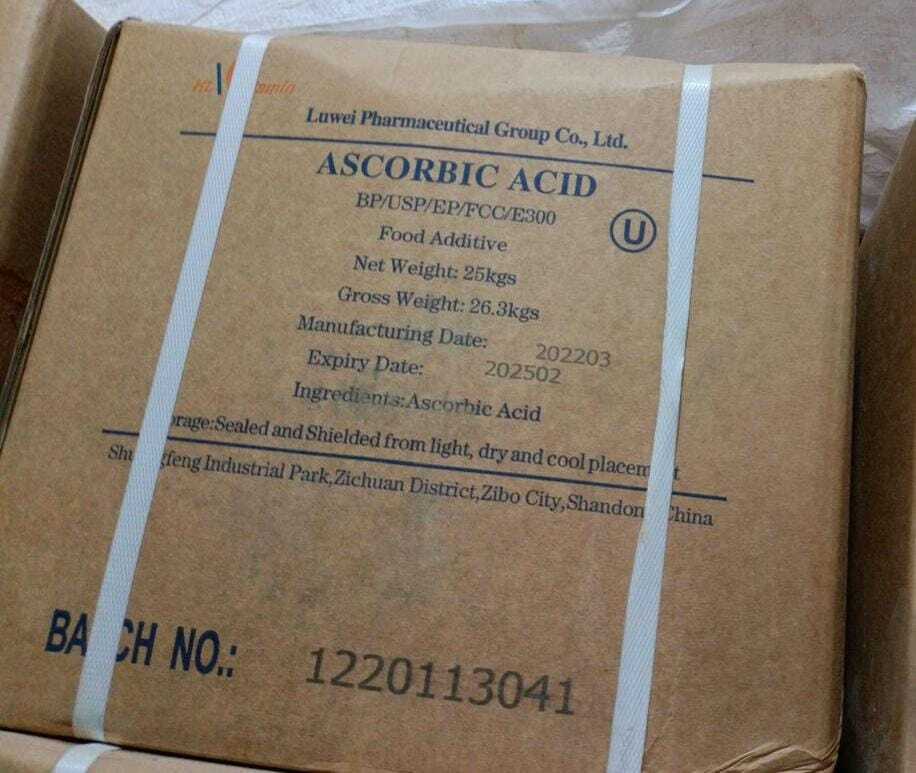
Ascorbic Acid (Vitamin C) Supplier in Kenya, Uganda & Tanzania
Welcome to Olinc Chemical Suppliers, a supplier of industrial and speciality chemicals in Nairobi, Kenya. We provide access to a range of chemical products for manufacturers, processors, laboratories and other businesses across Kenya and the wider East African region.
Are you looking for a reliable supplier of Ascorbic Acid (Vitamin C) in Nairobi, Kenya, Uganda or Tanzania? Olinc Chemical Suppliers welcomes enquiries from businesses looking for Ascorbic Acid for food processing, pharmaceutical manufacturing, cosmetics production, animal nutrition, water treatment and other approved industrial applications.
Ascorbic Acid, commonly known as Vitamin C, is a water-soluble vitamin widely valued for its antioxidant properties. It helps protect susceptible ingredients against oxidation and is used as a nutritional ingredient, food additive, formulation component and processing aid in different industries.
Whether you are a food manufacturer, beverage producer, pharmaceutical company, cosmetics manufacturer or chemical distributor, contact Olinc Chemical Suppliers for information about available grades, specifications, packaging and current prices.
What Is Ascorbic Acid?
Ascorbic Acid, also known as Vitamin C or L-Ascorbic Acid, is a naturally occurring organic compound and an essential water-soluble vitamin. It is widely used in food, beverage, pharmaceutical, cosmetic and other manufacturing processes.
It is particularly valued for its antioxidant activity. Antioxidants help slow oxidation reactions that can affect the colour, flavour, quality and stability of certain products.
In food manufacturing, Ascorbic Acid is used as an antioxidant and flour treatment agent. In beverages and food products, it can help protect ingredients from oxidation. In pharmaceutical and nutritional products, it is used as a source of Vitamin C.
Chemical Identification and Properties
| Property | Details |
|---|---|
| Product name | Ascorbic Acid |
| Common name | Vitamin C |
| Other name | L-Ascorbic Acid |
| Chemical formula | C₆H₈O₆ |
| CAS number | 50-81-7 |
| Molecular weight | 176.12 g/mol |
| Chemical classification | Organic acid; water-soluble vitamin |
| Appearance | White to almost white crystalline powder or crystals |
| Taste | Acidic |
| Solubility | Freely soluble in water |
| Food additive number | E300 |
| Chemical function | Antioxidant and nutritional ingredient |
The exact appearance, assay, particle size, moisture content and other specifications depend on the supplied grade. Buyers should confirm the relevant technical data sheet (TDS) and certificate of analysis (COA) before purchasing.
Other Names for Ascorbic Acid
When searching for Ascorbic Acid, customers may encounter several names and descriptions. These include:
- Vitamin C
- L-Ascorbic Acid
- Ascorbic Acid Powder
- Pure Vitamin C
- Food Grade Ascorbic Acid
- Pharmaceutical Grade Ascorbic Acid
- Cosmetic Grade Vitamin C
- E300
- Anti-Scorbutic Vitamin
These names are useful when searching for the product online or when discussing requirements with a chemical supplier. However, not every product sold under a Vitamin C-related name has the same formulation or grade.
For example, Sodium Ascorbate and Calcium Ascorbate are different Vitamin C compounds and should not automatically be treated as interchangeable with pure Ascorbic Acid.
Main Grades of Ascorbic Acid
Ascorbic Acid is available in different grades depending on its intended application. Selecting the right grade is important because manufacturers have different quality, purity and regulatory requirements.
Food Grade Ascorbic Acid
Food grade Ascorbic Acid is used in food and beverage manufacturing. It is commonly identified as food additive E300.
Typical applications include:
- Fruit juice and beverage production
- Soft drinks and powdered drink mixes
- Processed fruits and vegetables
- Bakery and flour treatment
- Canned and packaged food products
- Food preservation and antioxidant formulations
- Nutritional food products
Food manufacturers use it to help reduce oxidation, protect product quality and provide Vitamin C content.
Pharmaceutical Grade Ascorbic Acid
Pharmaceutical grade Ascorbic Acid is used in the manufacture of medicines, vitamin tablets, capsules, powders and nutritional preparations.
Applications include:
- Vitamin C tablets and capsules
- Multivitamin formulations
- Pharmaceutical powders
- Nutritional supplements
- Oral healthcare preparations
- Other approved pharmaceutical formulations
Pharmaceutical manufacturers should verify the applicable pharmacopoeial standard, purity, impurity limits and documentation before purchasing.
Cosmetic Grade Ascorbic Acid
Ascorbic Acid is used in selected skincare and cosmetic formulations because of its antioxidant properties.
Applications include:
- Vitamin C serums
- Facial creams and lotions
- Skin-conditioning products
- Antioxidant skincare formulations
- Selected personal care products
Formulators should consider its stability, pH requirements, packaging compatibility and sensitivity to air, light and moisture. Pure L-Ascorbic Acid is not the same as more stable Vitamin C derivatives such as Sodium Ascorbyl Phosphate or Magnesium Ascorbyl Phosphate.
Technical or Industrial Grade Ascorbic Acid
Technical grade material may be used in selected industrial processes where the required purity and specifications are suitable.
Possible applications include:
- Selected water treatment processes
- Dechlorination applications
- Industrial antioxidant formulations
- Chemical processing
- Specialised manufacturing applications
Always confirm that the grade is suitable for the intended process. Technical grade material should not be used in food, pharmaceutical or cosmetic production unless it meets the applicable requirements.
Uses and Applications of Ascorbic Acid
Ascorbic Acid is a versatile ingredient used across several industries. Its antioxidant activity, nutritional value and water solubility make it useful in many manufacturing processes.
Food and Beverage Manufacturing
One of the most common applications of Ascorbic Acid is in food and beverage processing.
It acts as an antioxidant, helping protect susceptible ingredients from oxidation. Oxidation can cause unwanted changes in colour, flavour and overall product quality.
Common applications include:
- Fruit juices
- Fruit concentrates
- Soft drinks
- Flavoured beverages
- Canned fruits
- Processed vegetables
- Packaged foods
- Food preparations and mixes
Food manufacturers may use it to help maintain product quality during processing and storage. The appropriate amount depends on the formulation, processing conditions and applicable food regulations.
Bakery and Flour Manufacturing
Ascorbic Acid is used as a flour treatment agent and dough improver in commercial baking.
It can help improve dough handling and contribute to dough strength and bread-making performance through its effects on dough proteins during mixing and fermentation.
Applications include:
- Bread production
- Commercial bakeries
- Flour milling
- Dough preparation
- Industrial baking
- Bakery premixes
It is particularly relevant to flour millers and large-scale bakeries seeking consistency in their production processes.
Pharmaceutical Manufacturing
Ascorbic Acid is an important raw material in the production of Vitamin C preparations.
It is used in:
- Vitamin C tablets
- Capsules
- Powdered supplements
- Multivitamin products
- Pharmaceutical preparations
- Nutritional formulations
Manufacturers should select material that complies with the relevant pharmaceutical quality standards and verify its documentation before use.
Cosmetics and Skincare Manufacturing
Ascorbic Acid is used in skincare formulations because it provides antioxidant activity and is involved in normal collagen synthesis in the skin.
It is found in selected:
- Vitamin C facial serums
- Face creams
- Moisturisers
- Skin-conditioning formulations
- Antioxidant skincare products
Because pure Ascorbic Acid can be sensitive to oxidation, cosmetic manufacturers must carefully manage formulation pH, exposure to air and light, packaging and product stability.
Water Treatment and Dechlorination
Ascorbic Acid can be used as a reducing agent in certain water treatment applications. It reacts with chlorine and can help neutralise residual chlorine under suitable treatment conditions.
Potential applications include:
- Dechlorination of treated water
- Selected wastewater treatment processes
- Chlorine neutralisation before certain downstream processes
- Specialised water processing
The required quantity depends on the residual chlorine concentration, water chemistry and treatment objectives. Water testing and appropriate process calculations should be carried out before use.
Animal Feed and Nutritional Products
Ascorbic Acid is used in selected animal nutrition and feed formulations as a Vitamin C source.
Potential applications include:
- Animal feed supplements
- Aquaculture feed
- Specialised nutritional premixes
- Selected veterinary nutritional preparations
The grade must meet the applicable feed-quality requirements, and the formulation should be developed according to the needs of the intended animal species.
Chemical and Industrial Processing
Ascorbic Acid is also used in selected chemical processes where a reducing agent or antioxidant is required.
Its suitability depends on the process conditions, purity requirements and compatibility with other ingredients.
How Does Ascorbic Acid Work?
Ascorbic Acid works mainly through its ability to participate in oxidation-reduction reactions.
It can donate electrons to other substances, helping prevent or slow certain oxidation reactions. This is why it is useful in food preservation, beverage manufacturing and selected industrial processes.
For example:
- In food products, it can help reduce oxidation-related changes.
- In flour treatment, it contributes to changes in dough protein behaviour that support baking performance.
- In water treatment, it can react with residual chlorine under appropriate conditions.
- In cosmetic formulations, it provides antioxidant activity but requires suitable formulation and packaging to maintain stability.
Its effectiveness depends on factors such as concentration, temperature, pH, oxygen exposure, metal ions and the nature of the formulation.
Technical Specifications of Ascorbic Acid
Buyers should understand the key specifications before purchasing Ascorbic Acid. These determine whether a particular product is suitable for the intended application.
| Specification | What the buyer should check |
|---|---|
| Assay / purity | Percentage of actual Ascorbic Acid |
| Appearance | White to almost white crystalline powder or crystals |
| Identification | Confirmation that the material is L-Ascorbic Acid |
| Solubility | Dissolution behaviour in water |
| Loss on drying | Moisture-related quality measurement |
| Specific rotation | Relevant identity and quality parameter |
| pH | Usually assessed using a defined solution concentration |
| Heavy metals / elemental impurities | Compliance with the relevant grade requirements |
| Microbiological limits | Particularly important for food and pharmaceutical uses |
| Packaging integrity | Protection against moisture and contamination |
Specifications vary by manufacturer, grade and applicable standard. Do not rely on generic figures as a guarantee of the material being supplied. Request the supplier’s current TDS and COA to confirm the actual specifications.
Packaging and Available Quantities
Ascorbic Acid is commonly supplied in sealed bags, pouches or drums designed to protect the product from moisture and contamination.
Packaging formats in the market may include:
- 25 kg bags or cartons
- Larger bulk quantities, subject to supplier availability
Actual packaging and quantities available through Olinc Chemical Suppliers should be confirmed before placing an order.
For bulk buyers, manufacturers and distributors, provide your required quantity when requesting a quotation. This helps us check the most suitable supply option.
Storage and Handling of Ascorbic Acid
Proper storage is important because Ascorbic Acid can gradually deteriorate when exposed to moisture, air, heat and light.
For best storage practice:
- Store in a cool, dry and well-ventilated area.
- Keep the product in its original, tightly sealed packaging.
- Protect it from direct sunlight and excessive heat.
- Avoid unnecessary exposure to air and moisture.
- Keep away from incompatible chemicals and strong oxidising agents.
- Use clean, dry handling equipment.
- Follow the manufacturer’s storage instructions and shelf-life guidance.
Always close opened packaging properly after use.
Safety Precautions
Ascorbic Acid is widely used in food, pharmaceutical and cosmetic manufacturing, but the powder should still be handled responsibly.
Recommended precautions include:
- Avoid breathing excessive quantities of dust.
- Avoid direct contact with the eyes.
- Wear suitable gloves and eye protection when handling bulk quantities.
- Use appropriate ventilation where dust may be generated.
- Wash hands after handling.
- Consult the product Safety Data Sheet (SDS) for detailed first-aid and handling instructions.
Although it is an organic acid, concentrated powder or solutions may irritate sensitive eyes or skin.
Difference Between Ascorbic Acid and Other Vitamin C Compounds
Customers sometimes confuse Ascorbic Acid with other Vitamin C ingredients. Although they are related, they have different chemical properties and applications.
| Product | Main difference |
|---|---|
| Ascorbic Acid | Pure L-Ascorbic Acid; acidic and water-soluble |
| Sodium Ascorbate | Sodium salt of Ascorbic Acid; generally less acidic |
| Calcium Ascorbate | Calcium salt of Ascorbic Acid; provides Vitamin C and calcium |
| Magnesium Ascorbyl Phosphate | A Vitamin C derivative used in selected cosmetic formulations |
| Sodium Ascorbyl Phosphate | A more stable Vitamin C derivative used in skincare |
If your manufacturing process specifically requires L-Ascorbic Acid, make sure you do not substitute another Vitamin C compound without checking the formulation requirements.
Industries That Use Ascorbic Acid
Olinc Chemical Suppliers welcomes enquiries from businesses in industries such as:
- Food and beverage manufacturing
- Juice and soft drink production
- Bakery and flour milling
- Pharmaceutical manufacturing
- Nutritional supplement production
- Cosmetics and skincare manufacturing
- Animal feed production
- Water treatment
- Chemical processing
- Industrial manufacturing
Whether you require Ascorbic Acid for small-scale production or bulk manufacturing, it is important to select the correct grade and packaging for your application.
Why Buy Ascorbic Acid from Olinc Chemical Suppliers?
When sourcing chemicals for manufacturing, choosing the right supplier matters. Buyers need clear product information, suitable specifications, reliable communication and quotations that match their requirements.
At Olinc Chemical Suppliers, we serve businesses looking for industrial and speciality chemicals in Nairobi and other parts of East Africa.
Why contact us?
- Nairobi-based supplier: Conveniently located along Enterprise Road, Avon Business Center, Nairobi.
- Regional enquiries: We welcome customers from Kenya, Uganda and Tanzania.
- Application guidance: Tell us how you intend to use the product so we can help establish the relevant grade and specifications to enquire about.
- Bulk-order enquiries: Share your required quantity for a quotation.
- Product information: Request available specifications, packaging details and relevant documentation.
- Direct communication: Contact our team by phone, email or WhatsApp.
We encourage buyers to confirm the required grade, specifications and availability before making an order.
Buy Ascorbic Acid in Nairobi, Kenya, Uganda and Tanzania
Are you searching online for any of the following?
- Ascorbic Acid supplier in Nairobi
- Vitamin C powder supplier in Kenya
- Food grade Ascorbic Acid in Kenya
- Ascorbic Acid price in Nairobi
- Bulk Vitamin C supplier in Kenya
- Pharmaceutical grade Ascorbic Acid
- Ascorbic Acid suppliers in Uganda
- Vitamin C powder suppliers in Tanzania
- Ascorbic Acid for food manufacturing
- Ascorbic Acid for cosmetics production
Olinc Chemical Suppliers welcomes enquiries from businesses looking for Ascorbic Acid in Nairobi, Kenya and across the East African region.
For a quotation, provide your required quantity, intended application and preferred grade. Our team can then advise on availability, packaging and pricing.
Contact Olinc Chemical Suppliers today for Ascorbic Acid enquiries.
Location: Enterprise Road, Avon Business Center, Nairobi, Kenya
Phone / WhatsApp: 0793062849
Alternative phone: 0743657810
Email: sales@olincinchemicals.com
WhatsApp: https://wa.me/254793062849
Frequently Asked Questions About Ascorbic Acid
What is Ascorbic Acid used for?
Ascorbic Acid is used in food and beverage manufacturing, pharmaceutical production, cosmetics, animal nutrition, flour treatment and selected water treatment processes. It is valued for its antioxidant properties and its role as a source of Vitamin C.
Is Ascorbic Acid the same as Vitamin C?
Yes. L-Ascorbic Acid is the chemical name for the commonly recognised form of Vitamin C. However, other Vitamin C compounds and derivatives are chemically different.
What is the chemical formula of Ascorbic Acid?
The chemical formula is C₆H₈O₆, and its CAS number is 50-81-7.
Is Ascorbic Acid soluble in water?
Yes. Ascorbic Acid is freely soluble in water, which makes it suitable for many liquid formulations, beverages and other water-based manufacturing processes.
What is food grade Ascorbic Acid used for?
Food grade Ascorbic Acid is used as an antioxidant and nutritional ingredient in products such as juices, beverages, processed fruits, vegetables, bakery products and other food preparations.
Can Ascorbic Acid be used in cosmetics?
Yes. It is used in selected Vitamin C serums, creams and skincare formulations. However, formulators must manage its stability, pH, exposure to air and light, and packaging requirements.
What is the difference between Ascorbic Acid and Sodium Ascorbate?
Ascorbic Acid is the acidic form of Vitamin C, while Sodium Ascorbate is its sodium salt and is generally less acidic. They have different formulation properties and should not automatically be substituted for each other.
How much does Ascorbic Acid cost in Kenya?
The price depends on the grade, manufacturer, specifications, packaging and order quantity. Contact Olinc Chemical Suppliers for a current quotation.
Is Ascorbic Acid available in 25 kg bags?
25 kg packaging is a common market format for bulk Ascorbic Acid. Confirm current packaging and availability with Olinc Chemical Suppliers before ordering.
Can I order Ascorbic Acid from Uganda or Tanzania?
Customers from Uganda and Tanzania are welcome to enquire. Contact Olinc Chemical Suppliers with your required quantity and delivery destination to discuss availability and delivery arrangements.
How should Ascorbic Acid be stored?
Store it in a cool, dry place, protected from moisture, direct sunlight and excessive heat. Keep the packaging tightly sealed when not in use.
What information should I provide when requesting a quotation?
For a more accurate quotation, provide:
- Required quantity
- Intended application
- Required grade
- Preferred packaging
- Delivery location
This helps establish the most appropriate product specification for your needs.
Request a Quote for Ascorbic Acid Today
Looking for a dependable source of Ascorbic Acid (Vitamin C) in Nairobi, Kenya, Uganda or Tanzania?
Contact Olinc Chemical Suppliers for current pricing, available grades, packaging options and bulk-order enquiries.
Whether you are manufacturing beverages, bakery products, supplements, cosmetics or other formulations, we welcome your enquiry.
Olinc Chemical Suppliers – Your Chemical Supply Partner in Nairobi, Kenya and East Africa.

Reviews
There are no reviews yet.