
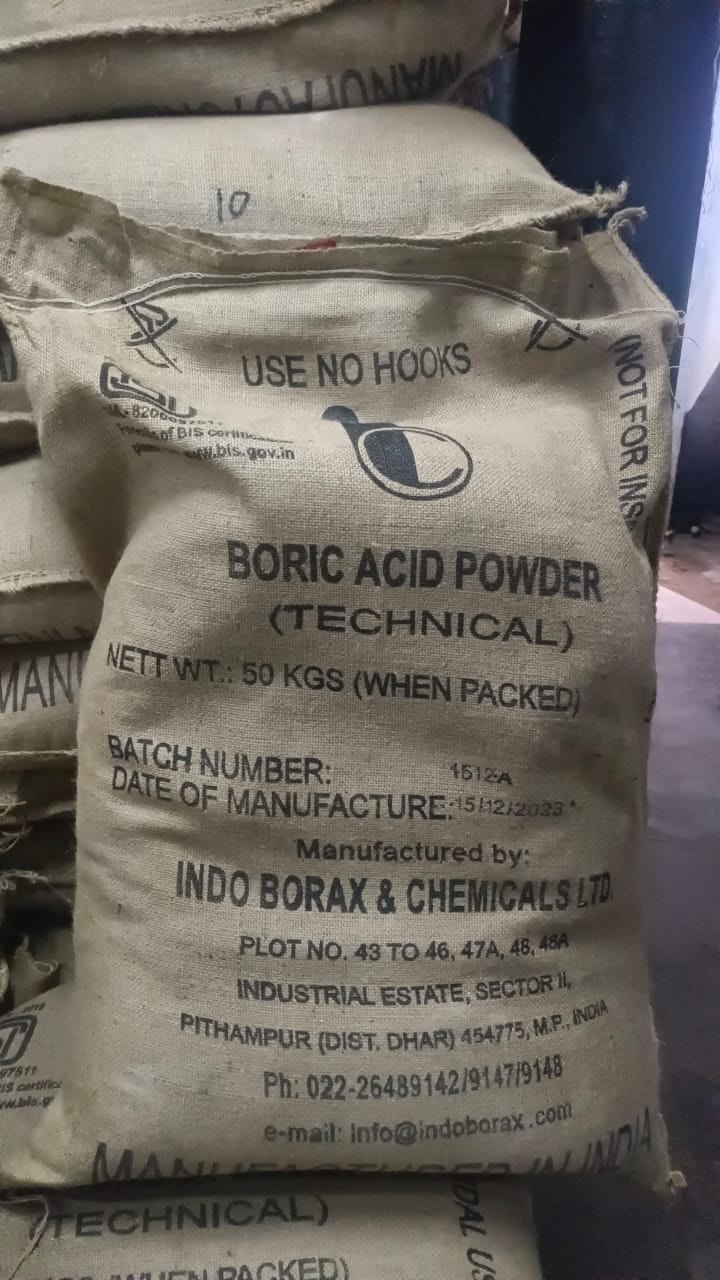
Boric Acid Supplier in Kenya | Olinc Chemical Suppliers
Looking for a dependable boric acid supplier in Kenya? Olinc Chemical Suppliers helps businesses source boric acid for industrial, manufacturing, laboratory and other suitable applications. Whether you need boric acid for glass production, ceramics, detergents, metal treatment or chemical processing, understanding the grade, purity and intended application is essential when selecting the right material.
Boric acid is a versatile inorganic chemical used across several industries because of its ability to act as a source of boron, a pH-buffering agent, a fluxing ingredient and a component in specialised formulations. It is available in different grades, and the correct specification depends on how your business intends to use it.
At Olinc Chemical Suppliers, we welcome enquiries from manufacturers, wholesalers, institutions, laboratories and industrial buyers in Nairobi and across Kenya. Contact us to enquire about boric acid specifications, packaging, availability and pricing.
What is boric acid?
Boric acid is a weak inorganic acid containing boron, oxygen and hydrogen. It is commonly supplied as a white crystalline powder or fine granular solid. It is odourless and dissolves in water, with solubility increasing as the water temperature rises.
Boric acid is valued in manufacturing because it provides a convenient source of boron and boron oxide. It is used in glass and fibreglass production, ceramic glazes, enamels, metal treatment, specialised chemical formulations, agricultural micronutrient products and certain pest-control formulations.
In glass manufacturing, boric acid helps modify the melting and working characteristics of glass and contributes to the properties of the finished material. In ceramics, it can act as a fluxing ingredient, helping glaze materials melt and form a suitable surface during firing.
For businesses in Kenya, the most important purchasing consideration is choosing a grade that meets the technical and regulatory requirements of the intended application. Industrial, agricultural, laboratory and pharmaceutical grades should not be treated as interchangeable.
Chemical identity and other names
| Property | Details |
|---|---|
| Common name | Boric Acid |
| Chemical name | Boric acid |
| IUPAC name | Trihydroxidoboron |
| Chemical formula | H₃BO₃ |
| Alternative formula | B(OH)₃ |
| CAS number | 10043-35-3 |
| EC number | 233-139-2 |
| Molecular weight | 61.83–61.84 g/mol |
| Chemical family | Inorganic boron compounds |
| Physical appearance | White crystalline powder or granules |
| Odour | Odourless |
| Nature | Weak inorganic acid |
Other names and synonyms for boric acid
Customers may encounter boric acid under different names in chemical catalogues, technical documents and supplier quotations. Common names include:
-
Orthoboric acid
-
Boracic acid
-
Hydrogen borate
-
Trihydroxyborane
-
Boron trihydroxide
-
Boron(III) hydroxide
-
Trihydroxidoboron
-
Borofax
-
Sassolite
-
Optibor – a commercial product name, not a generic chemical synonym
When ordering, use the CAS number 10043-35-3 alongside the product name to reduce the risk of receiving a different boron compound.
Important: Boric acid is not the same chemical as borax, sodium tetraborate or boric oxide. They are related boron compounds, but they have different chemical identities, properties and applications.
4. Physical and chemical properties
Understanding boric acid’s properties helps manufacturers determine whether it is suitable for their production process.
| Property | Typical description |
|---|---|
| Appearance | White crystalline powder or granules |
| Odour | Odourless |
| Molecular weight | 61.83 g/mol |
| Melting/decomposition behaviour | Around 170–171°C; undergoes dehydration and transformation on heating |
| Water solubility | Limited in cold water; increases in hot water |
| Density | Approximately 1.4–1.5 g/cm³, depending on the reference and measurement |
| Flammability | Not ordinarily classified as a flammable solid |
| Chemical behaviour | Weak Lewis acid; reacts with bases to form borates |
| Stability | Stable under normal dry storage conditions |
CID 7628 – PubChem+2
These are general reference values, not a substitute for the specification of the actual material being purchased. Particle size, moisture, purity and impurities can differ between manufacturers and grades. Buyers should request the relevant Technical Data Sheet (TDS) and Certificate of Analysis (COA) for the batch being supplied.
Grades and purity of boric acid
Boric acid is sold in different grades depending on the intended application. The grade determines the quality requirements, impurity limits and suitability for a particular process.
Technical or industrial grade
Technical-grade boric acid is used in industrial manufacturing where the material must meet the requirements of a production process. Applications can include:
-
Glass and fibreglass production
-
Ceramic glazes and enamels
-
Industrial chemical manufacturing
-
Metal treatment and electroplating
-
Flame-retardant formulations
-
Wood-preservation formulations, where permitted
Industrial-grade products should only be used for applications permitted by their product specification and applicable regulations.
Agricultural grade
Agricultural boric acid is used as a source of boron in fertiliser and micronutrient formulations. Boron is an essential plant micronutrient, but the amount required varies by crop and soil conditions.
Agricultural users should select a product intended and approved for the relevant agricultural use. An industrial-grade product should not automatically be substituted for an agricultural formulation.
Laboratory grade
Laboratory-grade boric acid is intended for laboratory work, analytical procedures, research and preparation of solutions. Buyers should check purity and impurity specifications against their test method.
Pharmaceutical grade
Pharmaceutical-grade boric acid has more specialised quality and regulatory requirements. It must not be confused with ordinary industrial boric acid. Its use is subject to the applicable pharmaceutical standards and regulations.
Cosmetic or personal-care grade
Where boric acid is permitted in a particular cosmetic application, the ingredient must meet the required purity, concentration and regulatory requirements. It should not be used in a cosmetic formulation simply because an industrial grade is available.
What purity should you request?
Commercial suppliers may advertise grades such as 99%, 99.5% or 99.6% minimum. These figures are supplier specifications, not a guarantee that every boric acid product has the same purity. For a quotation, specify the minimum purity and any critical impurity limits required by your process.
Industrial and commercial applications of boric acid
Boric acid has a broad range of applications. The following are some of the most important markets for businesses sourcing it in Kenya and the wider East African region.
Glass manufacturing
Glass production is one of the major industrial applications of boric acid and other boron compounds.
Boric acid provides boron oxide to glass formulations. This helps manufacturers control the melting and working characteristics of the glass and develop particular thermal, chemical and mechanical properties.
It is used in the manufacture of:
-
Borosilicate glass
-
Heat-resistant glass
-
Laboratory glassware
-
Speciality glass
-
Fibreglass
-
Glass fibres for reinforcement
-
Certain optical and technical glass products
-
Glass used in selected electronic applications
Why glass manufacturers use boric acid
-
It provides a controlled source of boron oxide.
-
It can help modify glass melting behaviour.
-
It can help improve resistance to thermal shock in suitable glass formulations.
-
It contributes to the chemical and mechanical properties required in speciality glass.
-
It supports the production of glass fibres with specific performance characteristics.
Boric acid is particularly relevant where manufacturers need consistent boron content in their glass formulation.
Fibreglass and insulation manufacturing
These fibres are used in:
-
Thermal insulation
-
Building insulation products
-
Roofing and construction materials
-
Fibreglass-reinforced plastics
-
Automotive components
-
Industrial insulation
-
Composite materials
-
Reinforcement products
In fibreglass production, boric acid can help provide the required boron oxide content and influence glass viscosity and fibre-forming behaviour.
This makes it relevant to manufacturers of insulation materials, glass wool and reinforcement fibres.
Ceramic manufacturing
It can act as a fluxing ingredient, helping glaze components melt and form a smooth coating during firing.
Applications include:
-
Ceramic tiles
-
Porcelain products
-
Sanitaryware
-
Ceramic tableware
-
Decorative ceramics
-
Ceramic coatings
-
Specialised ceramic products
Benefits in ceramic production
-
Helps control glaze melting behaviour.
-
Can support smooth glaze formation.
-
Helps develop suitable surface finishes.
-
Contributes to the chemical and physical properties of ceramic coatings.
-
Supports formulation of certain low-melting glaze systems.
The amount required depends on the glaze formulation, firing temperature and other raw materials used.
Enamels and protective coatings
Boric acid and boron compounds are used in selected enamel and coating formulations.
These materials may be used in:
-
Protective enamel coatings
-
Decorative enamel finishes
-
Metal-coated products
-
Ceramic-coated surfaces
-
Industrial coating formulations
Boron-containing ingredients can influence melting, adhesion, surface finish and chemical resistance in suitable enamel systems.
Agriculture and fertiliser manufacturing
Boric acid is a source of boron, an essential micronutrient needed by plants in small quantities.
Boron plays a role in several plant functions, including cell-wall formation, reproductive development, pollen germination and movement of sugars within plants.
It can be used in the manufacture of:
-
Boron micronutrient fertilisers
-
Water-soluble fertiliser blends
-
Agricultural nutrient mixtures
-
Specialised crop-nutrition formulations
-
Selected soil and foliar nutrient products
Crops that may require boron nutrition
Depending on soil conditions and local agronomic recommendations, boron is important for crops such as:
-
Brassicas, including cabbage and cauliflower
-
Sunflower
-
Cotton
-
Sugar beet
-
Oilseed crops
-
Certain fruit and vegetable crops
Boron requirements vary significantly between crops. Too little boron can affect growth, but excessive boron can be toxic to plants. Application rates should be based on soil or tissue analysis and qualified agricultural advice.
Metal treatment, welding and soldering
Boric acid is used in certain metalworking and surface-treatment applications.
Examples include:
-
Selected metal-treatment formulations
-
Nickel electroplating baths
-
Welding and brazing flux formulations
-
Soldering fluxes
-
Specialised metal-processing chemicals
In some metal-treatment systems, boric acid can help with buffering or formulation control. In flux applications, boron-containing compounds can help manage surface oxides and support the joining process.
The exact chemical formulation must be matched to the metal, bath chemistry and operating conditions.
Detergents, soaps and cleaning products
Boric acid and related borates are used in some cleaning and detergent formulations.
Potential applications include:
-
Specialised cleaning products
-
Industrial cleaning formulations
-
Selected detergent systems
-
Certain household cleaning products
-
Specialised chemical blends
Boric acid should not be confused with borax. Borax is a different chemical and is more commonly associated with some traditional detergent and cleaning formulations. The correct material depends on the formulation and required performance.
Flame-retardant formulations
Boric acid and boron compounds have been used in selected flame-retardant systems.
Potential applications include:
-
Cellulose insulation
-
Selected building materials
-
Wood-treatment formulations
-
Textile and insulation products
-
Specialised fire-protection formulations
Their role depends on the formulation. Boric acid is not itself a universal fireproofing treatment, and finished products must be tested against the applicable fire-performance standards.
Wood preservation
Boric acid is used in certain wood-preservation and pest-control formulations.
It may be incorporated into treatments intended to protect timber against certain wood-damaging insects and fungi. Its suitability depends on the formulation, exposure conditions and whether the treated timber will be exposed to moisture.
Applications can include:
-
Timber treatment
-
Wood-preservation formulations
-
Certain construction timber treatments
-
Specialised pest-control products
The use of boric acid in pesticide or biocidal products is subject to the applicable registration and regulatory requirements.
Chemical manufacturing
Boric acid is also used as a raw material in the production of other boron-containing chemicals.
These can include:
-
Borates
-
Boron oxide
-
Borate esters
-
Other specialised inorganic boron compounds
It is useful to manufacturers who need a controlled source of boron for further chemical processing.
Companies and industries that use boric acid
If you are targeting businesses that may purchase boric acid in commercial quantities, the most relevant customers are manufacturers whose processes use boron-containing glass, ceramics, agricultural products, coatings or specialised chemical formulations.
One important distinction: a company manufacturing a product in an industry that uses boric acid is a potential customer, but that does not prove the company buys boric acid directly. Some manufacturers purchase pre-mixed raw materials or source boron through another supplier.
International companies and documented industry examples
| Company | Country / market | Relevance to boric acid |
|---|---|---|
| U.S. Borax | United States / international | Produces Optibor boric acid for industrial applications, including fibreglass, borosilicate glass and ceramics. |
| Eti Maden | Türkiye / international | Publishes a boric acid technical data sheet identifying applications in speciality glass, glass fibre and other industrial uses. |
| Rose Mill Company | United States | Supplies boric acid and other borates to manufacturers serving glass and ceramics markets. |
| Brenntag | International | Distributes boric acid and identifies applications across glass, fibreglass and other industrial sectors. |
Industrial optimization powerhouse+3
These are useful examples of companies operating in the boric acid supply chain and industries that consume boron compounds. They should not all be described as independent end-user factories buying boric acid directly.
Kenyan businesses to approach as potential customers
For Olinc Chemical Suppliers, the following types of Kenyan businesses are worth prospecting:
-
Glass manufacturers and glass processors – especially businesses producing speciality glass, glass fibres or technical glass products.
-
Ceramic and tile manufacturers – businesses making ceramic tiles, porcelain, glazes and enamel products.
-
Fibreglass and insulation manufacturers – businesses producing fibreglass-reinforced products and insulation materials.
-
Agricultural-input manufacturers – companies blending micronutrient fertilisers and boron-based crop-nutrition products.
-
Metal-treatment companies – businesses involved in electroplating, welding consumables and specialised surface treatment.
-
Chemical formulators – manufacturers producing selected flame-retardant, wood-treatment, cleaning and industrial chemical formulations.
These are prospecting categories, not a verified list of Kenyan companies confirmed to purchase boric acid. Before presenting any named Kenyan manufacturer as a current customer or direct user, verify its actual formulation or procurement requirements.
Which customers should Olinc target first?
For commercial sales, I would prioritise:
-
Glass and fibreglass manufacturers, because boric acid has an established role in these processes.
-
Ceramic and tile manufacturers, because boric acid can be used in glaze formulations.
-
Fertiliser blenders, because boric acid is a source of boron for micronutrient products.
-
Industrial chemical formulators, because they may require boric acid as a raw material.
These sectors are likely to be more relevant to industrial-volume enquiries than ordinary household consumers.
Advantages of using boric acid in manufacturing
The benefits depend on the application, but manufacturers commonly value boric acid for the following reasons.
Reliable source of boron
Boric acid provides boron for industrial formulations and the production of other boron compounds.
Useful in glass formulation
It helps manufacturers control boron oxide content and influence the working and performance characteristics of glass.
Supports ceramic glaze production
It can act as a fluxing ingredient in suitable ceramic glaze and enamel systems.
Useful in specialised chemical formulations
It can be used as a raw material in selected industrial, agricultural and chemical processes.
Available in different physical forms
Depending on the supplier, it may be available as powder or granules, allowing buyers to select a form that suits their handling and production requirements.
Multiple industrial applications
A manufacturer may use boric acid in different production processes, depending on its product range and approved formulations.
Boric acid packaging
Boric acid is commonly supplied in dry, sealed packaging designed to protect the powder or granules from moisture and contamination.
Typical commercial packaging formats include:
-
25 kg bags
-
50 kg bags
-
500 kg bulk bags
-
1,000 kg jumbo bags
These are examples of packaging used in the market, not a confirmation that every pack size is available from Olinc at all times.
When requesting a quotation from Olinc, tell us whether you need a small quantity for trials, several bags for production or a larger bulk order. We can confirm the available packaging and supply arrangements.
How to choose the right boric acid
Before purchasing, consider the following:
| What to check | Why it matters |
|---|---|
| Intended application | Glass, ceramics, agriculture and laboratory processes may need different specifications. |
| Purity | Determines whether the material meets the process requirements. |
| Impurity limits | Some processes are sensitive to iron, sulphate, chloride and other impurities. |
| Particle size | Affects handling, blending and dissolution behaviour. |
| Moisture content | Important for storage, flowability and accurate formulation. |
| Grade | Industrial, agricultural, laboratory and pharmaceutical grades are not interchangeable. |
| Packaging | Should suit the quantity, storage conditions and handling equipment. |
| Documentation | TDS, SDS and COA help verify suitability and batch quality. |
For glass and ceramics manufacturers: Ask for the boric oxide content, purity, moisture and relevant impurity limits.
For fertiliser manufacturers: Confirm the boron content, purity, suitability for agricultural use and applicable regulatory requirements.
For laboratory buyers: Match the purity and impurity limits to the analytical method or experiment.
Boric acid versus borax
Customers sometimes confuse boric acid with borax because both are boron-containing chemicals. However, they are not the same product.
| Feature | Boric acid | Borax decahydrate |
|---|---|---|
| Chemical name | Boric acid | Sodium tetraborate decahydrate |
| Formula | H₃BO₃ | Na₂B₄O₇·10H₂O |
| CAS number | 10043-35-3 | 1303-96-4 |
| Chemical type | Weak inorganic acid | Hydrated sodium borate salt |
| Main industrial relevance | Source of boron; glass, fibreglass and ceramics | Cleaning formulations, glass, ceramics and other borate applications |
| Sodium content | Does not contain sodium as part of its formula | Contains sodium |
A customer should not substitute borax for boric acid without checking the formulation. The two chemicals have different compositions and can affect production differently.
Storage and handling of boric acid
Boric acid is a solid chemical, but it still requires responsible storage and handling.
Storage recommendations
-
Store in a cool, dry and well-ventilated area.
-
Keep bags tightly closed when not in use.
-
Protect the product from moisture and water contamination.
-
Store on pallets rather than directly on the floor.
-
Avoid damaged or leaking packaging.
-
Keep away from food, animal feed and incompatible materials.
-
Maintain clear product identification and appropriate inventory records.
Handling recommendations
-
Avoid creating or breathing dust.
-
Wear suitable protective gloves.
-
Use safety goggles to protect the eyes.
-
Use suitable respiratory protection where dust exposure may occur, following the SDS and workplace risk assessment.
-
Wash hands after handling.
-
Avoid eating, drinking or smoking in chemical-handling areas.
-
Use appropriate dust-control and ventilation measures.
Important health and safety information
Boric acid is not a harmless household powder. Depending on the classification applicable to the supplied product and jurisdiction, it may carry serious health warnings, including reproductive-toxicity concerns. Repeated or excessive exposure should be avoided. Swallowing significant quantities can be harmful.
Always consult the current Safety Data Sheet (SDS), product label and applicable occupational-safety requirements before handling. Do not use industrial-grade boric acid for medical, cosmetic, food or pharmaceutical applications unless the specific product is approved and meets the applicable requirements.
Why buy boric acid from Olinc Chemical Suppliers?
When sourcing industrial chemicals, buyers need more than just a product name. They need a supplier who understands the importance of specifications, application requirements and reliable communication.
Olinc Chemical Suppliers welcomes enquiries from businesses looking for boric acid in Nairobi and other parts of Kenya.
Why contact Olinc?
-
Industrial chemical sourcing: We serve customers looking for chemicals for manufacturing and commercial applications.
-
Product information: We help customers clarify the grade and specifications they should request.
-
Convenient Nairobi location: Find us at Avon Business Center, Enterprise Road, Nairobi.
-
Bulk enquiries: We welcome enquiries from manufacturers and businesses requiring commercial quantities, subject to availability.
-
Quotation support: Share your quantity and intended application so we can discuss the appropriate supply requirements.
-
Related chemical products: We also handle enquiries for other industrial and manufacturing chemicals.
Our aim is to make it easier for businesses to source the chemical products they need.
Frequently asked questions about boric acid in Kenya
What is boric acid used for?
Boric acid is used in glass manufacturing, fibreglass production, ceramics, ceramic glazes, enamels, agriculture, metal treatment, specialised cleaning formulations and chemical manufacturing.
Where can I buy boric acid in Kenya?
You can contact Olinc Chemical Suppliers in Nairobi to enquire about boric acid, available grades, packaging and current pricing.
What is the chemical formula of boric acid?
The chemical formula is H₃BO₃, also written as B(OH)₃.
What is the CAS number of boric acid?
The CAS number is 10043-35-3. This number helps distinguish boric acid from other boron-containing chemicals.
Is boric acid the same as borax?
No. Boric acid and borax are different chemical compounds. Boric acid has the formula H₃BO₃, while borax decahydrate has the formula Na₂B₄O₇·10H₂O.
What does boric acid look like?
It is normally a white crystalline powder or granular solid. It is generally odourless.
Is boric acid soluble in water?
Yes. Boric acid dissolves in water, and its solubility increases as the water temperature rises.
Is boric acid used in glass manufacturing?
Yes. It is an important source of boron oxide in the production of speciality glass, borosilicate glass and glass fibres.
Is boric acid used in ceramic production?
Yes. It can be used in ceramic glaze and enamel formulations, where it helps influence melting and surface-finish properties.
Is boric acid used in agriculture?
Yes. It is a source of boron, an essential micronutrient for plant growth. However, the application rate must be carefully controlled because excessive boron can damage crops.
What is the difference between industrial-grade and laboratory-grade boric acid?
Industrial-grade boric acid is manufactured to meet industrial process requirements, while laboratory-grade material is intended for laboratory applications with corresponding purity and impurity requirements.
What packaging is available for boric acid?
Common commercial packaging includes 25 kg and 50 kg bags, as well as larger bulk bags. Confirm actual pack sizes when requesting a quotation.
How should boric acid be stored?
Store it in a cool, dry place in tightly sealed packaging. Protect it from moisture, contamination and accidental exposure.
Is boric acid hazardous?
It requires appropriate safety precautions. Dust exposure and ingestion should be avoided, and certain classifications carry reproductive-health warnings. Always follow the product’s SDS and label.
Can boric acid be used to manufacture fertilisers?
Yes. It can be used as a boron source in suitable micronutrient fertiliser formulations, subject to the applicable agricultural specifications and regulations.
Can I buy boric acid in bulk from Olinc?
You can contact Olinc with your required quantity and application. We will confirm the available supply arrangements and provide a quotation.
Related chemicals from Olinc Chemical Suppliers
Customers purchasing boric acid may also be interested in other industrial chemicals used in related manufacturing processes:
-
Borax: A sodium borate used in glass, ceramics and selected cleaning formulations.
-
Soda Ash: Used in glass manufacturing, detergents and chemical processing.
-
Sodium Silicate: Used in detergents, adhesives and industrial applications.
-
Sodium Metasilicate: Used in industrial cleaning and detergent formulations.
-
Caustic Soda: Used in chemical manufacturing, soap production and industrial processing.
-
Sodium Sulphate Anhydrous: Used in detergent and glass manufacturing.
-
Calcium Carbonate: Used in paints, plastics, rubber and construction materials.
Order boric acid from Olinc Chemical Suppliers
Are you looking for a boric acid supplier in Nairobi, Kenya? Whether you are a glass manufacturer, ceramics producer, fertiliser blender, chemical formulator or industrial buyer, Olinc Chemical Suppliers welcomes your enquiry.
When contacting us, provide:
-
The product: Boric Acid
-
Required grade or purity
-
Quantity required
-
Intended application
-
Preferred packaging
-
Delivery location
This information will help us understand your requirements and prepare a suitable quotation.
Contact Olinc Chemical Suppliers
-
Location: Avon Business Center, Enterprise Road, Nairobi, Kenya
-
Phone / WhatsApp: 0793062849
-
Alternative phone: 0743657810
-
Email: sales@olincinchemicals.com
-
Website: www.olincinchemicalsl.com
Contact Olinc Chemical Suppliers today for boric acid enquiries, specifications and pricing in Kenya.


Reviews
There are no reviews yet.