
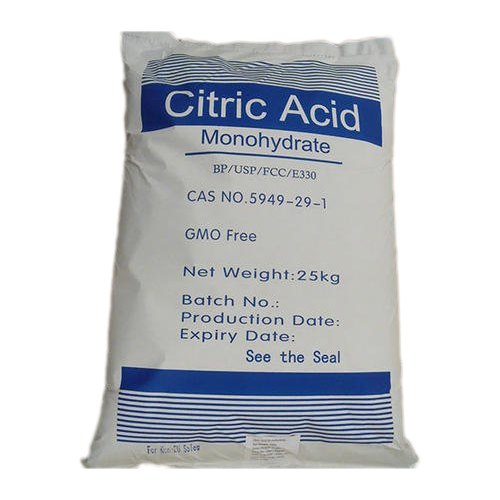
Citric Acid Monohydrate Supplier in Kenya | Olinc Chemical Suppliers
Citric Acid Monohydrate is a widely used organic acid valued for its acidity, excellent water solubility, and versatility across food processing, beverage manufacturing, pharmaceuticals, cosmetics, detergents, water treatment and other industrial applications. It is commonly selected by manufacturers who need a reliable acidulant, pH regulator, flavour enhancer, chelating agent or formulation ingredient.
At Olinc Chemical Suppliers, we understand that choosing the right chemical involves more than simply knowing its name. Buyers need to understand its properties, available grades, applications, specifications, packaging, storage requirements and suitability for their intended process. This guide provides detailed information to help you make an informed decision when sourcing Citric Acid Monohydrate in Nairobi and across Kenya.
Product identity and chemical information
Citric Acid Monohydrate is the hydrated crystalline form of citric acid. The word monohydrate means that each citric acid molecule is associated with one molecule of water of crystallisation. It is widely used in manufacturing because it provides controlled acidity and can also bind certain metal ions.
| Property | Details |
|---|---|
| Product name | Citric Acid Monohydrate |
| Chemical name | 2-Hydroxypropane-1,2,3-tricarboxylic acid monohydrate |
| Chemical formula | C₆H₈O₇·H₂O |
| Molecular weight | 210.14 g/mol |
| CAS number | 5949-29-1 |
| EC number | 201-069-1 |
| Appearance | White or colourless crystals, granules or crystalline powder |
| Odour | Odourless |
| Taste | Strongly acidic |
| Solubility | Very soluble in water |
| Food additive number | E330 / INS 330, where permitted |
| Chemical family | Organic acids; tricarboxylic acids |
These identification details are consistent with international food additive specifications and supplier technical information
Other names and synonyms
Clients may search for Citric Acid Monohydrate using different names, including:
-
Citric Acid Monohydrate
-
Monohydrated Citric Acid
-
Citric Acid Hydrate
-
Citric Acid, Monohydrate
-
2-Hydroxypropane-1,2,3-tricarboxylic acid monohydrate
-
2-Hydroxytricarballylic Acid Monohydrate
-
E330
-
INS 330
-
Food Grade Citric Acid Monohydrate
-
Crystalline Citric Acid
-
Sour Salt
-
Nimbu Sat (a common regional trade name)
Important distinction: Citric Acid Monohydrate and Citric Acid Anhydrous are related but different forms. Monohydrate contains one molecule of water of crystallisation and has a molecular weight of approximately 210.14 g/mol. Anhydrous citric acid has no water of crystallisation and a molecular weight of approximately 192.13 g/mol. They should not automatically be substituted weight-for-weight in formulations where precise acidity or dosage matters.
What is Citric Acid Monohydrate used for?
Citric Acid Monohydrate is valued for several functional properties:
-
Acidulant: Adds acidity to products and helps create a balanced sour taste.
-
pH regulator: Helps adjust and maintain the acidity of formulations.
-
Sequestrant: Binds certain metal ions, helping reduce unwanted reactions caused by minerals.
-
Flavour enhancer: Contributes a clean, tart flavour to foods and beverages.
-
Preservation support: By lowering pH and interacting with metal ions, it can support preservation systems when used with an appropriate formulation. It is not a stand-alone guarantee against microbial growth.
-
Cleaning agent: Helps dissolve mineral deposits such as limescale in suitable cleaning formulations.
-
Formulation ingredient: Supports acidity control and stability in selected cosmetic, pharmaceutical and industrial products.
The recognised food-related functions include acidulant, sequestrant, antioxidant synergist and flavouring agent.
Applications across different industries
Food and beverage manufacturing
Citric Acid Monohydrate is widely used in food processing because it provides acidity and helps manufacturers achieve a consistent taste and product profile.
Common applications include:
-
Soft drinks and carbonated beverages: Adds tartness and helps balance sweetness.
-
Fruit juices and juice concentrates: Adjusts acidity and improves flavour balance.
-
Squashes and cordials: Helps create the desired sour taste and acidity.
-
Jams and jellies: Helps establish the acidity required for the intended texture and product characteristics.
-
Sweets and confectionery: Used in sour sweets, gummies, hard candies and other confectionery products.
-
Baking and bakery products: Used in selected formulations to control acidity and support leavening systems.
-
Sauces and dressings: Helps regulate acidity and improve flavour balance.
-
Processed foods: Used where controlled acidity and metal-ion binding are required.
-
Dairy applications: Used in selected food processes and formulations where acidity control is appropriate.
Citric acid is recognised internationally as food additive E330. However, food manufacturers should use a grade that meets the applicable food standards and confirm permitted use levels for their product category.
Pharmaceutical manufacturing
Citric Acid Monohydrate is used in pharmaceutical formulations where a suitable pharmaceutical-grade material is required.
Applications may include:
-
pH adjustment in selected formulations;
-
effervescent tablets and powders, where it reacts with a suitable carbonate or bicarbonate ingredient to release carbon dioxide;
-
oral preparations;
-
selected syrups and liquid formulations;
-
buffering systems when combined with appropriate salts;
-
pharmaceutical formulation development and laboratory work.
Pharmaceutical manufacturers should confirm the required pharmacopoeial standard, such as USP, BP or Ph. Eur., and obtain supporting documentation for the specific batch.
Cosmetics and personal-care manufacturing
Citric Acid Monohydrate is used in selected personal-care formulations for acidity adjustment and related formulation functions.
Applications include:
-
shampoos;
-
conditioners;
-
liquid soaps;
-
body washes;
-
facial cleansers;
-
creams and lotions;
-
bath products;
-
selected skincare formulations.
In these products, it may help adjust the pH to a range suitable for the formulation. The final pH must be measured and confirmed rather than estimated from the quantity of citric acid added.
Detergent and cleaning product manufacturing
Citric Acid Monohydrate is useful in cleaning formulations because it can help manage mineral deposits and bind certain metal ions.
Applications include:
-
household cleaning products;
-
bathroom cleaners;
-
limescale removers;
-
descaling formulations;
-
dishwashing products;
-
selected laundry formulations;
-
industrial cleaning products;
-
cleaning solutions for suitable equipment and surfaces.
Its effectiveness depends on the formulation, concentration, contact time and surface being cleaned. It should not be used indiscriminately on acid-sensitive materials such as marble, limestone or some cement-based surfaces.
Water treatment
Citric Acid Monohydrate has selected applications in water-treatment and cleaning processes, particularly where acidity adjustment or mineral deposit management is needed.
Potential applications include:
-
pH adjustment in suitable treatment processes;
-
cleaning of certain equipment affected by mineral deposits;
-
formulation of selected descaling solutions;
-
binding of certain dissolved metal ions.
It is not a disinfectant and should not be presented as a replacement for chlorine, sodium hypochlorite or other approved water-disinfection chemicals.
Industrial and chemical manufacturing
Other applications include:
-
metal cleaning and surface preparation;
-
textile processing;
-
selected paper and pulp processes;
-
laboratory reagent preparation;
-
chemical formulation;
-
selected photographic and specialty applications.
The correct grade and technical specification depend on the intended process.
Available grades of Citric Acid Monohydrate
Citric Acid Monohydrate may be supplied in different grades depending on purity requirements and the intended application.
| Grade | Typical intended applications | What buyers should confirm |
|---|---|---|
| Food grade | Food, beverages and food processing | FCC or applicable food standard, purity and contaminant limits |
| Pharmaceutical grade | Pharmaceutical formulations | Relevant USP, BP or Ph. Eur. compliance |
| Industrial grade | Detergents, cleaning and general industrial formulations | Assay, impurities and process suitability |
| Laboratory / reagent grade | Laboratory testing and analytical work | ACS or other required reagent specification |
A grade name alone is not sufficient proof of compliance. Buyers should request the relevant Certificate of Analysis (CoA), Technical Data Sheet (TDS) and Safety Data Sheet (SDS) for the product being considered.
For food, pharmaceutical and personal-care production, do not assume that an industrial-grade product is suitable. The grade must match the regulatory and quality requirements of the finished product.
Physical and chemical properties
| Property | Description |
|---|---|
| Physical state | Solid |
| Appearance | White crystalline powder, granules or colourless crystals |
| Odour | Odourless |
| Taste | Strongly acidic |
| Water solubility | Very soluble |
| Alcohol solubility | Freely soluble in ethanol |
| Chemical behaviour | Weak organic acid |
| Functional groups | Three carboxylic acid groups and one hydroxyl group |
| Moisture content | Common monohydrate specifications are approximately 7.5–8.8% |
| Assay | Common food/pharmaceutical specifications are around 99.5–100.5% on an anhydrous basis |
The exact results depend on the manufacturer’s specification and test method.
Food Standards Australia New Zealand+2
Typical quality specifications
Manufacturers and industrial buyers often assess Citric Acid Monohydrate using the following parameters:
| Quality parameter | Why it matters |
|---|---|
| Assay / purity | Indicates the amount of citric acid relative to the applicable test basis |
| Moisture content | Confirms the expected monohydrate water content |
| Appearance | Checks colour and physical condition |
| Solubility | Confirms suitability for water-based formulations |
| Clarity of solution | Important for applications requiring a clear solution |
| Sulphated ash / residue on ignition | Helps assess inorganic residue |
| Oxalate | A controlled impurity in some specifications |
| Sulphate | Another impurity parameter |
| Heavy metals | Important for food and pharmaceutical applications |
| Arsenic and lead | Relevant contaminant limits for regulated grades |
As an example, a published supplier specification lists an assay of 99.5–100.5% on an anhydrous basis and water content of 7.5–8.8%. These are example specification values, not a guarantee for every product or batch.
Citric Acid Monohydrate versus Anhydrous Citric Acid
This is an important distinction for buyers and manufacturers.
| Feature | Citric Acid Monohydrate | Citric Acid Anhydrous |
|---|---|---|
| Water of crystallisation | One molecule | None |
| Chemical formula | C₆H₈O₇·H₂O | C₆H₈O₇ |
| Molecular weight | 210.14 g/mol | 192.13 g/mol |
| CAS number | 5949-29-1 | 77-92-9 |
| Typical appearance | White crystals or powder | White crystals or powder |
| Common applications | Food, beverages, cleaning, cosmetics and pharmaceuticals | Similar applications, depending on grade and process requirements |
Both forms are used as acidulants and pH regulators. The choice depends on the formulation, moisture requirements, process conditions and the manufacturer’s specification.
A manufacturer changing from one form to the other should review the formulation and calculate the appropriate quantity rather than assuming equal weights will provide identical results.
Packaging and available quantities
Citric Acid Monohydrate is commonly supplied in moisture-protective industrial packaging to preserve its quality during transportation and storage.
Typical packaging formats in the market include:
-
25 kg bags
-
50 kg bags
-
Larger bulk bags for industrial users
-
Smaller repacked quantities where available
A common commercial format is a 25 kg bag with an inner moisture barrier and an outer woven or multi-layer paper packaging. Larger industrial packaging may also be available depending on the manufacturer.
At Olinc Chemical Suppliers, customers can enquire about available packaging sizes and quantities for their requirements. Packaging, grade and quantity should be confirmed before placing an order.
How to use Citric Acid Monohydrate
The appropriate quantity depends on the application, formulation, desired acidity and required final product specifications.
For example:
-
A beverage manufacturer may use it to achieve a target acidity and flavour profile.
-
A detergent manufacturer may include it in a formulation designed to remove mineral deposits.
-
A cosmetics manufacturer may use it to adjust the pH of a personal-care product.
-
A pharmaceutical manufacturer may use it in a controlled formulation or effervescent system.
There is no single dosage suitable for every application. The correct amount should be determined through formulation calculations, product testing and applicable industry standards.
For pH adjustment, measure the pH of the formulation after adding and dissolving the acid. Do not rely only on the amount added, since the other ingredients and buffering capacity can affect the final pH.
Storage and handling requirements
Although Citric Acid Monohydrate is a commonly used organic acid, proper storage and handling are important for maintaining product quality and protecting workers.
Storage recommendations:
-
Store in a cool, dry and well-ventilated area.
-
Keep the product in its original packaging where possible.
-
Keep bags tightly closed when not in use.
-
Protect the material from moisture and water contamination.
-
Store away from strong bases and incompatible materials.
-
Avoid placing bags directly on damp floors.
-
Use clean, dry scoops and handling equipment.
-
Follow the manufacturer’s recommended storage conditions and shelf life.
Handling precautions:
-
Wear suitable protective gloves when handling the product.
-
Use safety goggles to prevent dust or particles entering the eyes.
-
Avoid breathing airborne dust.
-
Use appropriate ventilation when handling large quantities.
-
Wash hands after handling.
-
Do not eat, drink or smoke in chemical handling areas.
Citric acid dust may irritate the eyes, skin and respiratory tract. Always consult the supplied SDS for the specific product and follow workplace safety procedures.
Is Citric Acid Monohydrate safe?
Citric Acid Monohydrate is widely used in food and other regulated applications when it meets the appropriate quality standards and is used within permitted conditions.
However, concentrated solutions and airborne dust can cause irritation. Safe handling is therefore important, especially in industrial environments.
Potential exposure effects include:
-
Eye irritation from direct contact.
-
Skin irritation in susceptible individuals or after prolonged contact.
-
Throat or respiratory irritation from inhaling dust.
-
Discomfort if large amounts are accidentally swallowed.
In case of exposure, follow the product SDS and workplace emergency procedures. For eye contact, rinse cautiously with clean water. Seek medical attention if irritation persists or exposure is significant.
Food-grade status does not mean that bulk quantities of the chemical can be handled without precautions.
Factors to consider when buying Citric Acid Monohydrate
Before purchasing, it is important to confirm that the product matches your intended use.
Intended application
Tell your supplier whether you need the product for food processing, beverage production, detergents, cosmetics, pharmaceuticals, laboratory work or general industrial use.
2. Required grade
Confirm whether you need food grade, pharmaceutical grade, industrial grade or laboratory grade. The correct grade is essential for product quality and compliance.
3. Product identity
Check that the product is Citric Acid Monohydrate, CAS 5949-29-1, rather than Citric Acid Anhydrous, CAS 77-92-9.
4. Purity and specifications
Review the assay, moisture content, appearance and relevant impurity limits.
5. Documentation
For regulated applications, ask for:
-
Certificate of Analysis (CoA)
-
Technical Data Sheet (TDS)
-
Safety Data Sheet (SDS)
-
Relevant food or pharmaceutical compliance documentation, where applicable
6. Packaging and quantity
Confirm the required bag size and total quantity. This helps ensure that the product can be handled and stored appropriately.
7. Storage and shelf life
Check the manufacturing date, recommended shelf life and storage conditions. Ensure that the packaging is sealed and protected from moisture.
Why source Citric Acid Monohydrate from Olinc Chemical Suppliers?
When sourcing industrial and specialty chemicals, choosing a supplier who understands product requirements is important.
Olinc Chemical Suppliers serves customers in Nairobi and other parts of Kenya looking for chemical products for manufacturing, processing, cleaning and related industrial applications.
When enquiring about Citric Acid Monohydrate, our team can assist with product information and help you identify the grade and quantity appropriate for your intended application.
Whether you are a food processor, beverage manufacturer, detergent producer, cosmetics manufacturer or industrial buyer, it is important to specify your intended use so that the correct product requirements can be established.
Contact Olinc Chemical Suppliers to enquire about:
-
Citric Acid Monohydrate availability.
-
Available grades and specifications.
-
Packaging options.
-
Bulk and smaller quantity requirements.
-
Current pricing and quotations.
-
Product documentation and technical information.
Frequently asked questions about Citric Acid Monohydrate
What is Citric Acid Monohydrate?
Citric Acid Monohydrate is an organic acid in crystalline form that contains one molecule of water of crystallisation for each molecule of citric acid. It is widely used in food processing, beverages, pharmaceuticals, cosmetics, detergents and industrial formulations.
What is the chemical formula of Citric Acid Monohydrate?
Its chemical formula is C₆H₈O₇·H₂O.
What is the CAS number of Citric Acid Monohydrate?
The CAS number is 5949-29-1.
Is Citric Acid Monohydrate the same as lemon acid?
Citric acid is naturally present in citrus fruits, including lemons and limes. However, commercial Citric Acid Monohydrate is a manufactured or processed chemical ingredient and is supplied according to a defined specification.
Is Citric Acid Monohydrate food grade?
It is available in food-grade quality. However, buyers should confirm that the particular product is certified or documented to meet the applicable food-grade specification before using it in food or beverage production.
What is E330?
E330 is the food additive identification number for citric acid. It is used as an acidulant, acidity regulator and sequestrant in permitted food applications.
What is the difference between Citric Acid Monohydrate and Anhydrous Citric Acid?
Monohydrate contains one molecule of water of crystallisation, while anhydrous citric acid does not. They also have different molecular weights and CAS numbers.
Is Citric Acid Monohydrate soluble in water?
Yes. It is very soluble in water, making it suitable for many liquid formulations, beverage applications and cleaning solutions.
Can Citric Acid Monohydrate be used in juice manufacturing?
Yes. Food-grade citric acid is commonly used in juice and beverage production to adjust acidity and balance flavour. The appropriate amount depends on the product formulation and applicable food standards.
Can it be used in detergent manufacturing?
Yes. It can be used in selected detergent and cleaning formulations, particularly where acidity adjustment or mineral deposit removal is required.
Is Citric Acid Monohydrate used in cosmetics?
Yes. It is used in selected cosmetics and personal-care products, especially for pH adjustment. The final formulation must be tested to ensure it meets the required product specifications.
Can Citric Acid Monohydrate remove limescale?
Yes. Its acidic properties can help dissolve certain mineral deposits, including limescale. The surface must be compatible with acidic cleaners before application.
What packaging does Citric Acid Monohydrate come in?
Common commercial packaging includes 25 kg and 50 kg bags, with bulk packaging available in some supply arrangements. Confirm current packaging options before ordering.
How should Citric Acid Monohydrate be stored?
Store it in a cool, dry place, in sealed packaging, away from moisture and incompatible chemicals.
Can I use industrial-grade Citric Acid Monohydrate in food?
No. Do not assume that industrial-grade material is suitable for food use. Food production requires a grade that meets the applicable food safety and quality requirements.
How do I know whether I need monohydrate or anhydrous citric acid?
Your choice depends on your formulation, moisture requirements and process specifications. If you are unsure, share your intended application and formulation requirements with your chemical supplier or technical team.
Where can I buy Citric Acid Monohydrate in Nairobi, Kenya?
You can contact Olinc Chemical Suppliers in Nairobi to enquire about Citric Acid Monohydrate, including available grades, packaging, quantities, product specifications and current prices.
Request a quotation for Citric Acid Monohydrate in Kenya
Are you looking for a reliable source of Citric Acid Monohydrate in Nairobi, Kenya for food processing, beverage manufacturing, detergent production, cosmetics or industrial applications?
Olinc Chemical Suppliers welcomes enquiries from manufacturers, wholesalers, distributors, institutions and other businesses seeking chemical products.
When requesting a quotation, please provide:
-
The product name: Citric Acid Monohydrate.
-
Your required grade.
-
The quantity needed.
-
Your preferred packaging size.
-
Your delivery location.
-
Your intended application, where relevant.
This information will help establish the correct product requirements and quotation.
Contact Olinc Chemical Suppliers
-
Location: Nairobi, Enterprise Road, Avon Business Center, Kenya
-
Email: sales@olincinchemicals.com
-
Phone / WhatsApp: 0793062849
-
Alternative phone: 0743657810
-
Website: www.olincchemicalsl.com
Contact Olinc Chemical Suppliers today for product information and a quotation for Citric Acid Monohydrate in Kenya.

Reviews
There are no reviews yet.