
Methyl Acetate Supplier in Kenya | Industrial Methyl Acetate – Olinc Chemical Suppliers
Welcome to Olinc Chemical Suppliers, your Nairobi-based contact for industrial chemical supply enquiries in Kenya.
Are you looking for Methyl Acetate for paint manufacturing, printing inks, coatings, adhesives, industrial cleaning or other solvent-based applications? Methyl Acetate is a versatile organic solvent valued for its strong solvent activity, relatively low boiling point and fast evaporation rate.
Also known as Methyl Ethanoate or Acetic Acid Methyl Ester, Methyl Acetate is a clear, colourless liquid belonging to the ester family of organic chemicals. It is widely used in manufacturing processes that require a solvent capable of dissolving compatible resins, polymers and other organic materials while evaporating relatively quickly.
Methyl Acetate is particularly relevant to manufacturers of:
- Paints and industrial coatings.
- Printing inks and packaging inks.
- Adhesives and sealants.
- Automotive refinishing products.
- Furniture coatings and wood finishes.
- Industrial cleaning formulations.
- Selected chemical and pharmaceutical intermediates.
Its fast evaporation can help formulators develop products that dry quickly, although the final drying behaviour depends on the complete formulation, application conditions and substrate.
Olinc Chemical Suppliers welcomes Methyl Acetate enquiries from manufacturers, industrial businesses, printing companies, coating producers, adhesive manufacturers and other commercial buyers in Nairobi and across Kenya.
What Is Methyl Acetate?
Methyl Acetate is an organic ester formed from methanol and acetic acid. It is a volatile, low-viscosity liquid with a characteristic fruity or ether-like odour.
It is used primarily as an industrial solvent because it can dissolve many compatible organic materials, including selected acrylic, epoxy, polyurethane, polyester, phenolic and cellulose-based resins.
Unlike petroleum solvent mixtures such as White Spirit, Methyl Acetate is a defined chemical compound with a specific molecular formula and CAS number.
Its most important industrial characteristics include:
- Fast evaporation.
- Good solvent activity for many resins.
- Compatibility with many common organic solvents.
- Relatively low boiling point.
- Low viscosity.
- Use in selected coatings, inks, adhesives and cleaning formulations.
Because it evaporates quickly, it is often selected as the fast-evaporating component in solvent blends where manufacturers need to manage drying time and solvent release.
Chemical Identification and Technical Information
| Property | Description |
|---|---|
| Product name | Methyl Acetate |
| Common abbreviation | MA |
| IUPAC name | Methyl ethanoate |
| Alternative name | Acetic acid methyl ester |
| Chemical family | Esters |
| Chemical formula | C₃H₆O₂ |
| Structural formula | CH₃COOCH₃ |
| Molecular weight | 74.08 g/mol |
| CAS number | 79-20-9 |
| EC number | 201-185-2 |
| Appearance | Clear, colourless liquid |
| Odour | Characteristic fruity or ether-like odour |
| Main function | Organic solvent and chemical intermediate |
| Water solubility | Limited; partially miscible |
| Main industrial sectors | Paints, coatings, inks, adhesives and chemical manufacturing |
Other Names for Methyl Acetate
Methyl Acetate may appear under different names in chemical catalogues, technical documents and industrial purchasing systems.
Common alternative names include:
- Methyl Acetate
- Methyl Ethanoate
- Acetic Acid Methyl Ester
- Methyl Ester of Acetic Acid
- Methanol Acetate
- Acetate de Méthyle
- Methyl Acetic Ester
- MA Solvent
- Methyl Acetate Solvent
When purchasing, using the CAS number 79-20-9 helps identify the intended chemical and avoid confusion with other acetate esters.
Important: Methyl Acetate is not the same as Ethyl Acetate, Butyl Acetate, Methyl Ethyl Ketone (MEK) or Methyl Acetate Peroxide. These are different chemicals with different physical properties and applications.
Physical and Chemical Properties of Methyl Acetate
Understanding the properties of Methyl Acetate helps manufacturers determine whether it is suitable for their formulations and production processes.
Appearance
Methyl Acetate is normally a clear, colourless liquid. A commercial product should be checked against its specification for appearance, purity, colour and other quality parameters.
Odour
It has a characteristic fruity, ester-like odour. Odour is not a reliable way to determine product purity or whether exposure levels are safe.
Boiling Point
Methyl Acetate has a boiling point of approximately 56–57°C at normal atmospheric pressure.
Its relatively low boiling point contributes to its fast evaporation, making it useful in formulations that require rapid solvent release.
Density
Its density is approximately 0.93 g/cm³ at 20°C. The exact value should be confirmed against the relevant product specification.
Flash Point
Methyl Acetate has a very low flash point. Depending on the test method and product specification, published closed-cup values are typically in the region of approximately -15°C to -10°C.
This means it can produce ignitable vapours under ordinary ambient conditions. It must be handled as a highly flammable liquid.
Evaporation Rate
Methyl Acetate is a fast-evaporating solvent. This property is particularly useful in:
- Quick-drying coatings.
- Printing inks.
- Spray-applied finishes.
- Industrial cleaning products.
- Selected adhesive formulations.
Its evaporation rate influences drying time, coating appearance, solvent balance and production efficiency.
Water Solubility
Methyl Acetate has limited but significant solubility in water. It is not completely immiscible with water, and the amount that dissolves depends on temperature and conditions.
It is generally compatible with many common organic solvents.
Solvent Strength
Methyl Acetate dissolves a range of natural and synthetic resins, including selected:
- Acrylic resins.
- Vinyl copolymers.
- Epoxy resins.
- Polyurethane resins.
- Polyester resins.
- Phenolic resins.
- Cellulosic resins, including nitrocellulose and cellulose acetate butyrate.
Actual compatibility depends on the resin grade, formulation and water content of the solvent.
Typical Reference Properties
| Property | Typical reference value |
|---|---|
| Chemical formula | C₃H₆O₂ |
| Molecular weight | 74.08 g/mol |
| Boiling point | Approximately 56–57°C |
| Melting point | Approximately -98°C |
| Density at 20°C | Approximately 0.93 g/cm³ |
| Flash point | Approximately -15°C to -10°C, closed cup |
| Autoignition temperature | Approximately 450–500°C, depending on source and method |
| Vapour pressure at 20°C | Approximately 170–180 mmHg |
| Water solubility | Limited; partial miscibility |
| Physical state | Liquid |
These are indicative reference values. Different manufacturers and grades may report slightly different figures because of test methods, purity and specification differences. Always refer to the actual product TDS and SDS before making technical or safety decisions.
Main Uses and Applications of Methyl Acetate
Methyl Acetate is used in a variety of industries where fast evaporation and effective solvent properties are important.
Paint Manufacturing
Methyl Acetate is used as a solvent in selected paint formulations. Its ability to dissolve compatible resins makes it useful in solvent-based coating systems.
It may be used in formulations involving:
- Industrial paints.
- Architectural coatings.
- Acrylic coatings.
- Automotive refinishing paints.
- Protective coatings.
- Aerosol coatings.
- Selected specialty coatings.
It helps formulators adjust solvent balance and influence the drying characteristics of the finished paint.
The correct grade must be selected based on resin compatibility, water content, evaporation requirements and the desired film properties.
Industrial Coatings
Industrial coatings are designed to protect surfaces against environmental exposure, corrosion, wear and other forms of deterioration.
Methyl Acetate may be used in selected industrial coating formulations involving compatible resin systems.
Applications can include:
- Protective metal coatings.
- General industrial coatings.
- Marine coatings.
- Equipment coatings.
- Maintenance coatings.
- Selected construction and roofing coating products.
Its relatively rapid evaporation can help support quick-drying coating systems.
Printing Ink Manufacturing
Printing ink manufacturing is one of the important markets for Methyl Acetate.
It is used in selected solvent-based printing inks because of its ability to dissolve compatible ink resins and evaporate quickly during the printing process.
Potential applications include:
- Commercial printing inks.
- Packaging inks.
- Gravure printing inks.
- Flexographic printing inks.
- Graphic arts formulations.
- Selected printing varnishes.
- Ink formulations for compatible substrates.
In printing operations, solvent selection affects ink viscosity, drying speed, print quality, adhesion, solvent retention and production efficiency.
The printing process and substrate determine whether Methyl Acetate is suitable for a particular ink formulation.
Adhesive Manufacturing
Methyl Acetate is used in selected solvent-based adhesive formulations.
Its solvent properties make it useful for dissolving compatible polymers and resins used in adhesive production.
Potential applications include:
- Industrial adhesives.
- Selected polyurethane adhesives.
- Contact adhesive formulations.
- Construction adhesives.
- Selected packaging adhesives.
- Specialty bonding products.
- Adhesives for compatible wood and furniture applications.
The exact suitability depends on the adhesive chemistry. Methyl Acetate should not automatically be substituted into water-based, hot-melt or reactive adhesive systems.
Automotive Paints and Refinishing
Methyl Acetate is used in selected automotive coating and refinishing formulations.
Potential applications include:
- Automotive refinish paints.
- Spray-applied coatings.
- Selected primers and topcoats.
- Automotive component coatings.
- Cleaning and surface preparation before coating.
It can help formulate fast-drying products, but compatibility with the specific paint resin and application system must be established.
Furniture and Wood Coatings
Furniture manufacturers and wood-finishing businesses use solvent-based products to achieve protective and decorative finishes.
Methyl Acetate may be used in selected:
- Furniture coatings.
- Wood lacquers.
- Spray-applied finishes.
- Protective wood coatings.
- Selected varnish formulations.
- Furniture refinishing products.
Its evaporation rate can be useful in applications where a quick-drying finish is required.
Industrial Cleaning and Degreasing
Methyl Acetate is used in selected industrial cleaning formulations because it can dissolve compatible organic residues.
Possible cleaning applications include:
- Metal surface cleaning.
- Pre-coating cleaning.
- Selected automotive component cleaning.
- Removal of certain adhesive residues.
- Cleaning of compatible manufacturing equipment.
- Selected paint and resin residue removal.
It should only be used where the substrate and equipment materials are compatible. It may damage certain plastics, coatings and elastomers.
Aerosol Products
Methyl Acetate is used in selected aerosol coating and cleaning formulations.
Its solvent activity and evaporation characteristics can be useful in:
- Aerosol coatings.
- Spray-applied maintenance products.
- Selected industrial aerosol cleaners.
- Specialty surface-treatment formulations.
The finished aerosol formulation requires specific compatibility, pressure, flammability and regulatory assessments.
Chemical Manufacturing and Processing
Methyl Acetate can also serve as a process solvent and chemical intermediate.
Potential applications include:
- Organic synthesis.
- Selected chemical manufacturing processes.
- Pharmaceutical intermediate production.
- Process solvent applications.
- Manufacture of specialty chemical formulations.
High-purity specifications may be required for sensitive chemical processes.
Pharmaceutical and Specialty Chemical Applications
Certain high-purity grades of Methyl Acetate may be used as process solvents or intermediates in pharmaceutical and specialty chemical manufacturing.
The product must meet the relevant purity and regulatory requirements for the intended process. Industrial-grade Methyl Acetate should not automatically be treated as pharmaceutical grade or suitable for direct use in medicines.
Personal Care and Cosmetic Formulations
Selected Methyl Acetate grades may be used as solvents or processing ingredients in certain personal-care and cosmetic manufacturing applications.
The suitability of the solvent depends on the formulation, purity, intended exposure and applicable regulatory requirements. Industrial solvent grade is not automatically suitable for cosmetic or personal-care products.
Construction Chemicals
Methyl Acetate is used in selected construction chemical formulations, including certain coatings, sealants and adhesive products.
Its use depends on the formulation chemistry and the required performance of the finished product.
Industries That Use Methyl Acetate
| Industry | Application |
|---|---|
| Paint manufacturing | Solvent in compatible paint formulations |
| Industrial coatings | Fast-evaporating solvent for selected resin systems |
| Printing and packaging | Solvent in selected printing inks and varnishes |
| Adhesive manufacturing | Solvent in compatible adhesive formulations |
| Automotive refinishing | Selected coatings and surface preparation |
| Furniture manufacturing | Wood coatings and finishing products |
| Industrial maintenance | Selected cleaning and surface preparation |
| Chemical manufacturing | Process solvent and chemical intermediate |
| Pharmaceutical manufacturing | Selected process-solvent applications |
| Personal care manufacturing | Selected specialty solvent applications |
| Construction chemicals | Selected coatings, adhesives and sealants |
Companies That Manufacture or Use Methyl Acetate in Industrial Applications
It is important to distinguish companies that manufacture or sell Methyl Acetate from companies that use it as an input in their own manufacturing processes.
The following international manufacturers publish technical information identifying Methyl Acetate applications.
Eastman Chemical Company
Eastman publishes Methyl Acetate product information and identifies its use in:
- Commercial printing inks.
- Automotive coatings.
- Architectural coatings.
- General industrial coatings.
- Wood coatings.
- Marine coatings.
- Construction chemicals.
- Industrial maintenance products.
Eastman’s technical documentation also describes its solvent activity with acrylic, epoxy, polyester, alkyd, phenolic and cellulosic resins.
Celanese Corporation
Celanese publishes Methyl Acetate product information and identifies its use as a solvent for compatible resins and in various industrial formulations.
Its published applications include:
- Coatings.
- Inks.
- Adhesives.
- Automotive refinishing.
- Furniture coatings.
- Polyurethane coatings and adhesives.
- Selected pharmaceutical intermediates.
- Chemical synthesis.
Wacker Chemie AG
Wacker publishes technical information for Methyl Acetate, including its use in paints, coatings, inks, detergents and adhesives.
Its technical documentation also provides product properties, packaging information and storage guidance.
These companies publish Methyl Acetate product and application information. Their published material demonstrates established industrial uses, but should not be interpreted as proof that every listed company consumes the solvent in every factory or process.
Potential Companies to Approach in Kenya
For Olinc Chemical Suppliers, printing ink manufacturers and companies producing solvent-based coatings are particularly relevant potential customers.
The following Nairobi businesses operate in industries where Methyl Acetate may be relevant. Their current use or purchasing of Methyl Acetate has not been independently confirmed, so approach them as prospects and establish their actual solvent specifications.
Printing Ink and Packaging Businesses
1. Inkson Industrial Co. Ltd
A Nairobi-based manufacturer associated with printing inks, can coatings and press chemicals. Its industry makes it a particularly relevant business to approach about solvent requirements.
2. Ideal Inks & Coatings Ltd
A printing ink and coatings manufacturer supporting packaging and converting businesses. Its activities include gravure and flexographic printing-related products.
3. Inks Experts Ltd
A Nairobi-based printing ink manufacturer and supplier. It is a relevant prospect for discussing solvent specifications and ink-production requirements.
4. Inks (K) Ltd
A Nairobi printing ink and varnish manufacturer serving several printing processes. Its product range makes it worth approaching about solvent requirements.
5. KENNAT INKS & Chemical Plant Ltd
A printing ink and chemicals business associated with the printing supply chain. Its actual Methyl Acetate requirements should be established with its technical or procurement team.
Paint and Coatings Manufacturers
6. Crown Paints Kenya PLC
A major paint and coatings manufacturer with decorative, automotive and industrial coating products. Approach its technical or procurement department to establish whether Methyl Acetate is suitable for any of its formulations.
7. Kansai Plascon
A paint and coatings manufacturer with a broad product portfolio. It is a relevant prospect for enquiries about specialist coating solvents.
8. Glory Paints / Nasib Industrial Products Ltd
A Kenyan manufacturer of decorative and industrial paints and coatings. Its production activities make it a potential prospect for compatible solvent products.
9. Galaxy Paints & Coatings Ltd
A Nairobi-based paint manufacturer and potential prospect for industrial coating solvent enquiries.
10. Apex Coating East Africa Limited
A Nairobi-based paint and coatings manufacturer. Its coating activities make it worth approaching about solvent requirements.
Adhesive and Rubber-Related Businesses
11. Dunlex Adhesives Limited
An adhesive manufacturer based in Nairobi. Ask its procurement or technical department whether its formulations require Methyl Acetate or other ester solvents.
12. H.B. Fuller Kenya Limited
A Kenyan operation of an international adhesives manufacturer. Its broad adhesive technology portfolio makes it a relevant company to investigate, although its local manufacturing requirements and solvent use must be verified.
13. Rubber Products Limited
A Nairobi rubber-products and adhesive-related business. It may be worth approaching about compatible solvent requirements for selected rubber and bonding applications.
Different Grades of Methyl Acetate
Methyl Acetate can be supplied under different specifications depending on the intended application.
Industrial Grade Methyl Acetate
Industrial-grade Methyl Acetate is used in general industrial solvent applications.
Potential uses include:
- Paint and coating formulations.
- Printing inks.
- Selected adhesive production.
- Industrial cleaning.
-
General chemical processing.
The exact purity and impurity limits must be checked against the product specification.
High-Purity Methyl Acetate
High-purity grades are used where lower impurity levels and tighter technical specifications are required.
Important parameters may include:
- Methyl Acetate assay.
- Water content.
- Alcohol content.
- Acidity.
- Colour.
- Non-volatile residue.
- Other specified impurities.
High-purity Methyl Acetate can be important in moisture-sensitive coatings and selected polyurethane systems.
Urethane Grade Methyl Acetate
Urethane-grade Methyl Acetate is designed for applications requiring controlled moisture and alcohol content.
It may be suitable for selected moisture-sensitive polyurethane coating systems, including certain two-component polyurethane formulations.
The product must meet the exact water and impurity requirements of the polyurethane manufacturer.
Laboratory or Reagent Grade
Laboratory and reagent grades are intended for specific laboratory and analytical applications.
They should not automatically be substituted for industrial grades or used in regulated manufacturing processes without checking the required specification.
Purchasing note: Grade names are not always standardised across suppliers. Compare actual numerical specifications and the COA rather than relying only on the grade description.
Methyl Acetate Compared with Other Industrial Solvents
Customers may ask whether Methyl Acetate can replace MEK, acetone, Ethyl Acetate or other solvents.
| Solvent | Key characteristics |
|---|---|
| Methyl Acetate | Ester solvent with fast evaporation and good solvency for many resins |
| Ethyl Acetate | Ester solvent with a higher boiling point and generally slower evaporation |
| MEK | Ketone solvent with strong solvency for many resins |
| Acetone | Very fast-evaporating ketone solvent, fully miscible with water |
| White Spirit | Petroleum hydrocarbon solvent mixture, generally slower evaporating |
| Toluene | Aromatic hydrocarbon solvent with different resin solvency and evaporation properties |
| Xylene | Aromatic hydrocarbon solvent with a higher boiling range and slower evaporation |
These solvents are not automatically interchangeable. A formulation change requires compatibility testing and assessment of drying behaviour, resin solubility, film quality, substrate effects, safety and regulatory requirements.
Packaging and Supply Considerations
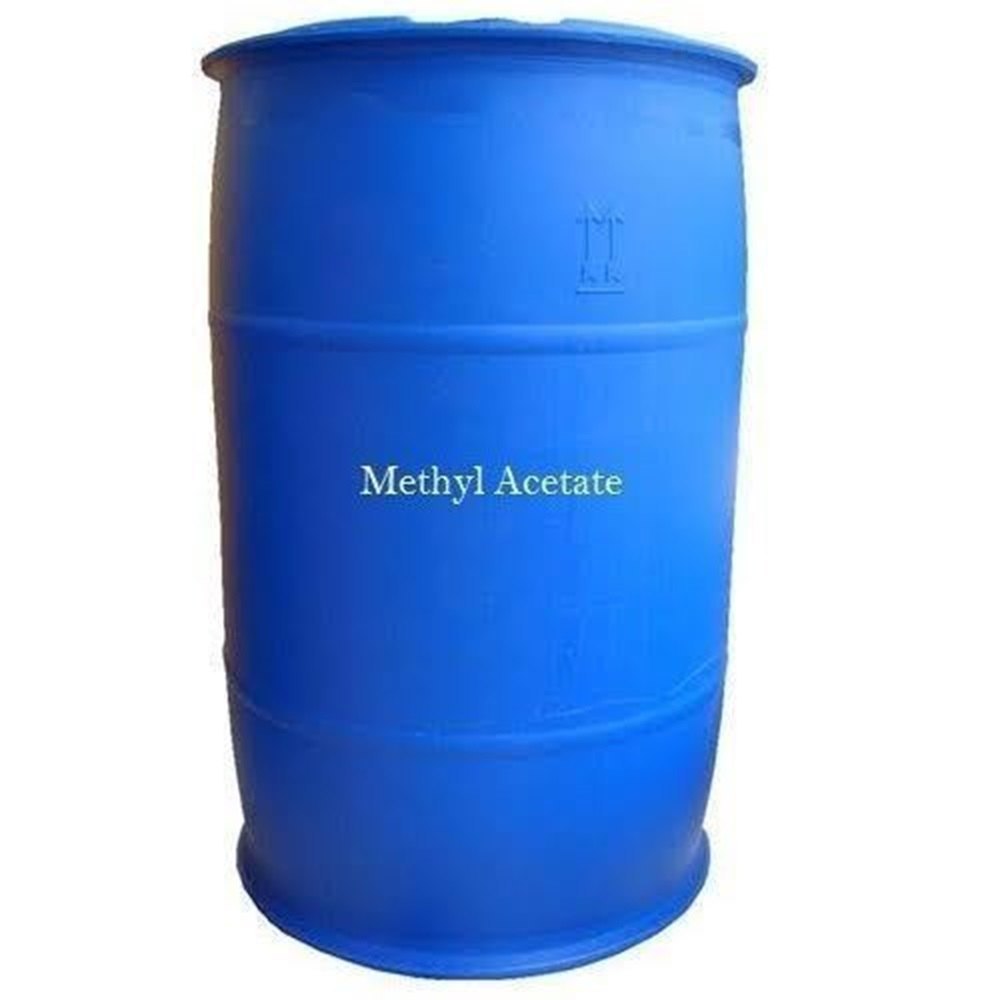
Methyl Acetate is commonly supplied in sealed containers designed for flammable solvents.
Depending on the manufacturer and supply arrangement, common commercial packaging formats may include:
- 20-litre or 25-litre containers.
- 200-litre or approximately 216-litre drums.
- Intermediate bulk containers (IBCs).
- Bulk supply for suitable industrial operations.
These are typical market packaging formats, not confirmation of Olinc’s current stock or available pack sizes. Customers should confirm packaging availability when requesting a quotation.
When purchasing Methyl Acetate in bulk, consider:
- Container compatibility.
- Approved closures and seals.
- Safe loading and unloading arrangements.
- Storage capacity.
- Fire protection.
- Product labelling.
- Batch identification and traceability.
Storage Requirements for Methyl Acetate
Methyl Acetate is highly flammable and must be stored in a suitable flammable-liquid storage area.
Recommended storage precautions include:
- Store in tightly closed, compatible containers.
- Keep away from direct sunlight and excessive heat.
- Store in a cool, well-ventilated location.
- Keep away from flames, sparks and hot surfaces.
- Avoid static discharge during transfer.
- Use suitable electrical equipment in areas where flammable vapours may be present.
- Keep away from strong oxidising agents.
- Prevent spills from reaching drains, soil and waterways.
- Keep containers properly labelled.
- Restrict access to trained and authorised personnel.
Its vapour is heavier than air and may travel along the ground to an ignition source. Appropriate ventilation and vapour-control arrangements are essential.
Safety Precautions When Handling Methyl Acetate
Methyl Acetate is a highly flammable organic solvent. It can also cause irritation and harmful effects when exposure is not properly controlled.
Fire and Explosion Hazard
Methyl Acetate has a very low flash point and can produce ignitable vapours at ordinary temperatures.
Keep it away from:
- Open flames.
- Smoking materials.
- Welding and cutting operations.
- Electrical sparks.
- Hot surfaces.
- Other ignition sources.
Use suitable ventilation and equipment designed for flammable-liquid handling. Bonding and grounding should be used where required by the approved transfer procedure.
Inhalation Exposure
Breathing Methyl Acetate vapour may cause:
- Headache.
- Dizziness.
- Drowsiness.
- Nausea.
- Eye, nose and throat irritation.
- Central nervous system effects at sufficiently high concentrations.
Use the product in a well-ventilated area. Where workplace exposure assessment requires it, suitable respiratory protection should be selected under an appropriate respiratory-protection programme.
Skin Contact
Repeated or prolonged contact may cause skin dryness and irritation.
Use suitable chemical-resistant gloves and protective clothing. Check the manufacturer’s chemical-resistance guidance when selecting glove materials.
Eye Contact
Methyl Acetate may cause eye irritation.
Wear suitable chemical splash goggles when there is a risk of splashing. If contact occurs, rinse cautiously with clean water and seek medical advice in accordance with the SDS.
Accidental Ingestion
Do not swallow Methyl Acetate. If ingestion occurs, seek urgent medical advice and follow the emergency instructions in the SDS. Do not induce vomiting unless directed by medical professionals.
Environmental Protection
Do not release Methyl Acetate into drains, rivers, soil or other water sources.
Collect spills using appropriate procedures and suitable equipment. Contaminated absorbents and waste solvent should be managed through authorised waste-disposal arrangements.
Quality Documentation to Request When Purchasing Methyl Acetate
Industrial buyers should confirm that the product meets the technical requirements of their process.
Important documents include:
Technical Data Sheet (TDS)
The TDS provides product properties, typical specifications and recommended applications.
Safety Data Sheet (SDS)
The SDS provides hazard classification, handling precautions, first aid, PPE requirements, storage instructions and emergency procedures.
Certificate of Analysis (COA)
Where available, the COA provides batch-specific test results, which may include:
- Assay or purity.
- Water content.
- Acidity.
- Colour.
- Density.
- Non-volatile residue.
- Other specified impurities.
Product Identification
Confirm the following:
- Product name: Methyl Acetate.
- CAS number: 79-20-9.
- Grade.
- Purity.
- Manufacturer or supplier.
- Batch number.
- Packaging details.
How to Choose the Right Methyl Acetate
Before purchasing, consider the following:
- Intended application: Is it for printing ink, paint, coatings, adhesives, cleaning or chemical processing?
- Required grade: Does the process need industrial, high-purity, urethane or laboratory grade?
- Purity: What assay or impurity limits are required?
- Water content: Is the application moisture-sensitive, particularly in polyurethane systems?
- Evaporation requirements: Does the formulation need rapid solvent release?
- Compatibility: Is Methyl Acetate compatible with the resin, polymer, substrate and other ingredients?
- Quantity: Is the requirement for workshop use, production batches or bulk manufacturing?
- Packaging: Which container size is suitable for the business?
- Documentation: Does the procurement or quality department require a TDS, SDS or COA?
Providing these details helps establish whether the product is appropriate for the intended application.
Frequently Asked Questions About Methyl Acetate
What is Methyl Acetate mainly used for?
Methyl Acetate is mainly used as an industrial solvent in paints, coatings, printing inks, adhesives, lacquers, automotive refinishing products and selected industrial cleaning formulations.
What is the chemical formula of Methyl Acetate?
Its chemical formula is C₃H₆O₂, and its structural formula is CH₃COOCH₃.
What is the CAS number of Methyl Acetate?
The CAS number is 79-20-9.
Is Methyl Acetate the same as Methyl Ethanoate?
Yes. Methyl Acetate and Methyl Ethanoate are two names for the same chemical compound.
Is Methyl Acetate the same as Ethyl Acetate?
No. Both are ester solvents, but they have different chemical structures, molecular weights and physical properties. Methyl Acetate generally evaporates faster than Ethyl Acetate.
Is Methyl Acetate a strong solvent?
Yes. It dissolves a wide range of compatible resins, including selected acrylic, epoxy, polyurethane, polyester, phenolic and cellulosic resins.
Is Methyl Acetate used in paint manufacturing?
Yes. It is used in selected solvent-based paint and coating formulations, including industrial, automotive, architectural and wood coatings.
Is Methyl Acetate used in printing inks?
Yes. It is used in selected printing ink formulations, including commercial printing and packaging-related ink systems.
Is Methyl Acetate used in adhesive manufacturing?
Yes. It can be used as a solvent in selected adhesive formulations involving compatible polymers and resins.
Is Methyl Acetate soluble in water?
It has limited but significant solubility in water. It is also compatible with many organic solvents.
Is Methyl Acetate flammable?
Yes. It is highly flammable and has a very low flash point. It must be stored and handled away from ignition sources.
Can Methyl Acetate replace MEK?
It may be a suitable alternative in certain formulations, but the two solvents are not universally interchangeable. Resin compatibility, drying rate, water content, formulation performance and safety must be assessed.
What is the difference between industrial and high-purity Methyl Acetate?
Industrial-grade material is intended for general industrial applications within its specified limits. High-purity grades have tighter impurity requirements and may be necessary for moisture-sensitive coatings or quality-critical processes.
What packaging is available?
Common commercial packaging may include smaller containers, 20–25-litre containers, drums and IBCs. Confirm available sizes and supply arrangements before ordering.
What information should I provide when requesting a quotation?
Provide your required quantity, intended application, preferred packaging, grade or purity requirements and any technical documentation requirements.
Enquire About Methyl Acetate in Nairobi, Kenya
If your business requires Methyl Acetate for printing inks, paints, coatings, adhesives, automotive refinishing, industrial cleaning or other compatible manufacturing processes, Olinc Chemical Suppliers welcomes your enquiry.
We serve industrial and commercial chemical enquiries from Nairobi, Kenya, and welcome enquiries from businesses operating across Kenya and the wider East African market.
When contacting us, kindly provide:
- The quantity required.
- Your intended application.
- Preferred packaging.
- Required grade or purity, if known.
- Any technical specification or documentation requirements.
Olinc Chemical Suppliers
Location: Enterprise Road, Avon Business Center, Nairobi, Kenya
Phone / WhatsApp: 0793062849
Alternative phone: 0743657810
Email: sales@olincinchemicals.com
Website: www.olincchemicalsl.com
Contact Olinc Chemical Suppliers for Methyl Acetate product and supply enquiries in Nairobi and across Kenya.


Reviews
There are no reviews yet.