
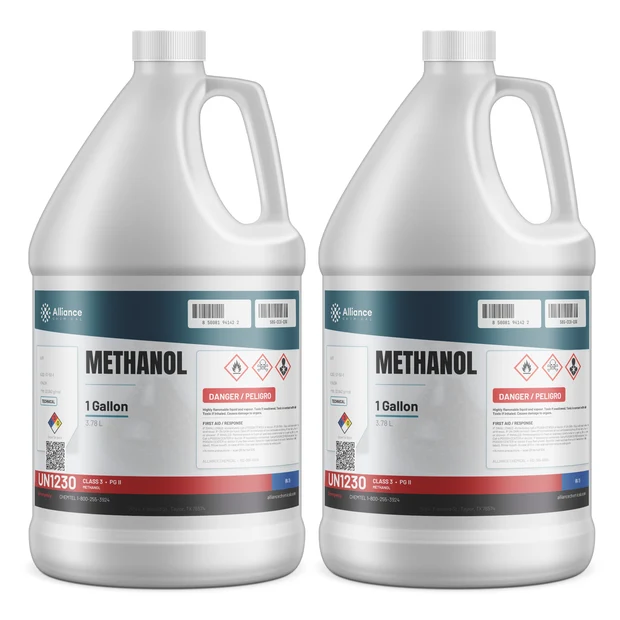
Methanol Supplier in Kenya | Industrial Methanol – Olinc Chemical Suppliers
Are you looking for Methanol for industrial manufacturing, chemical processing, laboratory applications or other professional uses? Olinc Chemical Suppliers welcomes enquiries from businesses looking for Methanol in Nairobi, Kenya, and other parts of East Africa.
Methanol is an important industrial chemical and one of the simplest members of the alcohol family. It is a colourless, volatile liquid with excellent solvent properties and a wide range of applications in chemical manufacturing, paints, adhesives, resins, inks, fuel-related industries and laboratory processes.
Also known as Methyl Alcohol, Wood Alcohol or Carbinol, Methanol is valued as both an industrial solvent and a chemical raw material. It is used in the production of formaldehyde, acetic acid and several other industrial chemicals. It also plays a role in selected fuel, energy and manufacturing applications.
Its ability to mix completely with water and many organic solvents makes it useful in different chemical processes. However, Methanol must be handled with particular care because it is highly flammable and extremely toxic. Exposure through swallowing, inhalation or skin absorption can cause serious poisoning, permanent visual damage or death.
For this reason, Methanol is intended for appropriately controlled industrial, professional and laboratory applications. It must never be treated as drinking alcohol or substituted for ethanol in beverages, food or personal-care products.
At Olinc Chemical Suppliers, we welcome enquiries from manufacturers, industrial processors, laboratories and other professional chemical users seeking product specifications, appropriate grades and packaging information.
What Is Methanol?
Methanol is a simple organic alcohol with the chemical formula CH₃OH. It consists of one carbon atom, four hydrogen atoms and one oxygen atom.
It is the simplest alcohol in the chemical alcohol family, containing a single carbon atom and one hydroxyl (-OH) group.
Methanol is a clear, colourless liquid with a characteristic alcohol-like odour. It evaporates relatively easily at ordinary temperatures and mixes completely with water.
In industrial chemistry, Methanol serves two major functions:
As a solvent: It dissolves or mixes with a variety of substances and is used in selected industrial formulations, cleaning processes, laboratory procedures and manufacturing operations.
As a chemical feedstock: It serves as a starting material in the production of other chemicals, including formaldehyde, acetic acid and various chemical intermediates.
Methanol is manufactured primarily through industrial synthesis from synthesis gas, a mixture containing carbon monoxide, carbon dioxide and hydrogen. The synthesis gas is commonly produced from natural gas or other carbon-containing feedstocks.
Chemical identity of Methanol
| Property | Description |
|---|---|
| Product name | Methanol |
| Chemical name | Methanol |
| Common name | Methyl Alcohol |
| Other names | Wood Alcohol, Carbinol |
| Chemical formula | CH₃OH |
| Molecular formula | CH₄O |
| Molecular weight | 32.04 g/mol |
| CAS number | 67-56-1 |
| EC number | 200-659-6 |
| Chemical family | Alcohols |
| Functional group | Hydroxyl group (-OH) |
| Physical state | Liquid |
| Appearance | Clear, colourless liquid |
| Main industrial functions | Solvent and chemical feedstock |
These identifiers are useful when requesting quotations, reviewing product documentation or confirming the identity of a chemical shipment.
Other Names and Synonyms of Methanol
Methanol is known by several alternative names in chemical catalogues, technical documents, laboratory references and industrial supply markets.
Common names include:
- Methanol
- Methyl Alcohol
- Wood Alcohol
- Carbinol
- Methyl Hydroxide
- Monomethyl Alcohol
- Wood Spirit
- Wood Naphtha
- Pyroligneous Spirit
- Columbian Spirits
The most commonly used alternative name in industrial purchasing is Methyl Alcohol.
Customers should use the CAS number 67-56-1 when confirming product identity, particularly when comparing technical specifications from different suppliers.
Physical and Chemical Properties of Methanol
Methanol has several physical and chemical properties that make it valuable in industrial processing.
Appearance
Methanol is normally a clear, colourless liquid. A change in appearance may indicate contamination or a product-quality issue.
Solubility
Methanol is completely miscible with water, meaning it can mix with water in all proportions.
It is also compatible with many organic solvents, which makes it useful in selected solvent systems and chemical manufacturing processes.
Volatility
Methanol evaporates relatively easily at room temperature. This characteristic is important in applications where solvent evaporation is required.
However, its vapours can accumulate and create serious fire and exposure hazards if ventilation is inadequate.
Boiling point
Methanol has a boiling point of approximately 64.7°C at normal atmospheric pressure.
This relatively low boiling point makes it useful in applications requiring a solvent that can be removed through evaporation or distillation.
Density
Methanol has a density of approximately 0.79 g/cm³ at 20°C. It is therefore less dense than water.
Flammability
Methanol is highly flammable. It has a flash point of approximately 11°C in commonly referenced specifications.
Its vapours can form flammable or explosive mixtures with air. Methanol should therefore be kept away from flames, sparks, hot surfaces and other ignition sources.
Typical physical property reference values
| Property | Typical value |
|---|---|
| Appearance | Clear, colourless liquid |
| Chemical formula | CH₃OH |
| Molecular weight | 32.04 g/mol |
| Boiling point | Approximately 64.7°C |
| Freezing point | Approximately -97.6°C |
| Density at 20°C | Approximately 0.79 g/cm³ |
| Flash point | Approximately 11°C |
| Water solubility | Completely miscible |
| Vapour pressure at 20°C | Approximately 12.8 kPa |
| Odour | Characteristic alcohol-like odour |
Values may vary slightly according to measurement conditions and product documentation. The actual product specification should be checked against the manufacturer’s Technical Data Sheet (TDS) and Certificate of Analysis (COA). <Cite refs={[“turn394516search0″,”turn394516search1″,”turn394516search3″,”turn394516search15”]}/>
Main Industrial and Commercial Uses of Methanol
Methanol is an important raw material and solvent used in several industries. Its applications extend beyond simple solvent cleaning because it also participates in the manufacture of numerous industrial chemicals.
Chemical manufacturing
One of the largest uses of Methanol is as a raw material in chemical manufacturing.
It is used in producing important industrial chemicals, including:
- Formaldehyde.
- Acetic acid.
- Methyl tert-butyl ether (MTBE).
- Dimethyl ether (DME).
- Methylamines.
- Selected solvents and chemical intermediates.
These chemicals are subsequently used in plastics, resins, coatings, adhesives, textiles and other manufacturing sectors.
For manufacturers involved in chemical processing, Methanol provides an important starting material for different chemical production routes.
Formaldehyde and resin manufacturing
Methanol is an important raw material in the production of formaldehyde.
Formaldehyde is then used in the manufacture of several resin systems, including:
- Urea-formaldehyde resins.
- Phenol-formaldehyde resins.
- Melamine-formaldehyde resins.
These resins have applications in wood-based panels, plywood adhesives, laminates, moulded products, insulation materials and other industrial products.
Methanol is therefore indirectly connected to industries producing furniture materials, construction boards, coatings and industrial adhesives.
Paints, coatings and inks
Methanol has solvent-related applications in selected paint, coating and printing formulations.
Depending on the formulation, it may be used as:
- A solvent or co-solvent.
- A processing aid.
- A chemical intermediate.
- A component in selected industrial cleaning processes.
Its compatibility must be evaluated before introducing it into a paint or coating formulation. Methanol is not a universal substitute for solvents such as Acetone, Toluene, Xylene or Ethyl Acetate.
Manufacturers should confirm solvent compatibility, evaporation behaviour, formulation stability and applicable safety requirements before use.
Adhesives and glue manufacturing
Methanol is involved in certain adhesive and resin manufacturing processes, particularly where it is used as a chemical feedstock or process solvent.
Its industrial relevance includes:
- Manufacture of selected resin intermediates.
- Processing of certain chemical formulations.
- Selected solvent-related manufacturing operations.
- Production processes involving formaldehyde-based resin systems.
The correct solvent or raw material depends on the adhesive chemistry and manufacturing process.
Pharmaceutical and chemical manufacturing
Methanol is used in certain pharmaceutical and chemical manufacturing processes as a solvent, processing medium or raw material.
Potential professional applications include:
- Chemical synthesis.
- Extraction processes.
- Purification operations.
- Production of chemical intermediates.
- Research and development.
The grade and impurity profile are important in these applications. Pharmaceutical manufacturers must follow their approved processes and applicable quality standards.
Methanol is not suitable for direct consumption or as an ingredient in food or beverages.
Laboratory and research applications
Methanol is commonly used in professional laboratories as a solvent and analytical reagent.
Applications include:
- Sample preparation.
- Analytical chemistry.
- Chromatography.
- Chemical synthesis.
- Extraction procedures.
- Research and development.
Laboratories should select a suitable reagent or analytical grade based on the method being performed.
For analytical work, purity alone may not be sufficient; specific impurity limits and documentation may also be necessary.
Fuel and energy applications
Methanol has applications in the energy sector as an industrial fuel and chemical energy carrier.
It may be used in:
- Specially designed industrial fuel systems.
- Certain alternative-fuel applications.
- Production of dimethyl ether.
- Selected fuel-blending processes.
- Certain fuel-cell technologies.
Methanol should only be used in equipment and systems specifically designed and approved for it. It is not a safe substitute for petrol, diesel, ethanol or ordinary household fuels.
Its high toxicity and flammability require specialised storage, handling, transport and fire-safety controls.
Automotive and transport industries
Methanol has applications in selected automotive and transportation-related industrial processes.
These include:
- Production of fuel-related chemical intermediates.
- Selected industrial de-icing formulations.
- Certain specialist fuel systems.
- Manufacturing of automotive chemical products.
Methanol is not a general-purpose replacement for conventional automotive fuels or coolants. Product compatibility and equipment requirements must be confirmed.
Plastics and polymer manufacturing
Methanol is used in the chemical supply chain for producing materials and intermediates used in plastics and polymer manufacturing.
Its role includes:
- Production of formaldehyde for resin manufacturing.
- Production of selected chemical intermediates.
- Supporting certain polymer-related manufacturing processes.
Industries producing engineered materials, resin systems, composite materials and moulded products may therefore use Methanol within their wider manufacturing operations.
Oil and gas industry
Methanol has several applications in oil and gas operations.
One important application is hydrate inhibition. Under appropriate process conditions, Methanol may be injected into certain gas systems to help prevent the formation of gas hydrates that can obstruct pipelines and processing equipment.
Other applications may include:
- Selected process-fluid operations.
- Gas-processing support.
- Chemical feedstock applications.
- Certain industrial treatment processes.
Such applications require specialised engineering controls and professionally managed chemical handling.
How Does Methanol Work as an Industrial Solvent?
Methanol functions as a polar solvent because its molecular structure contains a hydroxyl group (-OH).
This group allows Methanol to interact with other polar substances, including water and certain organic compounds.
Its solvent action is useful in processes where substances need to be dissolved, extracted, mixed or processed in a liquid medium.
Its main solvent characteristics include:
- Polarity: Its molecular structure allows it to interact with many polar compounds.
- Water miscibility: It mixes completely with water.
- Compatibility with selected organic substances: It can dissolve or mix with a range of compounds, depending on their chemical properties.
- Volatility: It can be removed from certain processes through evaporation or distillation.
- Low molecular weight: Its relatively small molecular size contributes to its physical and chemical behaviour.
The suitability of Methanol depends on the material being processed and the requirements of the final formulation.
Different Grades of Methanol
Methanol is supplied in different grades depending on the intended application and required purity.
Choosing the correct grade is important because industrial processes, laboratory testing and specialised manufacturing operations may have different impurity limits.
Industrial-grade Methanol
Industrial-grade Methanol is intended for suitable manufacturing, chemical processing and industrial applications.
Common application areas include:
- Chemical manufacturing.
- Formaldehyde production.
- Resin-related processes.
- Industrial solvent applications.
- Fuel and energy-related industrial processes.
- Selected oil and gas operations.
The exact purity and impurity limits should be confirmed from the manufacturer’s specification.
Technical-grade Methanol
Technical-grade Methanol is used for suitable technical and commercial processes where the required specification is met.
Applications may include selected industrial processing, manufacturing and professional chemical operations.
The term technical grade does not automatically guarantee a particular purity. Buyers should confirm the manufacturer’s stated assay and impurity limits.
Laboratory-grade Methanol
Laboratory-grade Methanol is designed for professional laboratory applications requiring controlled product quality.
It may be used in:
- General laboratory procedures.
- Chemical synthesis.
- Sample preparation.
- Research work.
- Selected analytical procedures.
Analytical or HPLC-grade Methanol
Analytical and HPLC-grade Methanol is manufactured to meet specific requirements for analytical applications.
It is used in:
- High-performance liquid chromatography (HPLC).
- Instrumental analysis.
- Analytical sample preparation.
- Research laboratories.
- Certain pharmaceutical analytical methods.
HPLC-grade products have tighter requirements for impurities that could interfere with analytical results.
Reagent-grade Methanol
Reagent-grade Methanol is intended for laboratory and chemical procedures where a defined reagent specification is required.
Its suitability depends on the relevant analytical or experimental method.
Important grade-selection note: Industrial-grade, technical-grade, laboratory-grade, reagent-grade and HPLC-grade Methanol are not automatically interchangeable. Always select a grade that meets the intended process specification.
Typical Methanol Specifications
Customers purchasing Methanol should review its technical specifications before accepting a product for industrial or laboratory use.
Important parameters include:
| Parameter | What it means |
|---|---|
| Methanol assay | Percentage of Methanol in the product |
| Water content | Amount of water present |
| Appearance | Visual condition of the liquid |
| Colour | Whether the product meets the required colour specification |
| Acidity | Level of acidic impurities |
| Non-volatile matter | Residue remaining after evaporation |
| Distillation range | Temperature range during distillation |
| Ethanol content | Presence of ethanol as an impurity |
| Other organic impurities | Presence of other alcohols or organic compounds |
The required limits vary according to grade and application.
For example, an industrial process may accept a specification that would not be suitable for HPLC analysis.
Customers should request the current TDS and COA where specific assay, water content or impurity limits are important.
Methanol Packaging and Supply Considerations
Methanol is a volatile, highly flammable and toxic liquid. It requires compatible, properly sealed and appropriately labelled packaging.
Depending on the manufacturer, supplier and order quantity, industrial Methanol may be supplied in:
- Approved small chemical containers.
- 20-litre or 25-litre containers.
- Industrial drums.
- Larger approved bulk liquid containers.
- Tanker or other approved bulk transport arrangements.
These are general packaging formats; actual packaging options must be confirmed with the supplier.
When requesting Methanol, customers should specify:
- Required quantity.
- Required grade and purity.
- Preferred packaging.
- Intended industrial application.
- Delivery location.
- Any specific documentation requirements.
Packaging must meet applicable dangerous-goods requirements. Methanol should never be stored or transported in ordinary drinking-water or beverage containers.
Storage Requirements for Methanol
Methanol requires careful storage because it is both highly flammable and toxic.
Recommended storage controls include:
Store in a designated chemical storage area: Use a properly designed storage facility for flammable and toxic liquids.
Keep containers tightly closed: This reduces vapour release and helps prevent contamination.
Provide adequate ventilation: Storage areas should be designed to prevent dangerous vapour accumulation.
Keep away from ignition sources: Avoid flames, sparks, hot surfaces and smoking.
Separate incompatible substances: Follow the SDS for segregation requirements, particularly for strong oxidising agents and other incompatible chemicals.
Use suitable containers: Packaging must be compatible with Methanol and approved for the intended storage conditions.
Prevent unauthorised access: Storage areas should be secured and accessible only to trained personnel.
Provide spill containment: Appropriate containment and emergency-response arrangements should be in place.
Always follow the current manufacturer SDS and applicable workplace and fire-safety requirements.
Methanol Safety Precautions and Health Hazards
Methanol is highly toxic and highly flammable. This is one of the most important considerations when purchasing, storing or using the chemical.
It can enter the body through swallowing, inhalation and skin absorption. Exposure can cause serious poisoning, metabolic complications, blindness and death.
The absence of immediate symptoms does not mean exposure is harmless. Serious effects may be delayed.
Inhalation hazards
Breathing Methanol vapour can cause harmful exposure.
Possible symptoms include:
- Headache.
- Dizziness.
- Nausea.
- Weakness.
- Visual disturbances.
- Confusion.
- Serious systemic poisoning after substantial exposure.
Use appropriate ventilation and exposure controls. Do not rely on odour to determine whether the atmosphere is safe.
Skin contact
Methanol can be absorbed through the skin and contribute to systemic poisoning.
Prevent direct contact by using suitable chemical-resistant gloves and protective clothing selected according to the SDS and exposure assessment.
Eye contact
Contact may cause irritation and can contribute to harmful exposure.
Use appropriate chemical splash goggles and suitable workplace controls.
Ingestion
Methanol must never be swallowed.
Ingestion can cause severe poisoning, metabolic acidosis, damage to the optic nerve, permanent blindness and death.
It must never be used as drinking alcohol or confused with ethanol.
Personal protective equipment
Depending on the workplace risk assessment, appropriate PPE may include:
- Chemical splash goggles.
- Methanol-compatible chemical-resistant gloves.
- Protective clothing.
- Suitable protective footwear.
- Respiratory protection where required by a competent assessment.
Glove selection should be based on the manufacturer’s chemical-resistance data. Not all glove materials provide adequate protection against Methanol.
First-aid and emergency response
Inhalation: Move the affected person to fresh air without exposing rescuers to the contaminated atmosphere. Obtain urgent medical assistance if exposure is suspected.
Skin contact: Remove contaminated clothing and immediately wash affected skin thoroughly with water. Obtain medical advice following significant exposure.
Eye contact: Immediately rinse cautiously with clean water for several minutes. Remove contact lenses if easy to do and continue rinsing. Obtain medical attention.
Ingestion: Treat as a medical emergency. Seek immediate emergency medical assistance or poison-centre advice. Do not induce vomiting and do not wait for symptoms to appear.
There is no safe home treatment for suspected Methanol poisoning. Medical professionals may need to provide specific antidotal treatment and specialist care.
Fire safety
Methanol produces flammable vapours that can ignite when exposed to suitable ignition sources.
- Keep away from flames and sparks.
- Do not smoke in handling or storage areas.
- Use equipment suitable for flammable-liquid environments.
- Ensure suitable ventilation.
- Follow approved procedures for bulk transfer and static-electricity control.
- Provide appropriate fire-fighting equipment and trained emergency personnel.
The current SDS should always be consulted before handling Methanol.
Methanol Compatibility and Incompatible Materials
Methanol is compatible with water and a number of organic solvents, but it should not be mixed indiscriminately with other chemicals.
Customers should pay attention to the following:
- Strong oxidising agents: These can create dangerous reaction and fire conditions.
- Certain reactive metals: Some metals can react with Methanol under particular conditions.
- Strongly reactive chemical mixtures: Compatibility must be checked before mixing.
- Incompatible seals and plastics: Some materials may deteriorate or fail when exposed to Methanol.
- Ignition sources: Methanol vapour can ignite and cause flash fires.
Material compatibility should be confirmed with the equipment manufacturer and current chemical compatibility information.
Never mix Methanol with another chemical simply because both are solvents or alcohols.
Methanol Transportation and Hazard Classification
Methanol is regulated as a dangerous good during transportation because of its flammability and toxicity.
Commonly referenced transport information includes:
| Transport detail | Classification |
|---|---|
| UN number | UN 1230 |
| Proper shipping name | METHANOL |
| Primary hazard class | Class 3 – Flammable Liquid |
| Subsidiary hazard | Class 6.1 – Toxic Substance |
| Packing group | II |
Transport and packaging requirements must be checked against the current SDS and applicable dangerous-goods regulations.
Difference Between Methanol and Ethanol
Methanol and Ethanol are both alcohols, but they are chemically different substances with very different safety profiles and applications.
| Property | Methanol | Ethanol |
|---|---|---|
| Chemical formula | CH₃OH | C₂H₅OH |
| Molecular weight | 32.04 g/mol | 46.07 g/mol |
| Number of carbon atoms | 1 | 2 |
| Common name | Methyl Alcohol | Ethyl Alcohol |
| CAS number | 67-56-1 | 64-17-5 |
| Industrial applications | Solvent, chemical feedstock, fuel-related processes | Solvent, chemical feedstock, disinfectant and other regulated applications |
| Toxicity | Extremely toxic | Also harmful in excessive exposure, but not equivalent to Methanol |
| Food and beverage use | Never suitable for consumption | Certain specifically regulated grades are used in food and beverages |
The most important difference is toxicity. Methanol can cause blindness and death following poisoning.
Methanol must never be substituted for food-grade or beverage-grade ethanol. Customers should always confirm the chemical name and CAS number before purchasing an alcohol for a particular application.
Factors to Consider When Buying Methanol in Kenya
Selecting the correct Methanol product requires more than confirming the chemical name.
Consider the following factors before placing an order:
Intended application
Identify whether Methanol is required for chemical manufacturing, solvent applications, laboratory work, resin production or another professional process.
Required grade
Confirm whether your process requires industrial, technical, laboratory, reagent or HPLC-grade Methanol.
Purity requirements
Establish the required assay and acceptable impurity limits. Different applications may have significantly different specifications.
Technical documentation
Request the TDS, SDS and, where necessary, the batch-specific COA.
Packaging requirements
Confirm the appropriate approved packaging format and quantity.
Quantity required
Provide the volume or quantity required so that the appropriate supply arrangement can be assessed.
Safe storage facilities
Ensure that your business has suitable flammable-liquid storage, ventilation, spill containment and access controls.
Transportation arrangements
Methanol requires dangerous-goods transport controls. Confirm that transportation and delivery arrangements meet the applicable requirements.
Why Contact Olinc Chemical Suppliers for Methanol Enquiries?
Olinc Chemical Suppliers serves businesses and professional customers seeking industrial and commercial chemical products in Nairobi, Kenya.
We welcome product enquiries from:
- Chemical manufacturers.
- Resin and adhesive manufacturers.
- Paint and coating manufacturers.
- Industrial processing companies.
- Laboratories and research facilities.
- Oil and gas service companies.
- Professional chemical distributors.
- Other industrial and manufacturing organisations.
When enquiring about Methanol, provide your required grade, purity, quantity, packaging preference and intended application. This helps ensure that the product requirements are properly understood.
We encourage customers to confirm the technical specification and safety documentation required for their particular process before purchasing.
Methanol Supplier in Nairobi, Kenya – Contact Olinc Chemical Suppliers
If your business is looking for Methanol in Nairobi, Kenya, contact Olinc Chemical Suppliers for product enquiries and information about specifications, packaging and supply arrangements.
We welcome enquiries from Nairobi, Mombasa, Thika, Nakuru, Eldoret, Kisumu and other parts of Kenya. Businesses in Uganda and Tanzania are also welcome to enquire about their industrial chemical requirements.
Contact Details
Company: Olinc Chemical Suppliers
Location: Enterprise Road, Avon Business Center, Nairobi, Kenya
Phone / WhatsApp: 0793062849
Alternative Phone: 0743657810
Email: sales@olincinchemicals.com
Website: www.olincchemicalsl.com
When contacting us, provide the following details:
- Product: Methanol
- Required grade and purity
- Quantity required
- Preferred packaging
- Delivery location
- Any required technical documentation
Contact Olinc Chemical Suppliers for Methanol product enquiries in Kenya.
Frequently Asked Questions About Methanol
What is Methanol used for?
Methanol is used as an industrial solvent and chemical feedstock in chemical manufacturing, formaldehyde production, resin manufacturing, fuel-related applications, oil and gas operations and laboratory processes.
What is the chemical formula of Methanol?
The chemical formula of Methanol is CH₃OH. Its molecular formula can also be written as CH₄O.
What is another name for Methanol?
Methanol is also known as Methyl Alcohol, Wood Alcohol, Carbinol and Methyl Hydroxide.
What is the CAS number of Methanol?
The CAS number of Methanol is 67-56-1.
Is Methanol soluble in water?
Yes. Methanol is completely miscible with water, meaning it mixes with water in all proportions.
What is the boiling point of Methanol?
Methanol has a boiling point of approximately 64.7°C at normal atmospheric pressure.
Is Methanol flammable?
Yes. Methanol is highly flammable. Its vapours can form flammable mixtures with air, so it must be kept away from heat, flames, sparks and other ignition sources.
Is Methanol the same as Ethanol?
No. Methanol and Ethanol are different chemical compounds. Methanol contains one carbon atom, while Ethanol contains two. Methanol is extremely toxic and must never be consumed or substituted for beverage alcohol.
Is Methanol used in paint manufacturing?
Methanol has applications in selected paint, coating and chemical manufacturing processes. Its suitability depends on the formulation and required solvent properties.
Is Methanol used in formaldehyde production?
Yes. Methanol is an important industrial feedstock used in formaldehyde manufacturing. Formaldehyde is subsequently used to produce resin systems and other industrial materials.
What is the difference between industrial-grade and laboratory-grade Methanol?
Industrial-grade Methanol is intended for suitable manufacturing and industrial processes. Laboratory-grade Methanol is produced to meet more specific purity requirements for professional laboratory work.
What packaging is Methanol supplied in?
Methanol may be supplied in approved chemical containers, drums and larger bulk packaging, depending on the supplier and order quantity. Confirm the available packaging before placing an order.
What documents should I request when buying Methanol?
Customers may request a Safety Data Sheet (SDS), Technical Data Sheet (TDS) and Certificate of Analysis (COA). These documents help confirm the product’s hazards, technical specifications and batch quality.
Is Methanol dangerous to handle?
Yes. Methanol is highly flammable and extremely toxic. It can enter the body through swallowing, inhalation and skin absorption. Appropriate PPE, ventilation, training and emergency-response procedures are essential.
Can Methanol be used in food or beverages?
No. Methanol is poisonous and must never be used as a food or beverage ingredient. It must not be confused with food-grade Ethanol.
Where can I enquire about Methanol in Nairobi, Kenya?
You can contact Olinc Chemical Suppliers at Enterprise Road, Avon Business Center, Nairobi, Kenya, for Methanol product enquiries and information about specifications, packaging and supply arrangements.
How can I request a quotation for Methanol?
Contact Olinc Chemical Suppliers by phone, WhatsApp or email. Provide your required grade, purity, quantity, packaging preference and delivery location.
Enquire About Methanol from Olinc Chemical Suppliers
Methanol is an important industrial solvent and chemical raw material used in several manufacturing and processing industries. Selecting the correct grade, understanding its specifications and following appropriate safety requirements are essential when purchasing this chemical.
For Methanol product enquiries in Nairobi, Kenya, contact Olinc Chemical Suppliers.
Call or WhatsApp: 0793062849
Olinc Chemical Suppliers – Industrial Chemical Product Enquiries in Nairobi, Kenya.


Reviews
There are no reviews yet.