
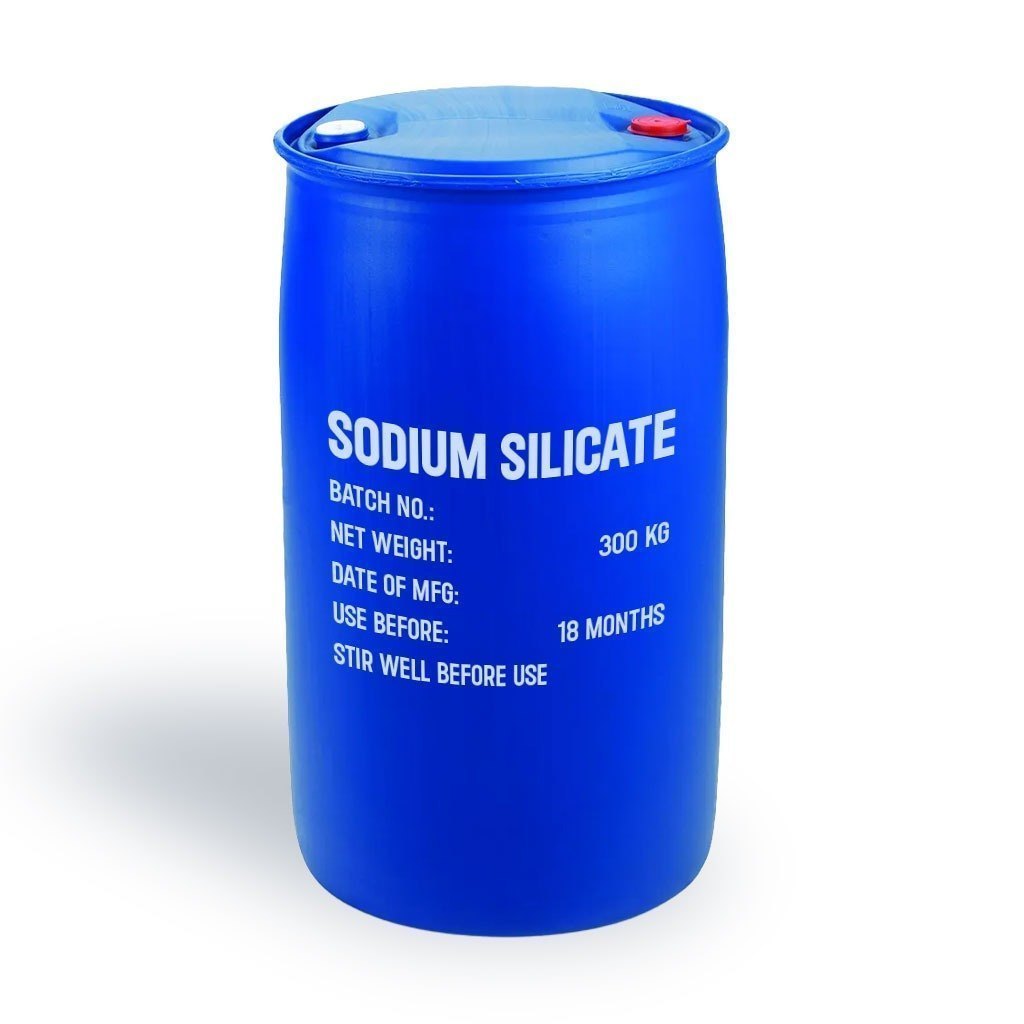
Sodium Silicate Supplier in Nairobi, Kenya, Tanzania and Uganda
Olinc Chemical Suppliers supplies sodium silicate for industrial and commercial applications in Nairobi, Kenya, with enquiries from customers across Kenya, Uganda and Tanzania. Also known as water glass, liquid glass, soluble glass or silicate of soda, sodium silicate is an important inorganic chemical used in soap and detergent manufacturing, adhesives, construction, water treatment, paper production, foundries and other industrial processes.
Sodium silicate is valued for its binding, adhesive, alkaline, stabilising and protective properties. It can help bind materials together, improve detergent performance, support the production of construction materials and serve as a raw material in the manufacture of silica-based products.
If you are looking for a reliable sodium silicate supplier in Nairobi, Kenya or the wider East African market, Olinc Chemical Suppliers can assist with product enquiries, specifications, packaging options and quotations. Contact us to confirm the form and grade suitable for your application.
What Is Sodium Silicate?
Sodium silicate is a family of inorganic compounds made from sodium oxide (Na₂O) and silicon dioxide (SiO₂). Its general chemical formula is written as:
Na₂O·nSiO₂
The letter n represents the silica-to-sodium oxide ratio, which varies depending on the product grade and intended application.
Sodium silicate is manufactured in different forms, including liquid solutions and solid products. Liquid sodium silicate is commonly called water glass because of its glass-like appearance and viscous consistency. Solid sodium silicate may be supplied as glassy lumps, granules or powder, depending on the manufacturing process.
The ratio of silica to sodium oxide is particularly important because it influences the chemical behaviour, alkalinity, viscosity, solubility and performance of the product. This means buyers should not select sodium silicate based on its name alone. They should also confirm the required ratio and physical form.
Chemical Identification and General Properties
| Property | Information |
|---|---|
| Product name | Sodium Silicate |
| Common name | Water Glass |
| Other names | Liquid Glass, Soluble Glass, Silicate of Soda |
| General formula | Na₂O·nSiO₂ |
| CAS number | 1344-09-8 |
| Chemical family | Inorganic silicate |
| Physical forms | Liquid, solid lumps, granules or powder |
| Liquid appearance | Clear to slightly coloured or translucent viscous liquid |
| Solid appearance | Glassy lumps, granules or powder |
| Solubility | Water-soluble, depending on grade and form |
| Chemical character | Generally alkaline |
| Main components | Sodium oxide and silica |
Important: Sodium silicate is a family of related compositions, so it does not have one universal molecular weight or one fixed technical specification. The exact composition should be confirmed from the supplier’s Technical Data Sheet (TDS) and Certificate of Analysis (COA).
Other Names and Related Products
Customers may search for sodium silicate using different names. Including these terms naturally on your website can help customers find the correct product.
Common alternative names include:
-
Water glass
-
Liquid glass
-
Soluble glass
-
Silicate of soda
-
Sodium silicate solution
-
Liquid sodium silicate
-
Sodium silicate glass
-
Sodium silicate liquid
-
Sodium silicate solid
Is sodium silicate the same as sodium metasilicate?
No. They are related silicate chemicals, but they are not automatically interchangeable.
Sodium silicate generally refers to a range of sodium oxide and silica compositions, while sodium metasilicate is a more specifically defined compound with the formula Na₂SiO₃. Sodium metasilicate is often supplied as a solid crystalline or powdered product and has different composition and application requirements.
If your process requires sodium metasilicate, make sure you request that exact product rather than ordering ordinary sodium silicate.
Types and Grades of Sodium Silicate
Choosing the right type is one of the most important purchasing decisions. Sodium silicate grades differ in physical form, concentration, silica-to-sodium oxide ratio and performance.
Liquid Sodium Silicate
Liquid sodium silicate is a concentrated aqueous solution. It is usually clear, colourless to slightly coloured, and has a thick or syrup-like consistency.
It is commonly used in:
-
Soap and detergent manufacturing.
-
Adhesive and binder production.
-
Paper and cardboard processing.
-
Foundry applications.
-
Construction and cement treatment.
-
Industrial water treatment.
-
Silica-based chemical manufacturing.
Liquid sodium silicate is often selected where the manufacturing process requires a ready-made solution that can be pumped, measured or blended into a formulation.
Solid Sodium Silicate
Solid sodium silicate is commonly produced in glass-like lumps, granules or other solid forms. It can be dissolved or processed according to the requirements of the application.
It is used in:
-
Manufacturing liquid sodium silicate solutions.
-
Detergent and cleaning product production.
-
Industrial chemical manufacturing.
-
Adhesive and binding formulations.
-
Silica-based product manufacturing.
Solid sodium silicate should be specified carefully because its dissolution behaviour and final solution properties depend on its composition and ratio.
Powdered Sodium Silicate
Powdered sodium silicate is a dry form used in applications where a solid ingredient is easier to transport, store or incorporate into a formulation.
It may be used in detergent formulations, cleaning products and other industrial processes. Buyers should confirm whether they require ordinary powdered sodium silicate or sodium metasilicate, as these are different products.
Neutral and Alkaline Sodium Silicate
Sodium silicate may also be classified by its composition and alkalinity.
-
Alkaline sodium silicate: Often selected for detergent, cleaning and other industrial applications where alkalinity is important.
-
Neutral or higher-ratio sodium silicate: Used in selected adhesive, paper, foundry and construction applications, depending on the specification.
The words neutral and alkaline should be confirmed against the supplier’s actual product specification rather than treated as universal grade names.
Understanding Sodium Silicate Ratio (Modulus)
One of the most important technical details when purchasing sodium silicate is its silica-to-sodium oxide ratio, also known as the modulus.
It is commonly expressed as:
This ratio helps determine how the product behaves in different applications.
For example:
-
A lower-ratio sodium silicate generally has a higher sodium oxide proportion and stronger alkaline characteristics.
-
A higher-ratio sodium silicate generally has a higher silica proportion and may be preferred for certain adhesive, binder and silica-related applications.
The correct ratio depends on the formulation and manufacturing process. A detergent manufacturer, a paper producer and a foundry may require different grades even though they all ask for sodium silicate.
Before placing an order, tell your supplier the application and required ratio if known. If you are unsure, provide the details of your process so the appropriate grade can be identified.
Industrial Applications and Uses of Sodium Silicate
Sodium silicate is used in many manufacturing and industrial sectors because of its ability to bind materials, provide alkalinity, stabilise formulations and form silica-based structures.
Soap and Detergent Manufacturing
Sodium silicate is an important ingredient in some detergent and cleaning product formulations.
Its functions may include:
-
Supporting alkalinity in cleaning formulations.
-
Helping improve cleaning performance.
-
Providing corrosion protection for certain metal surfaces under suitable formulation conditions.
-
Helping bind and stabilise detergent ingredients.
-
Supporting the structure and performance of detergent powders.
It is used by manufacturers producing:
-
Laundry detergent powder.
-
Industrial cleaning powders.
-
Heavy-duty cleaning products.
-
Certain household and institutional cleaning products.
For detergent manufacturers: The suitable sodium silicate grade depends on the formulation, desired alkalinity, ratio and whether the manufacturing process uses liquid or solid material.
Adhesive and Glue Manufacturing
Sodium silicate is used as an inorganic binder and adhesive in different manufacturing processes.
It can help bond porous materials and is used in:
-
Paper adhesives.
-
Cardboard and carton adhesives.
-
Corrugated packaging applications.
-
Foundry binders.
-
Selected construction and industrial adhesive systems.
It is particularly useful where an inorganic, water-based adhesive system is required.
Construction and Cement Applications
Sodium silicate is used in certain construction processes and cement-related formulations.
Applications include:
-
Concrete densification and surface treatment.
-
Cement-based formulations.
-
Selected masonry and building-material treatments.
-
Soil stabilisation applications.
-
Manufacture of silica-based construction materials.
In concrete surface treatments, suitable silicate products can react with available calcium-containing components to form additional cementitious products that help reduce surface porosity and improve surface hardness.
The exact result depends on the concrete condition, product concentration and application method. Sodium silicate should not be treated as a universal substitute for cement, waterproofing products or specialised concrete admixtures.
Water Treatment
Sodium silicate is used in selected water treatment applications.
Depending on water chemistry and treatment design, it may be used for:
-
Corrosion control in certain water distribution systems.
-
Stabilisation of water chemistry.
-
Supporting the treatment of specific industrial water streams.
-
Selected treatment and conditioning processes.
Its performance depends on water pH, alkalinity, hardness, dissolved metals and the silicate dosage. It should only be introduced into a treatment system according to a suitable treatment programme.
Paper and Cardboard Manufacturing
Sodium silicate is used in the paper and packaging industries as an adhesive, binder and processing chemical.
Its applications may include:
-
Corrugated cardboard production.
-
Paper bonding.
-
Selected paper coating and processing operations.
-
Adhesive systems used in packaging manufacture.
It is useful to manufacturers requiring suitable inorganic adhesive systems for paper-based materials.
Foundry and Metal Casting
Sodium silicate is used as a binder in foundry sand moulding and core-making processes.
It helps bind sand particles together to form moulds and cores used in metal casting. Depending on the foundry process, the binder may be hardened using a suitable curing method, such as carbon dioxide gas.
It is relevant to:
-
Metal casting foundries.
-
Sand mould production.
-
Core-making operations.
-
Industrial engineering and metalworking facilities.
The correct sodium silicate ratio and curing system must be selected for the foundry process.
Textile Industry
Sodium silicate is used in selected textile processing and finishing operations.
Depending on the process, it may be incorporated into:
-
Textile processing formulations.
-
Selected washing and treatment systems.
-
Certain dyeing and finishing operations.
The appropriate grade and concentration depend on the fabric, process chemistry and production requirements.
Pulp and Paper Industry
In pulp and paper processing, sodium silicate may be used in selected bleaching, processing and stabilisation systems. Its suitability depends on the bleaching chemistry and the operating conditions of the mill.
Silica Gel and Silica-Based Products
Sodium silicate is an important raw material in the manufacture of silica-based products, including silica gel.
Through controlled chemical processing, sodium silicate can be converted into silica-containing materials used in industrial and commercial applications.
Industries That Buy Sodium Silicate
Sodium silicate is relevant to a wide range of commercial and industrial buyers, including:
| Industry | Typical application |
|---|---|
| Soap manufacturers | Soap and detergent formulations |
| Detergent factories | Laundry and industrial cleaning products |
| Adhesive manufacturers | Paper, cardboard and industrial adhesives |
| Packaging companies | Corrugated carton bonding |
| Construction companies | Concrete treatment and selected cement applications |
| Water treatment companies | Selected water conditioning and corrosion-control systems |
| Paper mills | Paper processing and adhesive applications |
| Foundries | Sand mould and core binders |
| Textile manufacturers | Selected processing and finishing operations |
| Chemical manufacturers | Raw material for silica-based products |
Technical Specifications of Sodium Silicate
Technical specifications differ between manufacturers and grades. The following table gives buyers the main parameters to check when requesting sodium silicate.
| Specification | What it means |
|---|---|
| Chemical formula | Na₂O·nSiO₂ |
| CAS number | 1344-09-8 |
| SiO₂ content | Percentage of silica |
| Na₂O content | Percentage of sodium oxide |
| Silica-to-sodium oxide ratio | Indicates the product modulus |
| Total solids | Amount of dissolved or dry material, depending on form |
| Specific gravity | Density of the liquid product relative to water |
| Baumé (°Bé) | Common measure used to describe liquid density |
| Viscosity | Resistance of liquid to flow |
| Appearance | Colour, clarity and physical condition |
| Water-insoluble matter | Amount of material that does not dissolve under the test conditions |
| pH | Indicates the alkalinity of the solution |
Typical specification examples
Some commercial liquid grades are sold with different ratios and concentrations. For example, one published liquid grade reports a weight ratio around 1.65, silica content of 33–36%, sodium oxide content of 21–22% and total dissolved solids of 55–58%. These values describe that particular grade, not all sodium silicate products.
Important for buyers: Do not use these example figures as a guaranteed Olinc product specification. Request the actual TDS and COA for the grade being quoted.
How Does Sodium Silicate Work?
Sodium silicate performs differently depending on the application.
-
As a binder: It helps hold particles and materials together, such as sand in foundry moulds or fibres and paper surfaces in adhesive applications.
-
As an alkaline ingredient: It contributes alkalinity to detergent and cleaning formulations.
-
As a concrete treatment: Suitable silicate solutions react with certain components in cement-based materials, helping form additional solid products within the surface.
-
As a silica source: It can be processed to produce silica gel and other silica-based materials.
-
In water treatment: It can participate in selected water chemistry and corrosion-control processes.
This versatility explains why sodium silicate is used across several industries. However, the correct grade and process conditions are essential to achieving the desired performance.
Sodium Silicate Packaging
Packaging depends on whether the customer requires liquid or solid sodium silicate and on the order quantity.
Common commercial packaging formats include:
| Product form | Common packaging examples |
|---|---|
| Liquid sodium silicate | Drums, HDPE containers and IBC tanks |
| Bulk liquid sodium silicate | Suitable bulk tanker systems |
| Solid sodium silicate | Industrial bags, sacks or suitable bulk packaging |
| Powdered sodium silicate | Moisture-resistant bags |
Packaging sizes and availability vary by supplier and grade. Some suppliers offer liquid containers in drum and IBC formats, while solid products may be supplied in bags.
Contact Olinc Chemical Suppliers to confirm the available packaging, minimum order quantity and current supply options before placing your order.
Storage and Handling of Sodium Silicate
Correct storage and handling help preserve product quality and protect workers.
Storage recommendations
-
Keep containers tightly closed when not in use.
-
Store in a suitable, well-ventilated chemical storage area.
-
Protect solid and powdered grades from moisture.
-
Store liquid sodium silicate in compatible containers.
-
Avoid contamination with other chemicals.
-
Follow the storage temperature and compatibility requirements in the product SDS.
-
Keep away from incompatible materials, particularly strong acids and reactive metals such as aluminium and zinc.
Sodium silicate solutions are alkaline and can react with aluminium or zinc, potentially releasing flammable hydrogen gas. Suitable storage materials and equipment should therefore be selected using the product SDS and supplier guidance.
SODIUM SILICATE (solution 25-50%)+1
Safety precautions
Sodium silicate solutions can cause serious eye damage and skin burns, depending on concentration and grade. Dust from solid products can also irritate the eyes and respiratory system.
When handling sodium silicate:
-
Wear chemical-resistant gloves.
-
Use safety goggles and appropriate face protection.
-
Wear suitable protective clothing.
-
Avoid breathing dust or spray.
-
Ensure good ventilation.
-
Wash exposed skin after handling.
-
Follow the supplier’s Safety Data Sheet (SDS).
In case of eye or skin exposure, follow the emergency first-aid instructions in the SDS and seek prompt medical attention where required.
Never mix sodium silicate with acids or other chemicals unless the process has been specifically designed and assessed for that purpose. Acidification can cause silica precipitation or gel formation.
SODIUM SILICATE (solution 25-50%)+2
Sodium Silicate vs Other Similar Chemicals
Buyers sometimes confuse sodium silicate with other sodium-based industrial chemicals. Understanding the differences helps avoid ordering the wrong product.
| Chemical | Main difference |
|---|---|
| Sodium silicate | A sodium and silica-based chemical used in binders, detergents, construction and other applications |
| Sodium metasilicate | A specific silicate compound with formula Na₂SiO₃; commonly used in industrial cleaning and detergent formulations |
| Sodium carbonate (soda ash) | An alkaline carbonate used in glass, detergent and chemical manufacturing |
| Sodium hydroxide (caustic soda) | A strong alkali used in soap production, cleaning and chemical processing |
| Sodium sulphate | A sodium salt used in detergents, glass and other manufacturing processes |
These products are not interchangeable. Always confirm the exact chemical name and specification required by your process.
Why Buy Sodium Silicate from Olinc Chemical Suppliers?
When sourcing industrial chemicals, buyers need clear product information, suitable specifications and a supplier who understands their application.
Olinc Chemical Suppliers serves customers looking for industrial chemicals in Nairobi and other parts of Kenya, with enquiries from Uganda and Tanzania.
When you contact us, you can enquire about:
-
Sodium silicate product availability.
-
Liquid or solid product requirements.
-
Suitable grade and ratio for your application.
-
Technical specifications and product documentation.
-
Packaging and bulk quantities.
-
Current pricing and quotations.
-
Supply arrangements for your location.
Our aim is to help customers identify the appropriate chemical for their production or industrial requirements.
Sodium Silicate Supply in Nairobi, Kenya and East Africa
Olinc Chemical Suppliers welcomes sodium silicate enquiries from industrial and commercial customers in:
-
Nairobi, Kenya: Serving manufacturers, chemical distributors, detergent producers, construction-related businesses and other industrial buyers.
-
Other parts of Kenya: Enquiries from customers requiring sodium silicate for manufacturing and industrial applications.
-
Uganda: Customers seeking sodium silicate for detergent production, adhesives, construction and other industrial processes.
-
Tanzania: Enquiries from businesses looking for sodium silicate for commercial and industrial use.
If you are searching online for sodium silicate suppliers in Nairobi, sodium silicate price in Kenya, water glass suppliers in Kenya, or sodium silicate suppliers in East Africa, contact Olinc Chemical Suppliers for product and quotation enquiries.
How to Order Sodium Silicate from Olinc
To help us provide an accurate quotation, please share the following information:
-
Product form: Do you require liquid, solid lumps, granules or powder?
-
Application: Is it for soap making, detergent manufacturing, adhesives, construction, foundry use or another process?
-
Grade and ratio: Share your required silica-to-sodium oxide ratio or technical specification, if available.
-
Quantity: Indicate the number of kilograms, bags, drums or tonnes required.
-
Location: Tell us where the product is needed.
If you do not know the correct grade, tell us what you intend to manufacture or use it for. This will help us understand your requirements before recommending a suitable specification.
Request a Sodium Silicate Quotation
Contact Olinc Chemical Suppliers for current prices, availability, packaging and product specifications.
0793062849
0743657810
sales@olincinchemicals.com
Enterprise Road, Avon Business Center, Nairobi, Kenya
Enquire on WhatsApp
Frequently Asked Questions About Sodium Silicate
What is sodium silicate used for?
Sodium silicate is used in soap and detergent manufacturing, adhesives, cardboard production, construction, foundry sand binding, selected water treatment processes and silica-based chemical manufacturing.
What is another name for sodium silicate?
Sodium silicate is commonly known as water glass, liquid glass, soluble glass or silicate of soda. The name water glass is particularly common when referring to its liquid form.
What is the chemical formula of sodium silicate?
Its general chemical formula is Na₂O·nSiO₂. The value of n varies according to the grade and composition. Sodium metasilicate, a related but distinct compound, has the formula Na₂SiO₃.
Is sodium silicate available in liquid form?
Yes. Liquid sodium silicate is a concentrated water-based solution commonly used in detergent production, adhesives, construction and other industrial applications.
Is sodium silicate available in powder form?
Yes. Solid sodium silicate may be supplied as lumps, granules or powder, depending on the product. Buyers should specify the exact form required.
Is sodium silicate the same as water glass?
Yes. Water glass is a common name for sodium silicate, particularly liquid sodium silicate.
Is sodium silicate the same as sodium metasilicate?
No. Sodium metasilicate is a specific compound within the broader silicate family. It has a defined chemical composition and should not automatically be substituted for other sodium silicate grades.
What is the CAS number of sodium silicate?
The commonly used CAS number for sodium silicate is 1344-09-8. Always check the specific product documentation when purchasing a particular silicate composition.
What is the difference between alkaline and neutral sodium silicate?
They differ mainly in composition, ratio and resulting chemical properties. Alkaline grades are commonly used in detergent and cleaning formulations, while higher-ratio or neutral grades are used in selected adhesive, paper and foundry applications.
What is the price of sodium silicate in Kenya?
The price of sodium silicate in Kenya depends on the product form, grade, silica-to-sodium oxide ratio, concentration, packaging and order quantity. Contact Olinc Chemical Suppliers for a current quotation.
Can sodium silicate be used in soap manufacturing?
Yes. Sodium silicate is used in certain soap and detergent formulations. The appropriate grade and quantity depend on the product formulation and manufacturing process.
Can sodium silicate be used in detergent powder?
Yes. It is used in selected detergent powder formulations to contribute alkalinity, support cleaning performance and provide other formulation benefits.
How should sodium silicate be stored?
Store it in suitable, tightly closed containers, protected from contamination and incompatible chemicals. Solid grades should be protected from moisture, and liquid grades should be stored in chemically compatible tanks or containers.
Is sodium silicate hazardous?
Concentrated sodium silicate solutions can be corrosive and may cause serious eye damage or skin burns. Solid grades can create irritating dust. Appropriate protective equipment and the product SDS should always be followed.
Where can I buy sodium silicate in Nairobi, Kenya?
You can contact Olinc Chemical Suppliers in Enterprise Road, Avon Business Center, Nairobi, Kenya, to enquire about sodium silicate availability, specifications, packaging and pricing.
Does Olinc Chemical Suppliers serve customers in Uganda and Tanzania?
Olinc Chemical Suppliers welcomes enquiries from customers in Kenya, Uganda and Tanzania. Contact the sales team to discuss your required quantity, location and supply arrangements.

Reviews
There are no reviews yet.