
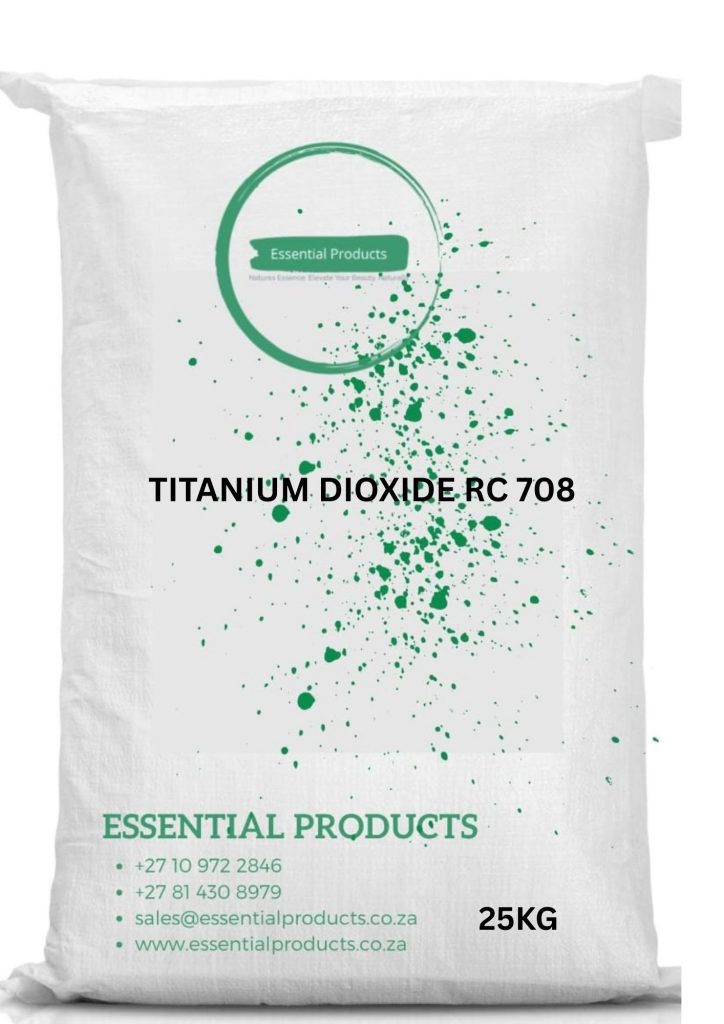
Titanium Dioxide Supplier in Kenya | Olinc Chemical Suppliers
Titanium Dioxide (TiO₂) is a high-performance white inorganic pigment widely used in the manufacture of paints, coatings, plastics, rubber, printing inks, paper, adhesives, sealants and other industrial products. It is valued for its exceptional whiteness, brightness, opacity, tinting strength and ability to provide excellent coverage in finished products.
Also known as Titanium(IV) Oxide, Titania, Titanium White, Titanium Oxide and Pigment White 6, Titanium Dioxide is one of the most widely used white pigments in industrial manufacturing. Its high refractive index allows it to scatter visible light effectively, helping products achieve a bright white appearance and strong hiding power.
For manufacturers looking for a reliable source of Titanium Dioxide in Nairobi, Olinc Chemical Suppliers welcomes enquiries from businesses in Kenya, Uganda and Tanzania. Contact us to enquire about available grades, specifications, packaging options and bulk-order pricing.
Other Names and Synonyms of Titanium Dioxide
Titanium Dioxide is sold and described under several chemical, technical and commercial names. Buyers may encounter different names depending on the supplier, manufacturer, industry or grade.
Common chemical and alternative names include:
-
Titanium Dioxide
-
Titanium(IV) Oxide
-
Titanium Oxide
-
Titania
-
Titanium White
-
White Titanium Oxide
-
Dioxotitanium
-
Dioxotitanium Oxide
-
Titanium Peroxide — a reported synonym, but not a recommended purchasing identifier
-
Pigment White 6
-
CI 77891
-
C.I. Pigment White 6
-
TiO₂
-
Rutile Titanium Dioxide
-
Anatase Titanium Dioxide
-
Titanium Dioxide Pigment
-
White Titanium Pigment
-
Titanium White Pigment
Names and commercial product references buyers may encounter:
-
Ti-Pure
-
Kronos Titanium Dioxide
-
Tronox Titanium Dioxide
-
Tioxide
-
Tiona
-
Tipaque
-
Titanox
-
Hombitan
-
Tiofine
-
Unitane
-
Rutil
-
Rutiox
-
Zopaque
-
Kemira Titanium Dioxide
-
Aeroxide
-
UV-Titan
Some names above are manufacturer or product-line names rather than chemical synonyms. The exact grade and manufacturer should therefore be confirmed when requesting a quotation.
Important purchasing note: Do not order using the name alone. Confirm whether you need rutile or anatase Titanium Dioxide, the intended application and the required technical specifications. These differences can significantly affect the performance of your finished product.
Chemical Identification and Basic Specifications
| Property | Details |
|---|---|
| Product name | Titanium Dioxide |
| Chemical formula | TiO₂ |
| CAS number | 13463-67-7 |
| Molecular weight | Approximately 79.87 g/mol |
| EC number | 236-675-5 |
| Colour | White |
| Physical appearance | Fine white powder |
| Chemical type | Inorganic oxide pigment |
| Solubility in water | Insoluble |
| Main crystal forms | Rutile and Anatase |
| Common pigment identification | CI Pigment White 6 / CI 77891 |
The CAS numbers for the individual crystal forms are also important:
-
General Titanium Dioxide: 13463-67-7
-
Anatase Titanium Dioxide: 1317-70-0
-
Rutile Titanium Dioxide: 1317-80-2
Understanding the Two Main Types of Titanium Dioxide
Titanium Dioxide is mainly supplied in two commercially important crystal forms: Rutile and Anatase. Both are white pigments, but they differ in their optical properties, stability and suitability for particular applications.
Rutile Titanium Dioxide
Rutile Titanium Dioxide is widely used in industrial applications where high opacity, strong whiteness, durability and weather resistance are important.
It has a high refractive index and is commonly preferred for demanding paint, coating and plastic applications.
Common applications:
-
Interior and exterior paints.
-
Industrial and protective coatings.
-
Automotive paints and finishes.
-
Plastic pipes and fittings.
-
PVC products.
-
Masterbatch manufacturing.
-
Printing inks.
-
Rubber products.
-
Construction coatings.
-
Weather-resistant coatings.
Why manufacturers choose rutile:
-
Excellent opacity and hiding power.
-
Strong whitening performance.
-
Good tinting strength.
-
Better resistance to outdoor weathering in appropriately treated pigment grades.
-
Suitable for many demanding industrial formulations.
Many commercial rutile grades receive surface treatments, commonly involving alumina, silica or organic materials, to improve dispersion, durability and compatibility with different formulation systems.
Anatase Titanium Dioxide
Anatase Titanium Dioxide is another widely used form, particularly in applications where its whiteness, brightness and cost-performance characteristics are suitable.
Common applications:
-
Interior decorative paints.
-
Paper manufacturing.
-
Printing inks.
-
Selected plastics.
-
Textile applications.
-
Rubber manufacturing.
-
Certain chemical and industrial formulations.
Why manufacturers choose anatase:
-
Good whiteness and brightness.
-
Useful pigment performance in selected formulations.
-
Suitable for various interior and general-purpose applications.
-
Can be an economical option depending on the application and grade.
Rutile vs Anatase: Which One Should You Buy?
| Feature | Rutile | Anatase |
|---|---|---|
| Crystal structure | Rutile | Anatase |
| Main strength | Opacity and durability | Whiteness and brightness |
| Outdoor exposure | Often preferred | Generally less preferred |
| Exterior paints | Commonly used | Grade and formulation dependent |
| Interior paints | Suitable | Suitable |
| Plastics | Widely used | Used in selected applications |
| Paper | Used in selected grades | Commonly used |
| UV/weathering performance | Often better | Generally lower |
Our recommendation: If you manufacture exterior paints, industrial coatings, plastic products or masterbatch, ask about a suitable rutile grade. For paper, selected interior paints and other general-purpose applications, an appropriate anatase grade may be suitable. Always select the grade based on the manufacturer’s technical data sheet and your formulation requirements.
Industrial Applications of Titanium Dioxide
Titanium Dioxide is used across a wide range of manufacturing industries because it improves the colour, appearance, opacity and performance of finished products.
Paints and Coatings Manufacturing
Titanium Dioxide is one of the most important raw materials used in paint manufacturing. It provides the white colour and hiding power needed to produce high-quality paints.
It is used in:
-
Emulsion paints.
-
Gloss paints.
-
Satin paints.
-
Primer paints.
-
Exterior and interior paints.
-
Industrial coatings.
-
Protective metal coatings.
-
Automotive refinishing paints.
-
Wood coatings.
-
Decorative coatings.
Benefits in paint formulations:
-
Improves whiteness and brightness.
-
Provides excellent hiding power.
-
Reduces the visibility of the underlying surface.
-
Helps achieve consistent colour.
-
Improves the appearance of finished coatings.
-
Supports the production of different shades when blended with colour pigments.
The grade selected can affect dispersion, gloss, opacity, durability and the final paint finish.
Plastics and PVC Manufacturing
Titanium Dioxide is widely used in plastic manufacturing to provide whiteness, opacity and colour consistency.
Applications include:
-
PVC pipes and fittings.
-
Plastic containers.
-
Packaging materials.
-
Plastic chairs and household products.
-
Plastic films.
-
Plastic sheets.
-
Electrical accessories.
-
Cable insulation and sheathing.
-
Plastic masterbatch.
-
Polypropylene and polyethylene products.
It can also help protect certain plastic products against UV-related deterioration when an appropriate pigment grade and formulation are used.
Masterbatch Manufacturing
Titanium Dioxide is an important raw material in white masterbatch production.
White masterbatch manufacturers use it to achieve:
-
High whiteness.
-
Strong opacity.
-
Consistent colour.
-
Improved coverage in plastic products.
-
Good dispersion when matched with a suitable carrier and processing system.
For masterbatch production, buyers should pay particular attention to pigment concentration, particle-size distribution, surface treatment and dispersibility.
Rubber Manufacturing
Titanium Dioxide is used in selected rubber formulations to provide white colour, opacity and improved appearance.
Applications may include:
-
White rubber products.
-
Coloured rubber compounds.
-
Rubber flooring.
-
Rubber sheets.
-
Rubber footwear components.
-
Industrial rubber goods.
-
Selected rubber seals and moulded products.
The correct grade should be selected according to the rubber type, processing temperature and required colour performance.
Printing Ink Manufacturing
Titanium Dioxide is used in printing inks where strong whiteness, opacity and coverage are required.
Applications include:
-
Packaging inks.
-
Screen-printing inks.
-
Decorative printing inks.
-
White inks for plastic films.
-
Paper printing formulations.
-
Industrial printing applications.
A suitable grade should offer good dispersion, colour consistency and compatibility with the ink system.
Paper Manufacturing
Titanium Dioxide can be used as a white pigment in paper production to improve brightness, opacity and appearance.
It is used in selected:
-
Printing papers.
-
Coated papers.
-
Specialty papers.
-
Decorative papers.
-
High-opacity paper products.
The choice between anatase and rutile depends on the paper-making process, performance requirements and economics.
Cosmetics and Personal-Care Manufacturing
Certain specifically manufactured Titanium Dioxide grades are used in cosmetic formulations as a white pigment or UV-filter ingredient, subject to the applicable product regulations.
Possible applications include:
-
Selected face powders.
-
Foundations.
-
Creams and lotions.
-
Sunscreen formulations.
-
Colour cosmetics.
-
Personal-care formulations.
Important: Industrial pigment grades must not automatically be assumed suitable for cosmetics. Cosmetic use requires the correct grade, particle characteristics, purity, surface treatment and regulatory documentation. Nano and non-nano grades may also have different requirements.
Construction and Building Materials
Titanium Dioxide is used in selected construction products to improve whiteness, brightness and opacity.
Applications include:
-
Decorative wall coatings.
-
Cement-based decorative products.
-
Coloured construction materials.
-
Selected sealants.
-
Construction paints.
-
Architectural coatings.
-
Certain flooring and surface-finishing products.
Adhesives and Sealants
Selected grades are used in adhesives and sealants to provide whiteness, opacity and colour consistency.
Applications include:
-
Construction adhesives.
-
White sealants.
-
Selected polymer-based adhesives.
-
Decorative bonding compounds.
-
Industrial sealant formulations.
Textile and Fibre Applications
Titanium Dioxide can be used in selected textile and fibre processes to modify appearance and optical properties. Its exact role depends on the fibre, processing method and grade.
Key Benefits of Titanium Dioxide
Manufacturers choose Titanium Dioxide because it offers several useful properties:
-
High whiteness: Helps produce bright white finished products.
-
Excellent opacity: Hides the colour of underlying surfaces and materials.
-
Strong tinting strength: Helps achieve the required colour performance in pigment formulations.
-
High refractive index: Provides effective light scattering.
-
Good chemical stability: Suitable for many industrial formulations.
-
Insolubility in water: Remains as a dispersed pigment rather than dissolving in water.
-
Versatility: Used in paints, plastics, rubber, inks, paper and selected personal-care products.
-
UV-related performance: Certain grades are useful in formulations requiring UV protection or light-scattering properties.
Available Grades and What Buyers Should Consider
Titanium Dioxide is not a single universal product. Different grades are manufactured to meet the needs of particular industries.
| Grade | Typical application |
|---|---|
| Rutile Titanium Dioxide | Exterior paints, coatings, plastics and masterbatch |
| Anatase Titanium Dioxide | Selected interior paints, paper and general industrial use |
| Paint Grade | Decorative and industrial paint formulations |
| Plastic Grade | PVC, PE, PP and other plastic products |
| Masterbatch Grade | White masterbatch production |
| Rubber Grade | Selected white and coloured rubber products |
| Ink Grade | Printing ink formulations |
| Paper Grade | Paper brightness and opacity |
| Cosmetic Grade | Approved cosmetic applications, subject to specifications |
| Food Grade | Only where legally permitted and supported by applicable documentation |
Do not assume that one grade can replace another. For example, a pigment designed for paint manufacturing may not meet the requirements for cosmetics or food-related applications.
Technical Specifications to Check Before Buying
When purchasing Titanium Dioxide, manufacturers should review the product’s technical data sheet (TDS) and certificate of analysis (COA).
Important specifications include:
| Specification | Why it matters |
|---|---|
| TiO₂ content | Indicates pigment purity or concentration |
| Crystal form | Identifies rutile or anatase |
| Whiteness | Affects the final appearance |
| Tinting strength | Indicates colour strength |
| Oil absorption | Helps determine binder and formulation requirements |
| Particle size | Influences opacity, dispersion and finish |
| Surface treatment | Affects compatibility and performance |
| Moisture content | Important for storage and processing |
| pH | Relevant to formulation compatibility |
| Specific gravity | Useful for formulation calculations |
| Dispersibility | Affects processing and final product quality |
| Colour undertone | Helps determine whether the pigment appears bluish, neutral or yellowish |
Exact specification limits vary between manufacturers and grades. Buyers should request the relevant TDS and COA rather than relying on generic figures.
How Much Titanium Dioxide Should You Use?
The required amount depends on the type of product being manufactured, the grade of Titanium Dioxide, the desired opacity, the other ingredients and the production process.
For example:
-
Paint manufacturers determine the pigment loading according to the paint formulation, opacity requirement and PVC (pigment volume concentration).
-
Plastic manufacturers determine the loading according to the polymer, product thickness, desired whiteness and processing conditions.
-
Masterbatch manufacturers select a pigment concentration based on the required masterbatch strength and let-down ratio.
-
Rubber manufacturers determine the dosage based on the compound and required colour.
There is no single dosage suitable for every application. Conduct formulation trials and follow the pigment manufacturer’s recommendations.
Packaging Options
Titanium Dioxide is commonly supplied as a dry powder in sealed packaging designed to protect it from moisture and contamination.
Common commercial packaging formats may include:
-
25 kg bags.
-
20 kg bags.
-
50 kg bags.
-
Jumbo bags or bulk bags for larger industrial requirements.
Packaging varies by manufacturer and supplier. Contact Olinc Chemical Suppliers to enquire about available pack sizes and bulk-order arrangements.
Storage and Handling
Proper storage helps maintain the quality and performance of Titanium Dioxide.
Storage recommendations:
-
Store in a cool, dry and well-ventilated area.
-
Keep bags tightly closed when not in use.
-
Protect the product from moisture.
-
Avoid contamination with dirt and other materials.
-
Store away from incompatible substances as directed by the SDS.
-
Keep packaging on pallets or raised surfaces where possible.
-
Avoid damaging bags during handling.
-
Follow the manufacturer’s recommended storage conditions.
Handling precautions:
-
Avoid generating and breathing dust.
-
Use suitable protective gloves and safety goggles.
-
Use appropriate respiratory protection where dust exposure may occur, based on workplace risk assessment.
-
Ensure adequate ventilation and dust control.
-
Wash hands after handling.
-
Follow the product-specific Safety Data Sheet (SDS).
Although Titanium Dioxide is widely used as an industrial pigment, inhalation of airborne respirable dust should be controlled. Some regulatory systems classify certain powder forms or exposure scenarios differently, so consult the current SDS for the exact product supplied.
How to Choose the Right Titanium Dioxide Supplier
Before purchasing Titanium Dioxide, consider the following:
-
Correct grade: Confirm whether the product is rutile or anatase.
-
Application suitability: Make sure the grade is designed for your industry.
-
Technical documentation: Request the TDS and COA.
-
Packaging: Confirm the available bag sizes.
-
Quantity: State whether you need a few bags or bulk supply.
-
Consistency: Ask about manufacturer, product identity and batch details.
-
Price: Compare quotations on the same grade and specification, not just the product name.
-
Delivery: Confirm the delivery location, transport arrangements and lead time.
Olinc Chemical Suppliers welcomes enquiries from manufacturers, distributors, contractors and industrial buyers looking for Titanium Dioxide in Kenya and the wider East African market.
Titanium Dioxide Compared with Other White Pigments
Titanium Dioxide is sometimes compared with other white pigments and mineral fillers. However, these materials do not offer exactly the same performance.
| Product | Main characteristics | Common applications |
|---|---|---|
| Titanium Dioxide | High opacity, whiteness and tinting strength | Paints, plastics, inks and paper |
| Zinc Oxide | White pigment with additional functional properties | Rubber, ceramics and selected coatings |
| Calcium Carbonate | Mineral filler and extender | Paints, plastics, rubber and construction |
| Lithopone | White pigment based on barium sulphate and zinc sulphide | Selected paints and coatings |
| Kaolin | White mineral filler and extender | Paper, paints and ceramics |
| Barium Sulphate | Dense, chemically stable extender | Coatings, plastics and industrial products |
Why choose Titanium Dioxide?
When strong whiteness, hiding power and opacity are essential, Titanium Dioxide is often preferred over ordinary mineral fillers such as Calcium Carbonate and Kaolin. These fillers can reduce formulation costs, but they do not provide the same pigment strength.
Why Buy Titanium Dioxide from Olinc Chemical Suppliers?
Olinc Chemical Suppliers serves businesses looking for industrial chemicals and raw materials in Nairobi, Kenya and the wider East African region.
When enquiring about Titanium Dioxide from Olinc, you can:
-
Request pricing for your required quantity.
-
Enquire about suitable grades for your manufacturing application.
-
Confirm available packaging options.
-
Request product specifications and relevant documentation.
-
Discuss requirements for small or bulk orders.
-
Enquire about supply arrangements in Kenya, Uganda and Tanzania.
Whether you manufacture paints, plastics, rubber, printing inks, coatings or other industrial products, we welcome your enquiry.
Contact Olinc Chemical Suppliers
-
Location: Nairobi, Enterprise Road, Avon Business Center
-
Phone / WhatsApp: 0793062849
-
Email: sales@olincinchemicals.com
-
Website: www.olincinchemicalsl.com
Frequently Asked Questions About Titanium Dioxide
What is Titanium Dioxide used for?
Titanium Dioxide is mainly used as a white pigment in paints, coatings, plastics, rubber, paper, printing inks and selected cosmetic products. It provides whiteness, brightness, opacity and hiding power.
What is another name for Titanium Dioxide?
Other names include Titanium(IV) Oxide, Titania, Titanium White, Titanium Oxide, Pigment White 6, CI 77891 and TiO₂.
What is the difference between rutile and anatase Titanium Dioxide?
Rutile is commonly preferred for exterior paints, coatings and plastics because of its opacity and generally better weathering performance. Anatase is used in selected interior paints, paper and other applications where its pigment characteristics are suitable.
Which Titanium Dioxide is best for paint manufacturing?
Rutile Titanium Dioxide is commonly selected for high-performance interior and exterior paints because of its hiding power, whiteness and durability. However, the correct grade depends on the paint formulation, desired finish and performance requirements.
Can Titanium Dioxide be used in plastic manufacturing?
Yes. It is widely used in PVC, polyethylene, polypropylene, plastic sheets, containers, pipes, fittings and masterbatch production to provide whiteness and opacity.
Is Titanium Dioxide soluble in water?
No. Titanium Dioxide is insoluble in water. It must be properly dispersed into the formulation to achieve uniform pigment distribution.
Is Titanium Dioxide a powder or liquid?
Commercial pigment-grade Titanium Dioxide is generally supplied as a fine white powder.
What is the CAS number for Titanium Dioxide?
The general CAS number is 13463-67-7. Anatase has CAS number 1317-70-0, while rutile has CAS number 1317-80-2.
Is Titanium Dioxide used in cosmetics?
Certain specially manufactured grades are used in cosmetics, including some colour cosmetics and sunscreen formulations. The grade must meet the relevant purity, particle-size and regulatory requirements. Industrial pigment grades should not automatically be used for cosmetic manufacturing.
Is Titanium Dioxide food grade?
Food-related use is subject to country-specific regulatory requirements. Some jurisdictions have restricted or prohibited its use as a food additive, while others may have different rules. Always verify current regulations in the destination market and request the correct documentation before considering food applications.
What packaging is available for Titanium Dioxide?
Common industrial packaging includes 25 kg bags, although other sizes and bulk packaging may be available depending on the manufacturer and supplier. Contact Olinc to confirm available packaging.
How do I choose the correct Titanium Dioxide grade?
Start by identifying your application. Paint, plastic, rubber, paper, ink and cosmetic manufacturers may require different grades. Confirm the crystal form, surface treatment, whiteness, tinting strength and dispersion characteristics before ordering.
Where can I buy Titanium Dioxide in Nairobi, Kenya?
You can contact Olinc Chemical Suppliers in Nairobi, Enterprise Road, Avon Business Center, to enquire about Titanium Dioxide pricing, specifications, packaging and bulk supply.
Does Olinc Chemical Suppliers serve customers outside Nairobi?
Olinc welcomes enquiries from customers across Kenya, Uganda and Tanzania. Contact us to discuss your location, quantity and delivery requirements.


Reviews
There are no reviews yet.