
Toluene Supplier in Kenya | Industrial Toluene – Olinc Chemical Suppliers
Welcome to Olinc Chemical Suppliers, your industrial chemical supply partner in Nairobi, Kenya. We welcome enquiries from manufacturers, paint producers, coating companies, adhesive manufacturers, printing businesses and other industrial users looking for Toluene for their production and processing requirements.
Toluene, also known as Methylbenzene, Toluol or Phenylmethane, is an aromatic hydrocarbon solvent widely used in industrial manufacturing. It is valued for its ability to dissolve a variety of organic substances, including certain resins, oils, rubber compounds, paints and coatings. It is also an important raw material in the manufacture of other chemicals.
Whether you are sourcing Toluene for paint formulation, industrial coatings, adhesive production, printing inks, rubber processing or chemical manufacturing, understanding the correct grade and product specifications is essential.
Olinc Chemical Suppliers welcomes Toluene enquiries in Nairobi and across Kenya. Contact us to enquire about product specifications, available grades, packaging options and supply arrangements.
What Is Toluene?
Toluene is an aromatic hydrocarbon consisting of a benzene ring with one attached methyl group. It is a clear, colourless, volatile liquid with a characteristic sweet, pungent aromatic smell.
It is naturally present in crude petroleum and is commercially produced mainly through petroleum refining and related petrochemical processes.
Toluene is particularly valued in industry because it acts as a solvent for many organic materials. It can dissolve or help disperse selected resins, polymers, oils, rubber compounds and coating ingredients, making it useful in different manufacturing formulations.
It is also used as a chemical feedstock in the production of benzene, toluene diisocyanate-related chemical chains and other industrial intermediates.
Chemical Identification and Product Information
| Property | Description |
|---|---|
| Product name | Toluene |
| Chemical name | Methylbenzene |
| Other names | Toluol, Phenylmethane, Methylbenzol |
| Chemical formula | C₇H₈ |
| Structural formula | C₆H₅CH₃ |
| CAS number | 108-88-3 |
| EC number | 203-625-9 |
| Molecular weight | 92.14 g/mol |
| Chemical family | Aromatic hydrocarbons |
| Appearance | Clear, colourless liquid |
| Odour | Characteristic aromatic odour |
| UN number | 1294 |
| Main industrial function | Solvent and chemical intermediate |
These identifiers help customers distinguish Toluene from other aromatic solvents and ensure that the correct chemical is specified when requesting a quotation.
Other Names of Toluene
When searching for Toluene, customers may encounter several alternative chemical names. These names generally refer to the same chemical substance.
Common alternative names include:
- Methylbenzene
- Methyl Benzene
- Toluol
- Phenylmethane
- Phenyl Methane
- Methylbenzol
- Benzene, Methyl-
- Monomethylbenzene
- Toluene solvent
- Industrial Toluene
Important: Toluene should not be confused with Xylene, Benzene or other aromatic hydrocarbon solvents. Although these chemicals belong to related chemical families, they have different molecular structures, properties and application requirements.
Physical and Chemical Properties of Toluene
Toluene has several properties that make it useful in industrial solvent applications.
Appearance
Toluene is normally a clear, colourless liquid. Any unusual colour, suspended material or visible contamination should be investigated against the product’s specification.
Solvent Properties
Toluene is an effective organic solvent for many materials, including selected resins, rubber compounds, oils, coatings and adhesives.
Its suitability depends on the chemical composition of the material being dissolved and the formulation requirements.
Volatility
Toluene evaporates relatively readily under normal conditions. Its evaporation characteristics make it useful in selected coating, ink and adhesive formulations.
However, evaporation also means that vapours can accumulate in poorly ventilated working areas.
Water Solubility
Toluene has very low solubility in water and generally forms a separate liquid layer when mixed with water.
It is considerably more compatible with many organic solvents than with water.
Flammability
Toluene is a highly flammable liquid. Its vapours can form explosive mixtures with air, so ignition sources, sparks, flames and unsuitable electrical equipment must be controlled.
Typical Physical Properties
| Property | Typical reference value |
|---|---|
| Molecular formula | C₇H₈ |
| Molecular weight | 92.14 g/mol |
| Appearance | Colourless liquid |
| Boiling point | Approximately 110.6°C |
| Melting point | Approximately -95°C |
| Relative density | Approximately 0.87 at 20°C |
| Flash point | Approximately 4°C, closed cup |
| Vapour pressure | Approximately 2.8 kPa at 20°C |
| Water solubility | Low, approximately 0.5 g/L at 25°C |
| Vapour density | Approximately 3.1 (air = 1) |
| Auto-ignition temperature | Approximately 480°C |
Values are typical reference data and may vary slightly with test conditions and the source used. Always consult the current manufacturer’s Technical Data Sheet (TDS) and Safety Data Sheet (SDS) for the exact product supplied.
Industrial Applications and Uses of Toluene
Toluene is used in many manufacturing sectors because of its solvent performance and its importance as a petrochemical raw material.
Paint and Coating Manufacturing
One of the recognised industrial applications of Toluene is in paints, coatings and related solvent formulations.
It may be used as a solvent in selected formulations to dissolve or reduce the viscosity of compatible resin systems and help achieve the required application properties.
Applications include:
- Industrial paint manufacturing
- Protective coating formulations
- Selected metal coating systems
- Wood coating formulations
- Lacquers and varnishes
- Certain printing and specialty coatings
The suitability of Toluene depends on the resin system, formulation design, evaporation requirements and compatibility with other ingredients.
Paint Thinners and Industrial Solvent Formulations
Toluene is used in some solvent blends and paint-thinning formulations.
It can help dissolve compatible coating materials and adjust the working viscosity of selected solvent-based products.
However, not every paint or coating system is compatible with Toluene. Water-based coatings and some specialised formulations require different solvents.
Adhesive Manufacturing
Toluene is used in selected adhesive formulations, particularly those based on compatible rubber and resin systems.
Its solvent properties can help dissolve adhesive ingredients and produce a workable formulation.
Potential applications include:
- Rubber-based adhesives
- Selected industrial bonding products
- Contact adhesive formulations
- Specialty solvent-based adhesives
Manufacturers should confirm compatibility with the adhesive’s polymers, resins and other ingredients before selecting a solvent.
Printing Ink Manufacturing
Toluene is used in certain printing ink formulations and printing-related processes.
It can act as a solvent for compatible ink resins and formulation ingredients. Its suitability depends on the printing technology, substrate, drying requirements and applicable workplace and environmental controls.
Rubber Processing
Toluene can dissolve certain rubber materials and rubber-related compounds.
It is therefore used in selected rubber processing and formulation operations, including the preparation of rubber solutions and certain industrial adhesive systems.
Chemical Manufacturing
Toluene is an important chemical intermediate and starting material in petrochemical manufacturing.
It is used in processes that produce other industrial chemicals, including:
- Benzene
- Toluene derivatives
- Selected aromatic intermediates
- Chemical feedstocks for polymer and resin industries
It is also used in the manufacture of materials that support the production of plastics, synthetic fibres, coatings and other industrial products.
Industrial Cleaning and Degreasing
Toluene may be used in controlled industrial solvent-cleaning applications where the target material is compatible with it.
It can dissolve certain oils, greases, resins and organic residues.
It should not be assumed suitable for every surface or cleaning operation. It can damage plastics, coatings and other materials, and its flammability and health hazards require appropriate industrial controls.
Laboratory and Chemical Research
Toluene is used in professional laboratories and chemical research as an organic solvent and reaction medium for selected procedures.
Laboratory applications may require a specific purity or analytical grade. Industrial-grade material should not automatically be substituted for laboratory or analytical-grade Toluene.
Petroleum and Fuel-Related Applications
Toluene is present in petroleum-related processes and is used in gasoline blending to improve octane rating.
It is also an important petrochemical feedstock in the wider petroleum and chemical manufacturing industries.
Available Grades of Toluene
Toluene is supplied in different grades depending on the intended application, required purity and product specification.
Customers should identify the grade they require before ordering.
Industrial Grade Toluene
Industrial-grade Toluene is used in selected manufacturing and solvent applications.
Potential users include:
- Paint and coating manufacturers
- Adhesive producers
- Rubber processors
- Printing ink manufacturers
- Industrial chemical manufacturers
The exact purity and impurity profile depend on the manufacturer’s specification.
Technical Grade Toluene
Technical-grade Toluene is used for industrial and technical applications where the product meets the requirements of the intended process.
Customers should confirm the purity, water content, impurity profile and other relevant parameters before selecting this grade.
Laboratory Grade Toluene
Laboratory-grade Toluene is intended for laboratory procedures requiring defined quality specifications.
The exact suitability depends on the stated purity and impurity limits.
Analytical or Reagent Grade Toluene
Analytical and reagent grades are manufactured to more specific quality requirements for laboratory testing and analytical procedures.
These grades may have tighter limits for impurities such as benzene, water and non-volatile residues.
Grade selection note: Do not select Toluene based on its name or stated concentration alone. Request the manufacturer’s specification and confirm that the grade is suitable for your application.
Important Quality Specifications to Check Before Purchasing
When sourcing Toluene for industrial use, customers should consider the following quality parameters:
| Parameter | Why it matters |
|---|---|
| Purity or assay | Indicates the proportion of Toluene in the product |
| Benzene content | Important impurity to assess because benzene presents serious health hazards |
| Water content | Helps establish suitability for moisture-sensitive formulations |
| Appearance | Helps identify visible contamination or unusual product condition |
| Density | Useful for product identification and quality control |
| Distillation range | Helps assess volatility and product consistency |
| Non-volatile residue | Relevant where residue could affect the final formulation |
| Colour | Important for applications requiring a colourless solvent |
| Acidity | May be relevant to specific manufacturing processes |
A Certificate of Analysis (COA), where available, helps customers verify the batch-specific results.
A Safety Data Sheet (SDS) should also be reviewed before handling or using the product.
Toluene Compared with Other Industrial Solvents
Toluene is sometimes compared with Xylene, Benzene, Acetone and Ethyl Acetate because these chemicals are used in different solvent and manufacturing applications.
| Chemical | Chemical family | General distinction |
|---|---|---|
| Toluene | Aromatic hydrocarbon | Solvent for selected resins, coatings and rubber compounds |
| Xylene | Aromatic hydrocarbon | Mixture of xylene isomers; often has a higher boiling range |
| Benzene | Aromatic hydrocarbon | Important petrochemical feedstock with serious carcinogenic hazards |
| Acetone | Ketone | Highly volatile solvent with broad organic-solvent applications |
| Ethyl Acetate | Ester | Common solvent in coatings, inks, adhesives and related formulations |
These solvents are not automatically interchangeable. Their solvency, evaporation rates, compatibility, safety characteristics and regulatory requirements differ.
Customers should select a solvent based on the technical requirements of the intended formulation rather than assuming that one can replace another.
Packaging and Supply Information
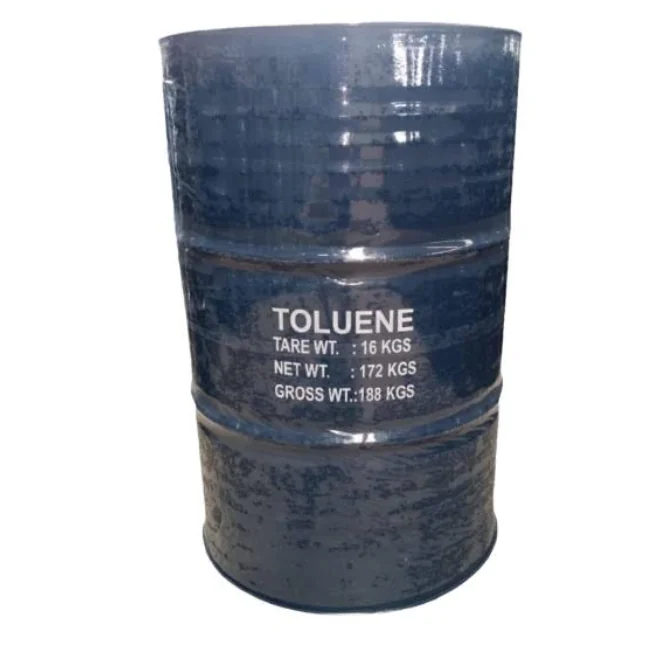
Toluene is a flammable industrial chemical and must be packaged in suitable, compatible, properly sealed containers designed for the product and applicable transport requirements.
Depending on the manufacturer’s supply arrangements, industrial solvents may be packaged in:
- Suitable small chemical containers
- Metal drums
- Approved bulk containers
- Other manufacturer-approved packaging
Actual packaging options, container sizes and availability should be confirmed when requesting a quotation from Olinc Chemical Suppliers.
Customers placing bulk orders should provide their required quantity and intended application so that the appropriate supply arrangement can be discussed.
Storage Requirements for Toluene
Correct storage is essential because Toluene is highly flammable and produces vapours that can create fire and explosion hazards.
Recommended storage considerations include:
- Store in a cool, dry and well-ventilated designated chemical storage area.
- Keep containers tightly closed when not in use.
- Keep away from flames, sparks, hot surfaces and other ignition sources.
- Use appropriate equipment designed for flammable-liquid storage.
- Prevent static electricity build-up during transfer and handling by using suitable bonding and grounding procedures.
- Keep away from strong oxidising agents.
- Store away from incompatible chemicals and materials.
- Protect containers from physical damage and unauthorised access.
- Keep appropriate spill-control and fire-protection equipment available.
- Follow the manufacturer’s SDS and applicable local chemical-storage requirements.
Toluene should not be stored in ordinary domestic containers or in areas where vapours can accumulate.
Safety Precautions When Handling Toluene
Toluene is a hazardous and highly flammable solvent. It must be handled by trained personnel following the manufacturer’s Safety Data Sheet and appropriate workplace safety procedures.
Health Hazards
Exposure may occur through inhalation, skin contact or accidental ingestion.
Possible health effects include:
- Eye and respiratory irritation
- Headache
- Dizziness
- Drowsiness
- Nausea
- Confusion and impaired coordination
- Skin irritation and dryness
- Effects on the nervous system following significant exposure
Repeated or prolonged exposure may cause more serious health effects. Toluene can also pose developmental and reproductive health concerns.
Swallowing the liquid creates an aspiration hazard: if it enters the lungs, it can cause serious lung injury.
Personal Protective Equipment
Appropriate protective measures may include:
- Chemical-resistant gloves selected for Toluene exposure
- Chemical splash goggles
- Suitable protective clothing
- Appropriate respiratory protection where exposure assessment indicates it is necessary
- Safety footwear suitable for the working environment
Glove materials and respirator selection should be based on the SDS and a workplace risk assessment.
Ventilation
Use effective general ventilation and local exhaust ventilation to control vapours.
Where necessary, use properly selected, maintained and approved respiratory protection. Do not rely on the smell of Toluene to determine whether the atmosphere is safe.
Fire Prevention
Toluene vapours can ignite readily and may travel to an ignition source.
- Prohibit smoking and open flames.
- Keep away from sparks and hot surfaces.
- Use suitable explosion-protected electrical equipment where required.
- Control static electricity during transfer operations.
- Do not use compressed air to transfer or handle Toluene.
First Aid Considerations
- Inhalation: Move the affected person to fresh air without exposing rescuers to the vapour. Seek immediate medical attention if symptoms occur.
- Eye contact: Immediately rinse cautiously with clean water for several minutes and obtain medical advice.
- Skin contact: Remove contaminated clothing and wash affected skin thoroughly with soap and water.
- Ingestion: Do not induce vomiting. Seek urgent medical attention because of the risk of aspiration into the lungs.
Always follow the product’s current SDS and local emergency procedures.
Environmental and Handling Considerations
Toluene is a volatile organic compound (VOC). Uncontrolled evaporation can contribute to workplace air contamination and environmental emissions.
Spills should be managed by trained personnel using appropriate protective equipment and suitable spill-control procedures.
Prevent the chemical from entering drains, surface water, soil or groundwater. Collect contaminated absorbents and waste in suitable labelled containers for disposal through an authorised waste-management route.
Do not pour unused Toluene into drains or dispose of it with ordinary household waste.
Transport and Regulatory Information
Toluene is commonly classified for transport as:
- UN number: UN 1294
- Proper shipping name: TOLUENE
- Transport hazard class: 3 – Flammable Liquid
- Packing group: II
Transport classification, packaging and labelling must be confirmed against the current SDS and the applicable dangerous-goods regulations for the actual shipment.
Businesses importing, storing, distributing or using Toluene should ensure that they meet applicable Kenyan chemical safety, occupational health, environmental and transport requirements.
Why Choose Olinc Chemical Suppliers for Toluene Enquiries?
Olinc Chemical Suppliers serves customers seeking industrial chemicals in Nairobi, Kenya.
We welcome enquiries from businesses and professional users requiring Toluene for manufacturing, processing and other legitimate industrial applications.
When making an enquiry, customers are encouraged to provide:
- Required quantity
- Intended industrial application
- Required grade or purity
- Preferred packaging size
- Delivery location
- Any specific technical specification or documentation required
Providing these details helps establish whether the product specification is suitable for the intended process.
Frequently Asked Questions About Toluene
What is Toluene mainly used for?
Toluene is mainly used as an industrial solvent and petrochemical raw material. Its applications include paints, coatings, adhesives, printing inks, rubber processing, chemical manufacturing and selected cleaning operations.
What is the chemical formula of Toluene?
The chemical formula of Toluene is C₇H₈. Its structural formula is C₆H₅CH₃.
What is the CAS number of Toluene?
The CAS number for Toluene is 108-88-3. This identifier helps distinguish Toluene from other industrial solvents.
Is Toluene the same as Methylbenzene?
Yes. Methylbenzene is the systematic chemical name for Toluene. Toluol and Phenylmethane are also recognised alternative names.
Is Toluene soluble in water?
Toluene has very low solubility in water. It is much more compatible with many organic solvents and is commonly used in organic-solvent formulations.
Is Toluene used in paint manufacturing?
Yes. Toluene is used in selected paint, coating, lacquer and varnish formulations as an organic solvent. Compatibility depends on the coating’s resin system and formulation requirements.
Can Toluene be used in adhesive manufacturing?
Yes. It is used in selected solvent-based adhesive formulations, particularly certain rubber- and resin-based systems. The manufacturer should verify compatibility before use.
What is the difference between Toluene and Xylene?
Both are aromatic hydrocarbon solvents, but they have different molecular structures and physical properties. Xylene contains two methyl groups attached to a benzene ring, while Toluene contains one. Their evaporation rates, solvency and formulation suitability differ.
Is Toluene flammable?
Yes. Toluene is highly flammable. Its vapours can form explosive mixtures with air, so it must be stored and handled away from ignition sources with suitable ventilation and fire-safety controls.
What is the difference between industrial-grade and laboratory-grade Toluene?
Industrial-grade Toluene is intended for suitable manufacturing and technical processes. Laboratory-grade and analytical-grade products are supplied to more specific purity and impurity requirements. The correct grade depends on the intended application.
What packaging is available for Toluene?
Packaging depends on the manufacturer’s supply arrangements. Industrial solvents may be supplied in suitable chemical containers, drums or approved bulk packaging. Confirm the actual available container sizes when requesting a quotation.
What information should I provide when ordering Toluene?
Provide the required quantity, intended application, preferred grade or purity, packaging preference and delivery location. If you have a technical specification, share it to help confirm product suitability.
Can Toluene be used as a replacement for Acetone or Ethyl Acetate?
Not automatically. These solvents have different chemical structures, evaporation characteristics and solvency profiles. A formulation or process should be tested and reviewed before any substitution.
Where can I enquire about Toluene in Nairobi, Kenya?
You can contact Olinc Chemical Suppliers in Nairobi for Toluene product enquiries, specifications, packaging information and supply arrangements.
Request a Toluene Quotation from Olinc Chemical Suppliers
Looking for an industrial Toluene supplier in Nairobi, Kenya?
Olinc Chemical Suppliers welcomes enquiries from manufacturers, paint producers, coating companies, adhesive manufacturers, printing businesses and other professional industrial users.
Contact us with your required quantity, grade, specifications and preferred packaging so that we can discuss your requirements.
Olinc Chemical Suppliers
Location: Enterprise Road, Avon Business Center, Nairobi, Kenya
Phone / WhatsApp: 0793062849
Alternative phone: 0743657810
Email: sales@olincinchemicals.com
Website: www.olincchemicalsl.com
Enquire about Toluene from Olinc Chemical Suppliers in Nairobi, Kenya.


Reviews
There are no reviews yet.