
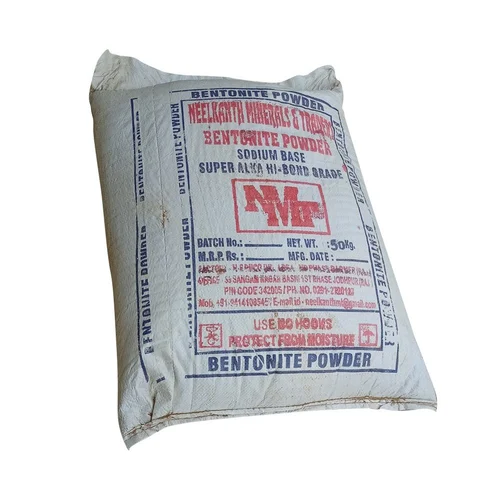
Bentonite Clay Supplier in Kenya | Olinc Chemical Suppliers
Looking for a reliable Bentonite Clay supplier in Kenya for drilling, construction, foundry operations, water treatment, agriculture or industrial manufacturing? Olinc Chemical Suppliers welcomes enquiries from businesses looking for quality bentonite clay in Nairobi and across Kenya.
Bentonite clay is a naturally occurring industrial mineral valued for its excellent water absorption, swelling, thickening, binding, sealing and adsorption properties. It is widely used in borehole drilling, oil and gas exploration, foundry sand moulding, pond and dam sealing, civil engineering, iron ore pelletising, animal feed production, cat litter, cosmetics and selected water-treatment processes.
One of the most important things to understand when buying bentonite is that not all bentonite is the same. Sodium bentonite and calcium bentonite have different properties and are suited to different applications. Choosing the correct type and grade is essential to getting the performance your production process requires.
At Olinc Chemical Suppliers, we welcome enquiries from manufacturers, drilling contractors, construction companies, foundries, agricultural businesses and other industrial customers seeking bentonite clay in Kenya.
-
-
What is Bentonite Clay?
-
Bentonite is a naturally occurring absorbent clay primarily composed of minerals from the smectite group, especially montmorillonite. It is formed mainly through the alteration of volcanic ash and other volcanic materials over geological time.
It is valued in industry because it can absorb water, swell, form stable suspensions, bind particles and adsorb certain substances. These characteristics make it useful in processes that require thickening, sealing, filtration, binding or moisture absorption.
When mixed with water, certain types of bentonite absorb water and expand considerably. Sodium bentonite is particularly well known for its swelling capacity and ability to form a viscous gel-like suspension.
Bentonite is not a single pure chemical compound with one fixed molecular formula. It is a natural mineral material whose composition varies depending on its geological origin, mineral content and processing.
Its main mineral, montmorillonite, is a hydrated aluminium silicate containing variable amounts of sodium, calcium and magnesium.
RMIS – Raw Materials Information System+2
Chemical identification and other names
| Property | Details |
|---|---|
| Common name | Bentonite Clay |
| Mineral classification | Natural clay mineral |
| Main mineral | Montmorillonite |
| Chemical family | Smectite clay minerals |
| General chemical description | Hydrated aluminium silicate |
| CAS number | 1302-78-9 |
| EC number | 215-108-5 |
| Appearance | Fine powder, granules or lumps |
| Colour | Grey, cream, off-white, beige or brown |
| Odour | Generally odourless or earthy |
| Solubility | Insoluble in water; forms a suspension |
| Main types | Sodium bentonite and calcium bentonite |
Other names and related terms
Bentonite may be listed or described using the following names:
-
Bentonite clay
-
Bentonite powder
-
Montmorillonite clay
-
Sodium bentonite
-
Calcium bentonite
-
Sodium montmorillonite
-
Calcium montmorillonite
-
Smectite clay
-
Swelling clay
-
Natural absorbent clay
-
Activated bentonite
-
Organoclay (a chemically modified bentonite product, not simply another name for untreated bentonite)
Important: These names do not always describe identical products. Sodium bentonite, calcium bentonite, acid-activated bentonite and organoclay have different characteristics and should not be treated as interchangeable.
Main types of Bentonite Clay
Understanding the different types is important when choosing bentonite for your application.
Sodium Bentonite
Sodium bentonite is a swelling type of bentonite that absorbs water and expands significantly. When mixed with water, it can form a viscous suspension or gel.
Key properties:
-
High swelling capacity.
-
Strong water absorption.
-
Good viscosity development.
-
Good suspension properties.
-
Useful sealing and binding characteristics.
-
Ability to help control fluid loss in suitable drilling systems.
Common applications:
-
Borehole drilling mud.
-
Oil and gas drilling fluids.
-
Pond and dam sealing.
-
Landfill liners and geosynthetic clay liners.
-
Foundry sand binding.
-
Iron ore pelletising.
-
Civil engineering slurry walls.
-
Selected earthing and grounding applications.
Sodium bentonite is especially useful when swelling, viscosity and sealing are important.
Calcium Bentonite
Calcium bentonite is another naturally occurring form of bentonite. It generally has lower swelling capacity than sodium bentonite but is useful for adsorption and other applications.
Key properties:
-
Lower swelling than typical sodium bentonite.
-
Good adsorption properties.
-
Useful moisture absorption.
-
Suitable for selected purification and filtration processes.
-
Can be processed or activated for particular industrial applications.
Common applications:
-
Edible oil refining and bleaching earth production, when appropriately activated and specified.
-
Selected filtration and purification processes.
-
Cosmetics and personal-care formulations.
-
Cat litter and absorbent products.
-
Animal-feed applications where the grade is approved.
-
Selected agricultural and environmental applications.
Some calcium bentonites are acid-activated to improve their bleaching and adsorption properties. Acid-activated bentonite is a processed product with its own specification and should be ordered separately where required.
Sodium-Activated Bentonite
Some calcium bentonite deposits are treated with sodium compounds to improve their swelling and performance.
This is called sodium activation.
It is used in applications where the original calcium bentonite does not provide sufficient swelling, viscosity or binding properties.
Acid-Activated Bentonite
Acid-activated bentonite is processed with acid to improve its surface area and adsorption characteristics.
It is particularly important in:
-
Edible oil refining.
-
Vegetable oil bleaching.
-
Fat purification.
-
Colour removal.
-
Selected chemical purification processes.
A customer requiring bleaching earth should specify whether they need natural calcium bentonite, acid-activated bentonite or another specialised adsorbent.
Organophilic Bentonite (Organoclay)
Organoclay is produced by modifying bentonite with organic compounds. This changes its compatibility and behaviour in certain organic liquids.
It is used in selected:
-
Paints and coatings.
-
Solvent-based systems.
-
Greases and lubricants.
-
Printing inks.
-
Adhesives and sealants.
-
Oil-based formulations.
It is not the same as ordinary untreated bentonite clay.
Industrial mineral fillers+2
Physical and chemical properties of Bentonite Clay
Bentonite’s properties vary depending on its mineral composition, source, processing method and grade. The following table gives general information about industrial bentonite, not a guaranteed specification for every product.
| Property | Typical description |
|---|---|
| Physical state | Fine powder, granules or lumps |
| Colour | Grey, cream, beige, off-white or brown |
| Odour | Usually odourless or earthy |
| Main mineral | Montmorillonite |
| Water solubility | Insoluble; disperses and forms a suspension |
| Swelling | Moderate to very high, depending on type |
| Water absorption | High |
| Binding ability | Good |
| Adsorption | Good, depending on grade |
| Plasticity | Generally good |
| pH | Variable; many industrial grades are neutral to alkaline |
| Bulk density | Varies with source, moisture and particle size |
| Cation exchange capacity | Depends on mineral composition |
| Viscosity | Depends on type, concentration and mixing conditions |
| Thermal behaviour | Loses absorbed and structural water when heated |
What makes Bentonite Clay special?
Its industrial value comes from several properties:
Swelling capacity
Certain bentonite types absorb water and expand. This is especially useful for drilling muds, pond sealing and construction applications.
Viscosity development
When properly dispersed in water, suitable grades develop viscosity. This helps suspend solid particles and maintain stable drilling-fluid systems.
Binding properties
Bentonite can bind sand, minerals and other particles together. This makes it useful in foundry moulding and pellet production.
Adsorption capacity
Bentonite can attract and hold certain substances on its surface. This property is important in selected oil purification, clarification and environmental applications.
Water retention
It can absorb and retain water, making certain grades useful in moisture-management and agricultural applications.
Thixotropic behaviour
Some bentonite suspensions become less viscous when stirred or sheared and regain viscosity when allowed to stand. This is useful in selected drilling fluids, paints and other industrial formulations.
Industrial applications of Bentonite Clay
Borehole and water-well drilling
One of the major uses of sodium bentonite is the preparation of drilling mud for borehole and water-well drilling.
When mixed with water, suitable sodium bentonite develops a viscous suspension that helps drilling operations.
Its functions include:
-
Carrying drilled rock cuttings from the bottom of the borehole to the surface.
-
Suspending cuttings when circulation is stopped.
-
Helping stabilise borehole walls.
-
Forming a thin filter cake on permeable formations.
-
Reducing fluid loss into surrounding formations.
-
Helping cool and lubricate the drill bit.
Bentonite is therefore an important material for borehole drilling contractors and water-well service providers.
Potential customers: Borehole drilling contractors, groundwater exploration companies, water-well drilling businesses and drilling-fluid suppliers.
Oil and gas drilling
Bentonite is used in selected water-based drilling-fluid systems in the oil and gas industry.
The drilling fluid must perform several functions during drilling, and bentonite contributes to the required viscosity and suspension properties.
It can help:
-
Carry drill cuttings to the surface.
-
Maintain suspension of solids.
-
Support borehole stability.
-
Control fluid loss in suitable formations.
-
Improve the rheological characteristics of drilling mud.
Oil and gas operators and drilling-fluid service companies may require specially specified drilling-grade bentonite.
A customer should confirm that the product meets the relevant drilling-fluid specification, such as the applicable API requirements, rather than assuming that ordinary industrial bentonite is suitable.
Foundry and metal casting
Bentonite is widely used as a binder in foundry sand.
In metal casting, sand is prepared into moulds that hold the shape of the component being produced. Bentonite helps bind the sand particles together and gives the mould the strength needed to retain its shape.
Its functions include:
-
Improving mould strength.
-
Helping maintain mould shape.
-
Improving sand bonding.
-
Supporting mould stability during handling.
-
Contributing to the reusability of suitable foundry sand systems.
It is used in the production of metal components for automotive, machinery, construction equipment and other engineering applications.
Potential customers: Iron foundries, steel foundries, aluminium casting businesses, metal component manufacturers and foundry-sand suppliers.
Construction and civil engineering
Bentonite is used in civil engineering because some grades form low-permeability barriers and stable suspensions.
Applications include:
-
Diaphragm wall construction.
-
Slurry trench excavation.
-
Foundation engineering.
-
Underground construction.
-
Tunnel-related ground-support operations.
-
Groundwater control.
-
Sealing of selected construction joints and structures.
In slurry wall construction, bentonite suspension can help support excavated trenches before concrete or other permanent structural materials are installed.
The appropriate grade depends on the construction method and required slurry properties.
Pond, dam and reservoir sealing
Sodium bentonite is used in selected pond and water-retention projects because it swells when hydrated.
It can help reduce water seepage through suitable soil structures.
Applications include:
-
Farm ponds.
-
Water reservoirs.
-
Irrigation ponds.
-
Artificial lakes.
-
Dams and water-retention structures.
-
Selected canal and lagoon sealing projects.
Bentonite is generally incorporated into or applied to a prepared soil layer using an engineered method. The correct quantity depends on soil permeability, site conditions, water chemistry and design requirements.
It should not be applied without checking whether the soil and water conditions are suitable.
Landfill liners and environmental protection
Bentonite is used in geosynthetic clay liners (GCLs) and other low-permeability barrier systems.
These systems are designed to limit the movement of liquids through engineered containment structures.
Potential applications include:
-
Landfill base liners.
-
Landfill caps.
-
Waste containment facilities.
-
Environmental protection barriers.
-
Selected groundwater protection projects.
In GCLs, bentonite is commonly incorporated between geotextiles or other supporting layers. It is not simply loose clay spread over every site.
Iron ore pelletising
Bentonite is used as a binder in iron ore pellet production.
During processing, fine iron ore particles are combined into small balls or pellets. Bentonite helps the particles bind together and gives the green pellets sufficient strength for handling before further processing.
Its functions include:
-
Improving green pellet strength.
-
Helping bind fine iron ore particles.
-
Supporting pellet formation.
-
Improving handling characteristics.
-
Helping maintain pellet integrity during processing.
This is an important application for mineral-processing companies and iron ore pellet manufacturers.
Animal feed manufacturing
Certain approved bentonite grades are used in animal feed as binders and, where authorised, as adsorbents.
Potential applications include:
-
Animal feed pellet binding.
-
Improving physical pellet quality.
-
Selected mycotoxin-binding applications.
-
Specialised feed formulations.
Important: Feed-grade bentonite must meet the applicable animal-feed requirements. Industrial-grade bentonite should never be assumed suitable for animal consumption.
Cat litter manufacturing
Bentonite is widely used in cat litter because of its absorbency.
Sodium bentonite is particularly useful in clumping cat litter. When exposed to moisture, it swells and forms clumps that can be removed.
Benefits include:
-
Absorbing liquid waste.
-
Forming removable clumps in suitable products.
-
Helping control moisture.
-
Supporting odour-control formulations.
-
Providing a convenient litter material.
Cat litter manufacturers may use bentonite as a primary raw material or blend it with other materials.
Water and wastewater treatment
Bentonite is used in selected water-treatment and wastewater-treatment processes as an adsorbent or processing aid.
Depending on the formulation and treatment design, it can help remove or bind certain suspended substances and contaminants.
Potential applications include:
-
Industrial wastewater treatment.
-
Selected clarification processes.
-
Adsorption-based treatment systems.
-
Treatment of certain process effluents.
-
Sludge conditioning in specialised systems.
However, bentonite is not a universal replacement for conventional coagulants such as PAC, alum or ferric chloride. Its effectiveness depends on the contaminants, water chemistry, grade and treatment method. Jar testing is advisable before full-scale use.
Edible oil refining and bleaching
Acid-activated bentonite, often marketed as bleaching earth, is used in the refining of vegetable oils.
It helps adsorb pigments and other impurities during the refining process.
Applications include:
-
Palm oil refining.
-
Sunflower oil refining.
-
Soybean oil refining.
-
Other vegetable oil processing.
-
Selected fat purification operations.
The appropriate material is normally a specified bleaching-earth grade, not just any ordinary bentonite clay.
Wine, juice and beverage clarification
Selected bentonite grades are used in beverage clarification, particularly in winemaking.
Bentonite can adsorb certain proteins and help reduce protein haze in wine.
It is also used in some juice and beverage-processing applications where the relevant grade and process have been approved.
Food-processing applications require food-grade material and compliance with the relevant food regulations.
Paints and coatings
Bentonite and specially modified bentonite products are used in selected paint and coating formulations.
Their functions may include:
-
Thickening.
-
Suspension of pigments.
-
Prevention of settling.
-
Improving application consistency.
-
Rheology modification.
Organophilic bentonite is particularly relevant to certain solvent-based systems, while other grades are used in water-based formulations.
Cosmetics and personal-care products
Selected cosmetic-grade bentonite is used in:
-
Facial masks.
-
Cleansing masks.
-
Body masks.
-
Soap and skincare formulations.
-
Certain powders and personal-care products.
Its absorbent and thickening properties make it useful in selected formulations.
For cosmetics, buyers should request a grade with appropriate purity, microbiological and contaminant specifications. Industrial-grade material is not automatically suitable for skin-contact products.
Agriculture and soil conditioning
Bentonite is used in some agricultural applications because of its water-retention and soil-conditioning properties.
Potential uses include:
-
Improving water retention in selected soils.
-
Soil conditioning.
-
Horticultural formulations.
-
Certain fertiliser and nutrient granulation processes.
-
Selected agricultural adsorbent products.
The suitability of bentonite depends on soil type, climate, crop requirements and product specification.
Fertiliser and mineral granulation
Bentonite can be used as a binder during the production of certain fertiliser and mineral granules.
It helps fine particles bind together during granulation, improving the physical strength and handling characteristics of the finished product.
Briquette and pellet manufacturing
Bentonite is used as a binder in selected briquette and pellet manufacturing processes.
Applications may include:
-
Mineral briquettes.
-
Industrial fuel briquettes.
-
Biomass-based formulations.
-
Mineral powder agglomeration.
The required grade and dosage depend on the raw material and desired strength of the finished briquette.
Companies that use Bentonite Clay
Bentonite is purchased by businesses across several sectors. For Olinc’s sales strategy, I would focus on companies involved in drilling, construction, foundry operations, cat litter, mineral processing, edible oil refining and industrial chemical manufacturing.
Here are some identifiable companies and the evidence for their connection to bentonite.
International companies with documented bentonite applications
Purina confirms that its Tidy Cats clumping litter is made primarily from natural sodium bentonite, while some non-clumping products use absorbent clay such as calcium bentonite. This is a clear example of a company using bentonite in a finished consumer product.
Industry: Pet-care products and cat litter
CETCO markets bentonite-based drilling fluids made from sodium bentonite. Its published information explains their use in borehole stability, cuttings removal and slurry-wall construction. This establishes a documented bentonite-based product line, although it is a supplier rather than an independent end-user.
Minerals Technologies Inc.
Industry: Drilling fluids and civil engineering materials
Wyo-Ben produces bentonite products for water-well drilling, oil and gas drilling, environmental construction, cat litter and other industrial applications. It is a manufacturer and supplier, rather than a confirmed external purchaser.
Manufacturer of Bentonite Clay
Industry: Bentonite mining and industrial mineral processing
Elementis manufactures organophilic bentonite and other clay-based rheology additives for oilfield drilling, stimulation and cementing applications.
ENERGY CHEMICALS PRODUCT GUIDE
Industry: Specialty chemicals and oilfield additives
Potential customers for Olinc in Kenya
These are the types of Kenyan businesses I would approach:
| Potential customer group | Why they may need bentonite |
|---|---|
| Borehole drilling contractors | Prepare drilling mud and stabilise boreholes |
| Construction and foundation contractors | Use bentonite slurry in piling, trenching and diaphragm walls |
| Metal foundries | Bind foundry sand for casting |
| Mining and mineral-processing companies | Use bentonite for mineral pelletising and binding |
| Cat litter manufacturers | Produce absorbent and clumping litter |
| Edible oil processors | Purchase specialised bleaching earth for oil purification |
| Animal feed manufacturers | Use approved grades as binders or adsorbents |
| Paint and coating manufacturers | Use suitable grades as thickeners and suspension agents |
| Cosmetic manufacturers | Use cosmetic-grade bentonite in clay-based products |
| Water-treatment chemical formulators | Evaluate bentonite in selected treatment systems |
Kenyan prospecting note: I found a local drilling-products business, PRD Rigs, advertising AMC Bentonite HV for drilling-fluid applications. This confirms a local market for specialist drilling bentonite, but does not establish that PRD Rigs purchases its bentonite from Olinc or that it is an end-user.
I would prioritise borehole drilling contractors, foundries and construction contractors when prospecting for industrial bentonite in Kenya. They have direct applications for the material and can be approached with technical specifications and samples where available.
How to choose the correct Bentonite Clay grade
Before purchasing, customers should identify the purpose for which they intend to use the product.
| Customer application | Recommended type to investigate |
|---|---|
| Borehole drilling | High-swelling sodium drilling-grade bentonite |
| Oil and gas drilling | Drilling-grade bentonite meeting relevant API specifications |
| Horizontal directional drilling | Specialist HDD-grade bentonite |
| Foundry moulding | Foundry-grade sodium bentonite |
| Pond and dam sealing | High-swelling sodium bentonite |
| Geosynthetic clay liners | Specified GCL-grade bentonite |
| Iron ore pelletising | Pelletising-grade bentonite |
| Cat litter | Suitable absorbent or clumping bentonite |
| Vegetable oil refining | Acid-activated bleaching earth |
| Facial masks and skincare | Cosmetic-grade bentonite |
| Animal feed | Approved feed-grade bentonite |
| Paints and coatings | Formulation-specific bentonite or organoclay |
| Wastewater treatment | Grade selected through treatment testing |
What is drilling-grade Bentonite?
Drilling-grade bentonite is processed to provide the swelling, viscosity, suspension and filtration-control characteristics required for drilling fluids.
For demanding drilling applications, customers may request compliance with API Specification 13A, where applicable, and ask for test results covering viscosity, yield, filtrate loss and residue.
A normal industrial clay grade should not be advertised as API-compliant unless it has been tested and meets the relevant requirements.
What is foundry-grade Bentonite?
Foundry-grade bentonite is selected for its bonding performance in moulding sand.
Important properties include:
-
Green compression strength.
-
Dry compression strength.
-
Wet tensile strength.
-
Moulding sand compatibility.
-
Thermal stability.
-
Moisture requirements.
What is cosmetic-grade Bentonite?
Cosmetic-grade bentonite is processed and controlled for personal-care applications.
Buyers should check:
-
Heavy-metal limits.
-
Microbiological quality.
-
Mineral composition.
-
Particle size.
-
Relevant cosmetic regulatory compliance.
-
Documentation for skin-contact applications.
A general industrial grade is not automatically a cosmetic grade.
Bentonite Clay specifications customers should request
A buyer should always evaluate the technical specifications before purchasing, particularly when using bentonite in a production process.
The following parameters are useful:
| Parameter | Importance |
|---|---|
| Montmorillonite content | Indicates the proportion of the main clay mineral |
| Swelling index | Important for drilling, sealing and clumping applications |
| Moisture content | Affects storage, handling and product performance |
| Particle size | Affects dispersion, mixing and application |
| pH | Important for compatibility with formulations |
| Bulk density | Useful for transport and dosing calculations |
| Viscosity | Important for drilling and other suspension systems |
| Filtrate loss | Important for drilling-fluid performance |
| Cation exchange capacity (CEC) | Helps assess clay properties |
| Sand and coarse residue | Important for drilling and specialised industrial uses |
| Calcium and sodium content | Helps identify the bentonite type |
| Iron content | Important in selected colour-sensitive applications |
| Heavy metals | Particularly important for cosmetic, feed and food-related grades |
Documents to request
-
TDS – Technical Data Sheet: Product properties and typical specifications.
-
SDS – Safety Data Sheet: Handling, storage and hazard information.
-
COA – Certificate of Analysis: Actual test results for the supplied batch.
For drilling-grade bentonite, customers may also request relevant API or OCMA test results. For food, feed and cosmetic applications, request the documentation specific to the intended use.
Packaging and supply options
Typical commercial packaging formats include:
| Packaging | Suitable for |
|---|---|
| 25 kg bags | Small and medium-sized industrial users |
| 50 kg bags | Larger commercial and industrial users |
| 500 kg jumbo bags | Bulk industrial consumption |
| 1,000 kg jumbo bags | Large manufacturing and construction projects |
Some specialist grades may use multiwall paper bags, woven polypropylene bags with liners or other moisture-protective packaging.
The actual packaging available through Olinc should be confirmed before ordering.
How to prepare Bentonite Clay for use
The preparation method depends on the application.
For drilling mud
-
Prepare clean water in the mixing tank.
-
Start mechanical agitation or use a suitable mud-mixing system.
-
Add the bentonite gradually through an appropriate mixing hopper.
-
Allow adequate hydration and dispersion.
-
Monitor the slurry properties.
-
Adjust the formulation according to the drilling programme and technical requirements.
Do not add large quantities all at once, as this can cause clumping and poor dispersion.
For foundry sand
Bentonite is blended with foundry sand and moisture under controlled mixing conditions. The mixture is then tested for the required moulding properties before casting.
For pond sealing
The soil and site conditions must first be assessed. The bentonite is then applied using an engineered method and compacted or incorporated into the soil as required.
For cat litter
Bentonite is processed into the required particle size and moisture range. Suitable grades may be granulated or screened to provide the required absorbency and clumping performance.
For oil refining
Specialised bleaching earth is added to oil under controlled refining conditions. The process typically involves mixing, adsorption and subsequent filtration.
Important: There is no universal dosage for bentonite. The amount required depends on the grade, application, water chemistry, raw materials and desired performance. Follow the relevant process specification and conduct trials where necessary.
Benefits of using Bentonite Clay
Bentonite offers several benefits to industrial and commercial users.
-
Excellent swelling properties: Suitable sodium grades expand when exposed to water, making them useful for sealing and drilling.
-
Good binding ability: Helps hold particles together in foundry moulds, pellets and briquettes.
-
Effective absorption: Can absorb moisture and certain other substances.
-
Viscosity development: Helps create thick suspensions in suitable formulations.
-
Good suspension characteristics: Helps keep solid particles suspended in liquids.
-
Versatile industrial applications: Used across construction, drilling, agriculture, mineral processing and manufacturing.
-
Natural mineral origin: It is obtained from naturally occurring clay deposits and processed into different commercial grades.
-
Useful adsorption properties: Selected grades can assist in purification, bleaching and clarification.
Storage and handling of Bentonite Clay
Proper storage helps preserve the quality and handling characteristics of bentonite.
Recommended storage practices:
-
Store in a cool, dry and covered warehouse.
-
Keep bags sealed when not in use.
-
Protect the product from rain and moisture.
-
Store on pallets rather than directly on the floor.
-
Avoid contact with water before the product is required for use.
-
Keep packaging away from damaged or leaking containers.
-
Prevent contamination with other chemicals, soil or foreign materials.
-
Use clean, dry handling equipment.
-
Follow the supplier’s recommended storage conditions.
Bentonite can absorb moisture and may form lumps or cake when exposed to humid conditions. This can make it more difficult to handle and disperse.
Safety precautions when handling Bentonite Clay
Bentonite is a natural mineral, but that does not mean all grades are free from occupational hazards.
The main concern during dry handling is airborne dust. Depending on its geological source, bentonite may contain crystalline silica, which can pose a serious inhalation hazard when respirable particles are present.
Recommended precautions include:
-
Avoid breathing dust.
-
Use appropriate dust extraction or ventilation.
-
Wear suitable safety goggles.
-
Wear protective gloves and work clothing.
-
Use suitable respiratory protection where required by the risk assessment.
-
Avoid creating unnecessary dust during bag opening and transfer.
-
Wash hands after handling.
-
Do not eat, drink or smoke in handling areas.
-
Consult the product SDS for the actual hazards and required PPE.
Important: Customers should request the SDS for the specific grade they are purchasing. The silica content and hazard classification can differ between bentonite sources and products.
Why buy Bentonite Clay from Olinc Chemical Suppliers?
Olinc Chemical Suppliers serves industrial and commercial customers from Nairobi, Kenya.
When enquiring about bentonite, customers can discuss:
-
Their intended application.
-
The required type of bentonite.
-
Product grade and technical specifications.
-
Available packaging.
-
Order quantities.
-
Commercial quotations.
-
Delivery arrangements.
-
Related industrial chemicals.
Olinc Chemical Suppliers is a chemical supplier and reseller, not a bentonite manufacturer. Product availability, grade, packaging and delivery terms should be confirmed when requesting a quotation.
Frequently asked questions about Bentonite Clay
What is Bentonite Clay used for?
Bentonite is used in borehole drilling, oil and gas drilling, foundry sand moulding, construction, pond sealing, landfill liners, iron ore pelletising, cat litter, oil refining, cosmetics and selected water-treatment processes.
What is the CAS number of Bentonite Clay?
A commonly used CAS number for bentonite is 1302-78-9.
Is Bentonite Clay soluble in water?
No. Bentonite is generally insoluble in water. It absorbs water, swells and forms a suspension or gel depending on its type and concentration.
What is the difference between Sodium Bentonite and Calcium Bentonite?
Sodium bentonite generally has greater swelling and viscosity development, while calcium bentonite typically has lower swelling and is used in selected adsorption and absorbent applications.
Which Bentonite is best for borehole drilling?
High-swelling sodium drilling-grade bentonite is commonly used. The buyer should check the required viscosity, swelling, filtration properties and applicable drilling specifications.
Can Bentonite Clay be used for pond sealing?
Yes. Suitable sodium bentonite can be used in engineered pond and dam sealing applications to reduce water seepage through suitable soil.
Is Bentonite Clay used in foundries?
Yes. It is used as a binder in foundry sand to help create strong and stable moulds for metal casting.
Is Bentonite used in water treatment?
Yes, selected grades are used in certain water and wastewater treatment processes. Its effectiveness depends on the water chemistry and contaminants being treated.
Is Bentonite Clay used in cosmetics?
Yes. Cosmetic-grade bentonite is used in facial masks, cleansing products and selected skincare formulations.
Can Bentonite be used in edible oil refining?
Yes. Specialised acid-activated bentonite, often sold as bleaching earth, is used to adsorb pigments and impurities during vegetable oil refining.
What packaging is available?
Common industrial formats include 25 kg and 50 kg bags, as well as larger jumbo bags. Actual packaging depends on the supplier and grade.
Is Bentonite Clay safe?
It should be handled carefully, especially in powder form. Dust inhalation is a concern, and some deposits may contain respirable crystalline silica. Follow the specific product SDS.
Can Bentonite replace Kaolin?
Not automatically. Bentonite and kaolin have different mineral structures and properties. The right material depends on the required application.
What is the difference between Bentonite and Bleaching Earth?
Bentonite is the natural clay material. Bleaching earth is a specialised adsorbent, often produced by activating bentonite or other suitable clays, for oil purification and colour removal.
Which companies use Bentonite Clay?
Companies in borehole drilling, oil and gas, foundry casting, cat litter manufacturing, mineral processing, edible oil refining, construction and cosmetics use different bentonite grades.
Where can I buy Bentonite Clay in Kenya?
Contact Olinc Chemical Suppliers in Nairobi to enquire about bentonite clay, available grades, packaging and quotations.
Related products customers may also need
For internal linking on the Olinc website, consider connecting this product page to:
-
Kaolin Clay
-
Calcium Carbonate
-
Sodium Silicate
-
Soda Ash Light
-
Soda Ash Dense
-
Sodium Metasilicate
-
Activated Carbon
-
Aluminium Sulphate (Alum)
-
Ferric Chloride
-
Poly Aluminium Chloride (PAC)
-
Calcium Chloride
-
Citric Acid
Order Bentonite Clay from Olinc Chemical Suppliers
Are you looking for bentonite clay for borehole drilling, construction, foundry operations, water treatment, agriculture or manufacturing?
Olinc Chemical Suppliers welcomes enquiries from businesses across Kenya and the wider East African region.
Contact us with your required grade, application and quantity so that we can discuss your requirements and provide a quotation.
Olinc Chemical Suppliers
-
Location: Avon Business Center, Enterprise Road, Nairobi, Kenya
-
Phone / WhatsApp: 0793062849
-
Alternative phone: 0743657810
-
Email: sales@olincinchemicals.com
-
Website: www.olincinchemicalsl.com

Reviews
There are no reviews yet.