
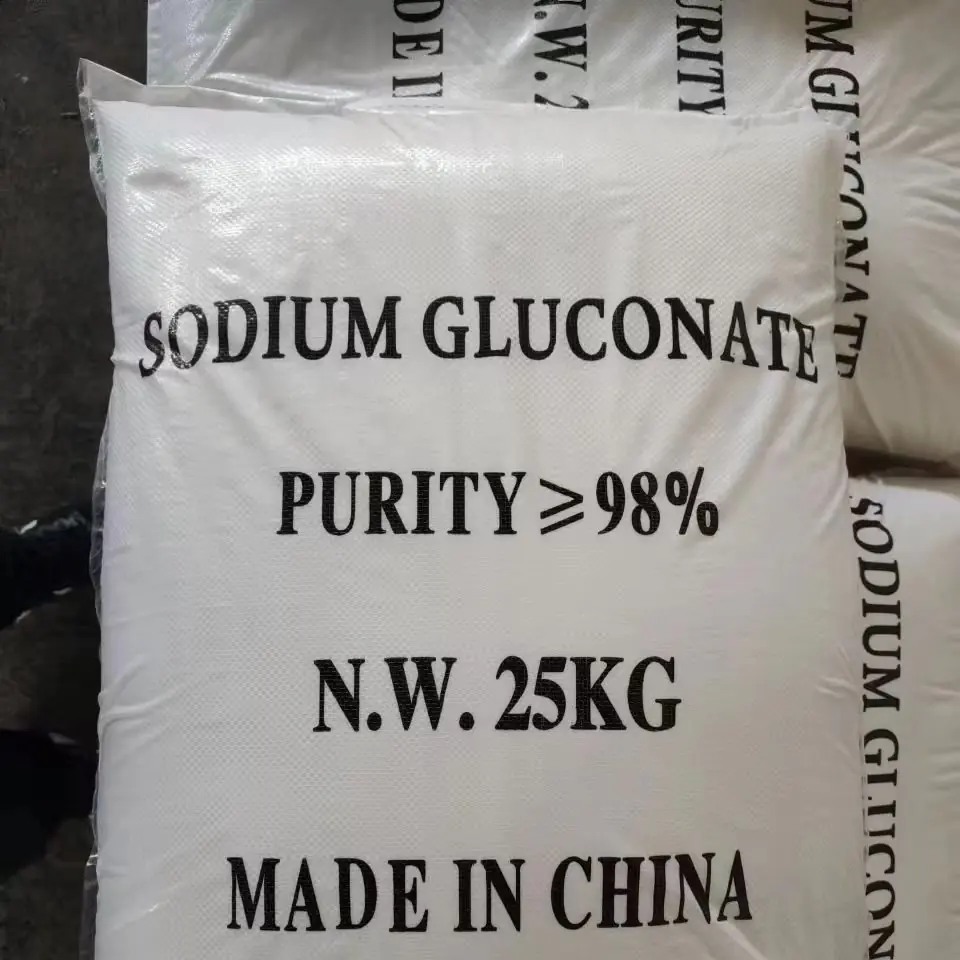
Sodium Gluconate Supplier in Nairobi, Kenya, Tanzania and Uganda
Olinc Chemical Suppliers supplies Sodium Gluconate for industrial, construction, cleaning, water treatment and other commercial applications in Nairobi, Kenya, and across the East African region, including Tanzania and Uganda.
Sodium Gluconate is a versatile, water-soluble organic salt widely valued for its excellent chelating, sequestering and dispersing properties. It is particularly useful in applications where controlling metal ions such as calcium, iron and other minerals is important.
It is commonly used in concrete admixtures, industrial detergents, cleaning formulations, water treatment processes, textile processing and various manufacturing operations.
Whether you are a manufacturer, construction contractor, chemical formulator, detergent producer or industrial buyer, Olinc Chemical Suppliers can assist you with your Sodium Gluconate supply requirements.
Contact us for product availability, current pricing, packaging options and bulk orders.
What Is Sodium Gluconate?
Sodium Gluconate is the sodium salt of gluconic acid. It is an organic chemical compound commonly supplied in the form of a white to off-white crystalline powder or granules.
It is known for its ability to bind metal ions, making it an effective chelating agent in various industrial processes.
One of its most important characteristics is its ability to control the effects of metal ions in water-based formulations. This makes it valuable in industries where mineral deposits, metal-ion interference and unwanted chemical reactions need to be controlled.
Sodium Gluconate is also widely used as a concrete retarder, helping to slow down the setting time of cement-based materials when used in properly formulated admixture systems.
Its versatility makes it an important raw material for manufacturers and industrial users across several sectors.
Sodium Gluconate Chemical Identification
| Property | Description |
|---|---|
| Product name | Sodium Gluconate |
| Chemical name | Sodium D-Gluconate |
| Chemical formula | C₆H₁₁NaO₇ |
| CAS number | 527-07-1 |
| Molecular weight | 218.14 g/mol |
| Appearance | White to off-white powder or crystals |
| Odour | Odourless or nearly odourless |
| Solubility | Highly soluble in water |
| Chemical classification | Organic sodium salt |
| Main function | Chelating and sequestering agent |
| Common grades | Industrial, technical and food grade |
Note: Actual appearance, purity, particle size and other specifications depend on the supplied manufacturer’s grade. Food-grade use requires appropriate food-grade certification.
Key Properties and Characteristics of Sodium Gluconate
Understanding the properties of Sodium Gluconate helps manufacturers select the right chemical for their production processes.
Excellent chelating ability
Sodium Gluconate binds metal ions such as calcium, iron and other metallic ions. This helps reduce unwanted reactions associated with these minerals.
High water solubility
It dissolves readily in water, making it suitable for liquid cleaning products, water-based formulations and industrial processing.
Effective concrete setting retarder
Sodium Gluconate can delay cement hydration and extend concrete setting time. This is particularly useful when longer working time is needed.
Good compatibility in formulated products
It is used in different water-based formulations, although compatibility and performance should always be tested under actual operating conditions.
Useful in industrial cleaning
Its ability to bind metal ions makes it useful in cleaning formulations designed to remove mineral deposits and improve cleaning performance.
Versatile industrial applications
It serves different functions depending on the formulation, dosage and manufacturing process.
Main Industrial Applications of Sodium Gluconate
Sodium Gluconate is used in several industries because of its ability to bind metal ions and influence chemical processes.
Construction and Concrete Manufacturing
One of the major applications of Sodium Gluconate is in the construction industry, particularly in concrete and cement admixture manufacturing.
It functions as a concrete setting retarder, helping slow down the setting process of cement.
Benefits in construction include:
-
Extends the working time of freshly mixed concrete.
-
Helps prevent concrete from setting too quickly.
-
Improves workability when correctly formulated.
-
Supports easier concrete placement and finishing.
-
Helps manage concrete setting under hot weather conditions.
-
Useful in ready-mix concrete production.
-
Can be incorporated into cement and mortar admixture formulations.
Where is it used?
-
Ready-mix concrete plants.
-
Precast concrete manufacturing.
-
Cement admixture production.
-
Construction chemical manufacturing.
-
Large-scale concrete casting.
-
Cement-based mortar and plaster formulations.
For construction companies and admixture manufacturers, Sodium Gluconate can be an important ingredient when controlled setting time and improved workability are required.
Detergent and Cleaning Chemical Manufacturing
Sodium Gluconate is an effective chelating agent used in detergent and industrial cleaning formulations.
Water often contains dissolved minerals such as calcium and magnesium. These minerals can interfere with cleaning performance and contribute to deposits on equipment and surfaces.
Sodium Gluconate helps bind certain metal ions, supporting better performance in formulated cleaning products.
Its benefits include:
-
Helps control mineral ions in cleaning formulations.
-
Supports cleaning performance in hard-water conditions.
-
Helps reduce unwanted mineral deposits.
-
Improves formulation stability in suitable detergent systems.
-
Supports the cleaning of metal and industrial surfaces.
-
Useful in alkaline cleaning formulations.
Common applications include:
-
Industrial detergents.
-
Heavy-duty cleaning chemicals.
-
Commercial cleaning products.
-
Metal cleaning formulations.
-
Industrial degreasers.
-
Institutional cleaning products.
-
Cleaning-in-place (CIP) formulations.
Detergent manufacturers can use Sodium Gluconate as part of formulations designed for industrial and commercial cleaning.
Water Treatment Applications
Sodium Gluconate is used in certain water treatment and industrial water-processing formulations because of its metal-ion chelating properties.
It can bind calcium, iron and other metal ions, helping control their behaviour in specific water systems.
Applications include:
-
Metal-ion sequestration.
-
Scale-control formulations.
-
Industrial cleaning of water-system components.
-
Boiler and cooling-system treatment formulations where compatible.
-
Supporting the control of mineral deposits in industrial processes.
It is important to understand that Sodium Gluconate is not a complete water treatment chemical by itself. It does not replace a properly designed water treatment programme or all conventional scale and corrosion inhibitors.
Textile Manufacturing and Processing
The textile industry uses Sodium Gluconate in selected processing formulations where controlling metal ions is important.
Metal ions in processing water can interfere with dyes, bleaching agents and other textile chemicals.
Sodium Gluconate helps bind these ions and can support more consistent processing.
Applications include:
-
Textile dyeing.
-
Fabric processing.
-
Textile washing formulations.
-
Textile finishing processes.
-
Metal-ion control in processing baths.
It is particularly useful to manufacturers looking to improve the consistency of their textile processing operations.
Metal Cleaning and Surface Treatment
Sodium Gluconate is used in metal cleaning and surface treatment formulations because of its ability to complex metal ions.
It can assist in formulations designed to clean metal surfaces and manage metallic contaminants.
Common uses include:
-
Industrial metal cleaning.
-
Surface preparation.
-
Cleaning of metal equipment.
-
Formulated alkaline cleaning products.
-
Certain electroplating and metal-processing operations.
Its performance depends on the metal being treated, the formulation and the operating conditions.
Food and Beverage Manufacturing
Food-grade Sodium Gluconate is used as a food additive and sequestrant in applications where permitted by applicable food regulations.
It is also identified by the food additive number E576.
Depending on the application and regulatory requirements, it may be used to:
-
Bind certain metal ions.
-
Help maintain product stability.
-
Support selected food processing operations.
-
Control mineral-related reactions in formulations.
Important: Industrial-grade Sodium Gluconate should not be used in food manufacturing. Buyers must request food-grade material with the relevant specifications and documentation.
Pharmaceutical and Personal Care Manufacturing
Sodium Gluconate may also be used in selected pharmaceutical and personal care formulations as a metal-ion sequestering ingredient.
Its role depends on the formulation, regulatory requirements and quality grade.
Potential applications include:
-
Selected pharmaceutical formulations.
-
Personal care manufacturing.
-
Cosmetic formulations.
-
Formulated oral care products.
Only an appropriately certified grade should be selected for these applications.
Grades of Sodium Gluconate Available for Different Applications
Choosing the correct grade is important because not every Sodium Gluconate product is suitable for every manufacturing process.
| Grade | Common applications |
|---|---|
| Industrial grade | Industrial cleaning, metal treatment and general manufacturing |
| Construction grade | Concrete retarders, cement and mortar admixtures |
| Technical grade | Industrial processing and chemical formulations |
| Food grade | Food processing and permitted food additive applications |
| Pharmaceutical grade | Selected pharmaceutical applications subject to required standards |
Which grade should you buy?
-
If you manufacture concrete admixtures, request construction or suitable industrial grade.
-
If you manufacture detergents, request a grade matching your formulation requirements.
-
If you operate a water treatment facility, select a grade based on the treatment process.
-
If you manufacture food products, request certified food-grade Sodium Gluconate.
-
If you manufacture pharmaceutical products, request the relevant pharmaceutical specifications and regulatory documentation.
At Olinc Chemical Suppliers, customers should specify their intended application when requesting a quotation so that the appropriate product grade can be confirmed.
Technical Specifications of Sodium Gluconate
The following table provides indicative specifications for commonly supplied high-purity industrial Sodium Gluconate.
| Parameter | Typical specification |
|---|---|
| Appearance | White crystalline powder |
| Purity | 98% minimum (typical industrial grade) |
| Chemical formula | C₆H₁₁NaO₇ |
| CAS number | 527-07-1 |
| Molecular weight | 218.14 g/mol |
| pH (aqueous solution) | Approximately 6.5–8.5 |
| Solubility | Highly soluble in water |
| Odour | Odourless |
| Loss on drying | Typically 1% maximum |
| Sulphate | Grade-dependent |
| Chloride | Grade-dependent |
These are indicative values, not a guaranteed Olinc batch specification. Actual limits vary between manufacturers and grades. Buyers should request the current Technical Data Sheet (TDS) and Certificate of Analysis (COA) for the supplied batch.
How Sodium Gluconate Works
Sodium Gluconate works primarily through a process known as chelation.
Chelation occurs when a chemical substance binds metal ions and forms complexes with them.
For example, in industrial water and detergent formulations, dissolved calcium and iron ions may interfere with the performance of other ingredients.
Sodium Gluconate can bind these ions, helping reduce their interference in the formulation.
In concrete production, its interaction with cement hydration processes helps delay setting, giving freshly mixed concrete additional working time.
This explains why Sodium Gluconate is useful in two very different industries: construction and industrial cleaning.
Sodium Gluconate Dosage and Usage
The correct dosage depends on the intended application, the concentration of the product and the formulation being manufactured.
There is no single dosage suitable for every industrial application.
For concrete manufacturing
Sodium Gluconate is added as part of a concrete admixture formulation to regulate setting time and workability.
The appropriate dosage should be established through laboratory trials using the actual cement, aggregates and other admixture ingredients.
Excessive dosage may cause significant delays in setting and affect concrete performance.
For detergent manufacturing
The quantity used depends on the hardness of the water, the other ingredients in the detergent and the cleaning requirements.
Manufacturers should conduct formulation trials before commercial production.
For water treatment
Dosage depends on the water chemistry, metal-ion concentration and intended treatment objective.
Water analysis and controlled testing are recommended.
For textile processing
The dosage depends on the textile process, bath conditions, water quality and the other chemicals being used.
Always follow the manufacturer’s recommendations and the relevant TDS.
9. Packaging and Storage
Sodium Gluconate is commonly supplied as a dry powder in industrial packaging.
Typical packaging options include:
-
25 kg bags.
-
50 kg bags, subject to supplier availability.
-
Larger bulk packaging for industrial requirements, subject to confirmation.
Storage recommendations
To maintain product quality:
-
Store in a cool and dry environment.
-
Keep the bags tightly sealed when not in use.
-
Protect the product from moisture.
-
Avoid direct exposure to rain and water.
-
Store away from incompatible chemicals.
-
Keep in a clean, well-ventilated storage area.
-
Follow the manufacturer’s storage instructions.
Proper storage helps prevent moisture absorption, contamination and product caking.
Safety and Handling Information
Sodium Gluconate is generally regarded as a relatively low-hazard industrial chemical under normal handling conditions. However, users should follow the supplier’s Safety Data Sheet.
Recommended precautions include:
-
Wear suitable gloves when handling the powder.
-
Use safety goggles to protect the eyes.
-
Avoid breathing excessive dust.
-
Work in an adequately ventilated area.
-
Wash hands after handling.
-
Keep containers properly labelled.
-
Avoid contamination with other chemicals.
For spills, avoid creating airborne dust and collect the material using an appropriate method in accordance with the SDS.
Always consult the latest product-specific Safety Data Sheet before use.
Difference Between Sodium Gluconate and Other Chelating Agents
Customers sometimes compare Sodium Gluconate with other chemicals before making a purchasing decision.
| Chemical | Main function |
|---|---|
| Sodium Gluconate | Chelating agent and concrete setting retarder |
| EDTA | Strong metal-ion chelating agent |
| Citric Acid | Chelating, pH adjustment and acidifying agent |
| Sodium Citrate | Sequestering and buffering agent |
| Sodium Tripolyphosphate (STPP) | Builder, dispersant and water-softening agent |
Although these chemicals can perform some similar functions, they are not direct replacements in every formulation.
The correct selection depends on the intended application, formulation requirements, compatibility and cost.
Industries That Purchase Sodium Gluconate
Olinc Chemical Suppliers targets commercial and industrial customers who require Sodium Gluconate as a manufacturing raw material.
Our potential customer groups include:
-
Construction chemical manufacturers.
-
Ready-mix concrete producers.
-
Cement and mortar manufacturers.
-
Detergent and soap manufacturers.
-
Industrial cleaning chemical manufacturers.
-
Water treatment companies.
-
Textile processing companies.
-
Metal processing industries.
-
Food and beverage manufacturers requiring food-grade material.
-
Pharmaceutical and personal care manufacturers requiring suitable certified grades.
Whether you require one bag for production testing or larger quantities for regular manufacturing, you can contact Olinc to discuss your requirements.
Why Buy Sodium Gluconate from Olinc Chemical Suppliers?
Choosing a reliable chemical supplier is important for maintaining consistent manufacturing operations.
At Olinc Chemical Suppliers, we understand the importance of sourcing suitable industrial chemicals for different manufacturing and commercial applications.
Here is why you should contact us for your Sodium Gluconate requirements:
A wide range of industrial chemicals
We supply and source chemicals for different industries, including construction, water treatment, detergent manufacturing and industrial processing.
Competitive quotations
Contact us for current Sodium Gluconate prices and quotations based on your required quantity and grade.
Support with product selection
Tell us how you intend to use Sodium Gluconate so that we can help establish the appropriate grade and specifications to request.
Bulk purchasing enquiries
We welcome enquiries from manufacturers, distributors, contractors and businesses requiring larger quantities.
Convenient enquiry process
You can contact our sales team through WhatsApp, email or telephone to enquire about availability, packaging and orders.
Sodium Gluconate Supply in Kenya, Tanzania and Uganda
Olinc Chemical Suppliers serves industrial chemical purchasing enquiries from businesses in Nairobi and other parts of the East African region.
Sodium Gluconate Supplier in Nairobi, Kenya
Are you searching for a reliable Sodium Gluconate supplier in Nairobi?
Olinc Chemical Suppliers serves Nairobi-based manufacturers, construction chemical companies, detergent producers and other industrial customers.
Whether you need Sodium Gluconate for concrete admixtures, detergent production, water treatment or industrial cleaning, contact us for availability and pricing.
Our business location is Enterprise Road, Avon Business Center, Nairobi, Kenya.
Sodium Gluconate Supplier in Tanzania
Businesses in Tanzania looking for Sodium Gluconate for industrial and manufacturing applications can contact Olinc Chemical Suppliers for product enquiries and supply arrangements.
We welcome enquiries from customers in Dar es Salaam, Arusha, Mwanza, Dodoma and other commercial and industrial centres.
Contact us to confirm available grades, quantities, packaging and delivery arrangements to Tanzania.
Sodium Gluconate Supplier in Uganda
Olinc Chemical Suppliers also welcomes Sodium Gluconate enquiries from Uganda.
We cater to enquiries from manufacturers, construction chemical suppliers, detergent producers and industrial buyers in Kampala, Jinja, Entebbe and other areas.
Contact our sales team to discuss your required quantity, product specifications and supply arrangements to Uganda.
How to Order Sodium Gluconate from Olinc Chemical Suppliers
Ordering is straightforward.
Contact our sales team
Send us an enquiry indicating that you require Sodium Gluconate.
Specify your requirements
Tell us the grade, quantity and intended application.
Request a quotation
Our team can assist with a quotation based on confirmed product availability and your requirements.
Confirm your order
Once the price, quantity and supply arrangements have been agreed upon, you can proceed with your order.
Arrange delivery or collection
Confirm the available delivery or collection arrangements with our sales team.
Request a Sodium Gluconate quotation today
Looking for Sodium Gluconate in Nairobi, Kenya, Tanzania or Uganda?
Contact Olinc Chemical Suppliers for pricing, availability, packaging and bulk supply enquiries.
WhatsApp / Phone: 0793062849
Alternative phone: 0743657810
sales@olincinchemicals.com
Enterprise Road, Avon Business Center, Nairobi, Kenya
Enquire on WhatsApp
Frequently Asked Questions About Sodium Gluconate
What is Sodium Gluconate used for?
Sodium Gluconate is used as a chelating agent in detergent manufacturing, industrial cleaning, water treatment, textile processing and metal cleaning. It is also used as a setting retarder in concrete and cement admixtures.
Where can I buy Sodium Gluconate in Nairobi, Kenya?
You can contact Olinc Chemical Suppliers, located at Enterprise Road, Avon Business Center, Nairobi, for Sodium Gluconate availability, pricing and packaging enquiries.
What is the CAS number for Sodium Gluconate?
The CAS number is 527-07-1. This helps buyers identify the correct chemical when sourcing from manufacturers and chemical suppliers.
What does Sodium Gluconate look like?
It is generally supplied as a white to slightly yellow crystalline powder or granules. It is odourless or nearly odourless and dissolves readily in water.
Is Sodium Gluconate soluble in water?
Yes. Sodium Gluconate is highly soluble in water, making it suitable for water-based chemical formulations and industrial processing.
Can Sodium Gluconate be used in concrete?
Yes. It is used as a concrete setting retarder. It helps extend setting time and improve workability when incorporated into properly designed concrete admixtures.
Can Sodium Gluconate be used in detergent manufacturing?
Yes. It is used as a chelating agent in industrial and commercial detergent formulations. It helps bind metal ions that may interfere with cleaning performance.
Does Sodium Gluconate help with hard water?
Yes. It can bind certain metal ions, including calcium and iron, helping reduce their interference in detergent and other industrial formulations.
Is Sodium Gluconate biodegradable?
Sodium Gluconate is generally considered biodegradable. However, its environmental impact depends on the complete formulation, concentration and discharge conditions.
What is the difference between Sodium Gluconate and Gluconic Acid?
Gluconic Acid is the acid form, while Sodium Gluconate is its sodium salt. They have different chemical properties and should not automatically be substituted for each other.
What packaging does Sodium Gluconate come in?
Common industrial packaging includes 25 kg bags. Other packaging options may be available depending on the manufacturer and order quantity.
Can I buy Sodium Gluconate in bulk?
Yes. Industrial buyers can enquire about bulk quantities. Contact Olinc Chemical Suppliers to confirm availability and request a quotation.
Is Sodium Gluconate food grade?
Food-grade Sodium Gluconate is used as food additive E576 where permitted. However, industrial-grade material is not automatically suitable for food applications. Always request food-grade certification.
How should Sodium Gluconate be stored?
Store it in a cool, dry place, away from moisture and contamination. Keep the packaging sealed when not in use.
Does Olinc Chemical Suppliers serve customers outside Nairobi?
Olinc welcomes enquiries from customers in Kenya, Tanzania and Uganda. Contact our sales team to confirm regional supply and delivery arrangements.

Reviews
There are no reviews yet.