
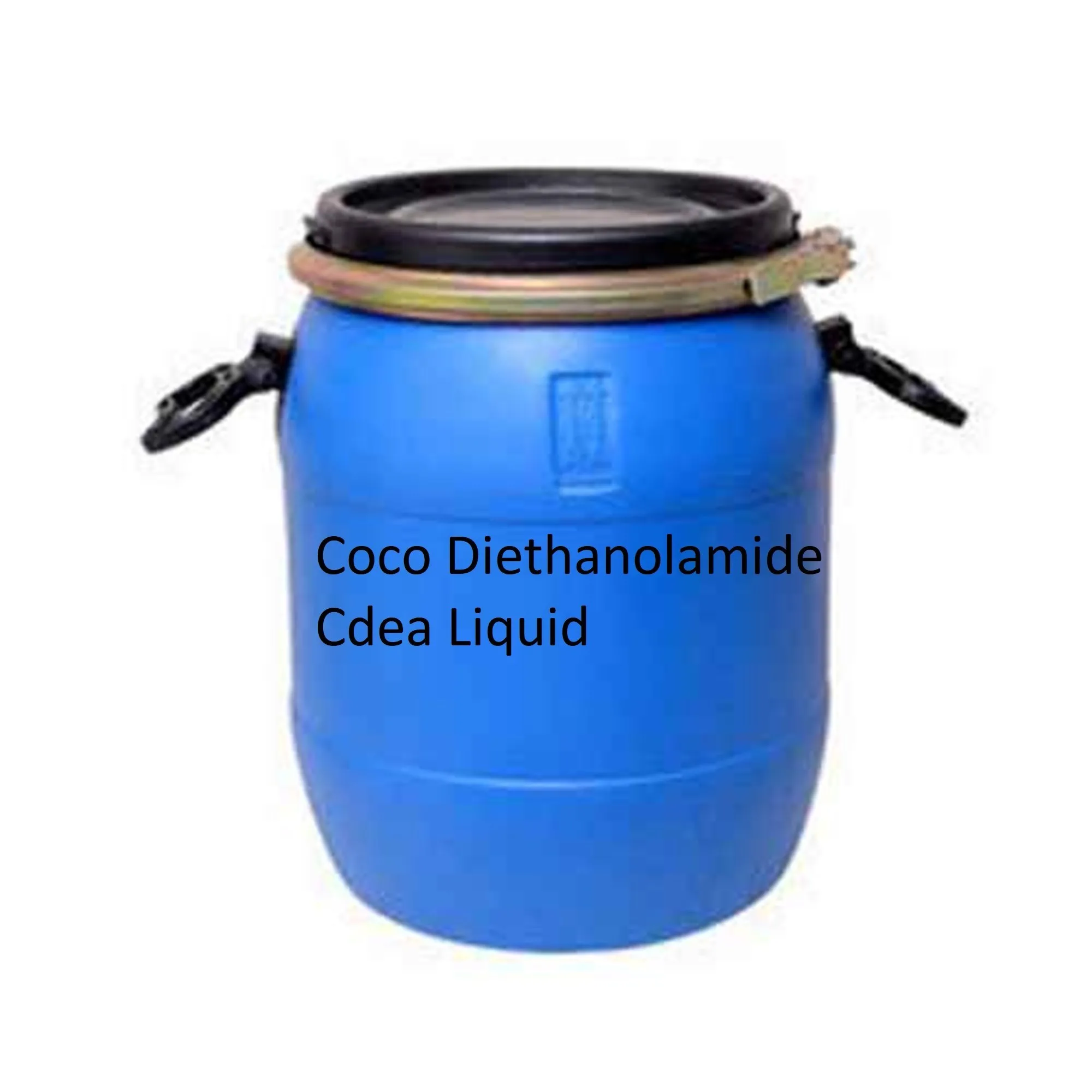
Cocodiethanolamide (CDEA) Supplier in Kenya | Olinc Chemical Suppliers
Cocodiethanolamide (CDE) is a non-ionic surfactant derived from the fatty acids of coconut oil and diethanolamine. It is widely used as a foam booster, foam stabiliser, thickening agent and emulsifier in the manufacture of liquid soaps, detergents, shampoos, dishwashing liquids and other cleaning products.
CDE is particularly valuable in detergent manufacturing because it improves the quality and stability of foam while helping to give liquid cleaning products a thicker, smoother and more appealing consistency.
When combined with other surfactants such as SLES (Texapon) and LABSA, Cocodiethanolamide helps improve foam performance, viscosity and the overall cleaning formulation.
At Olinc Chemical Suppliers, we cater to manufacturers, wholesalers, detergent producers and industrial customers looking for Cocodiethanolamide in Nairobi, Kenya and the wider East African market, including Uganda and Tanzania.
Other Names for Cocodiethanolamide
When searching for or purchasing this chemical, you may encounter several different names. These names are useful when identifying the correct raw material.
-
Cocodiethanolamide
-
Coconut Diethanolamide
-
Coco Diethanolamide
-
CDE
-
CDEA
-
Cocamide DEA
-
Coconut Oil Diethanolamide
-
Coconut Fatty Acid Diethanolamide
-
Coconut Diethanolamine
-
6501 (a common commercial designation)
CAS Number: 68603-42-9 (commonly used for coconut-derived CDEA).
These names generally refer to the same ingredient family, although commercial grades and compositions can differ. Always confirm the CAS number, active matter and technical specifications before purchasing.
Chemical Properties and Characteristics
Cocodiethanolamide is valued for its ability to improve the physical and performance characteristics of liquid cleaning formulations.
Its important properties include:
-
Foam boosting: Helps increase the volume of foam produced by cleaning products.
-
Foam stabilisation: Helps maintain foam for longer during washing.
-
Thickening: Improves the viscosity and consistency of liquid soaps and detergents.
-
Emulsification: Helps disperse and stabilise certain oil-based ingredients in formulations.
-
Wetting: Helps cleaning solutions spread across surfaces and materials.
-
Cleaning support: Works alongside primary surfactants to improve overall formulation performance.
-
Surfactant compatibility: Can be blended with various anionic and non-ionic surfactants, subject to formulation testing.
Typical product appearance
|
Property |
Typical description |
|---|---|
|
Physical form |
Viscous liquid |
|
Appearance |
Pale yellow to yellowish-brown |
|
Chemical type |
Non-ionic surfactant |
|
Origin |
Coconut fatty acids |
|
Solubility |
Water-compatible; behaviour varies with grade and formulation |
|
Main functions |
Foam boosting, thickening and stabilisation |
|
CAS number |
68603-42-9 |
Note: These are general product characteristics, not a guaranteed specification for every CDE grade. Actual colour, active matter, pH and other parameters should be confirmed using the supplier’s Technical Data Sheet (TDS) and Certificate of Analysis (COA).
pdt.static.globalsources.com+2
Main Uses and Applications of Cocodiethanolamide
Cocodiethanolamide is used in several industries, especially those involved in manufacturing detergents, personal-care products and industrial cleaning chemicals.
Liquid soap manufacturing
CDE is commonly used in liquid soap production to improve foam quality and viscosity.
It helps manufacturers achieve:
-
Richer and more stable foam.
-
A thicker liquid soap consistency.
-
Improved washing experience.
-
Better compatibility with primary surfactants.
-
More appealing finished products.
It is particularly useful in formulations containing SLES (Texapon) and other surfactants.
Dishwashing liquid production
It helps:
-
Improve foam production during washing.
-
Stabilise foam in the presence of dirt and grease.
-
Improve the thickness of dishwashing liquid.
-
Support wetting and cleaning performance.
-
Improve the overall appearance and texture of the finished product.
It is suitable for manufacturers producing household dishwashing liquids and commercial dishwashing detergents.
Shampoo manufacturing
CDE is used in selected shampoo formulations as a foam booster, viscosity modifier and emulsifying ingredient.
Its functions include:
-
Supporting rich and stable lather.
-
Improving shampoo consistency.
-
Supporting the blending of compatible ingredients.
-
Improving the texture and appearance of the finished shampoo.
Formulators should select an appropriate cosmetic-grade material and assess its regulatory suitability before using it in products intended for consumers.
Body wash and shower gel production
It helps improve:
-
Foam quality.
-
Product thickness.
-
Formulation stability.
-
Overall product texture.
Laundry detergent manufacturing
Cocodiethanolamide can be used in selected liquid laundry detergent formulations to support foam stability, wetting and the performance of the surfactant system.
It is useful to manufacturers developing household and commercial laundry cleaning products.
Industrial cleaning products
CDE is also used in selected industrial cleaning formulations where foam, wetting, viscosity control and surfactant compatibility are required.
Applications may include:
-
General-purpose liquid cleaners.
-
Surface-cleaning formulations.
-
Degreasing products.
-
Certain metal-cleaning preparations.
Textile and fibre processing
In textile applications, CDE can be used in selected formulations requiring wetting, emulsification, dispersing or conditioning properties.
It may support the processing and cleaning of fibres and fabrics.
Why Is Cocodiethanolamide Important in Liquid Soap Manufacturing?
For detergent manufacturers, CDE is more than just another raw material. It helps address several important formulation requirements.
1. Improves foam quality
Customers often associate good cleaning products with rich, stable foam. CDE supports the production and maintenance of foam when combined with suitable primary surfactants.
2. Helps achieve the desired thickness
Thin liquid soap can appear diluted or poorly formulated. CDE helps manufacturers build viscosity and achieve a more desirable consistency.
3. Supports primary surfactants
CDE works alongside surfactants such as SLES and LABSA to improve the overall performance of the formulation.
4. Improves product appearance
By helping control foam and viscosity, it contributes to a more consistent finished product.
5. Offers formulation flexibility
It can be used in different types of cleaning formulations, allowing manufacturers to develop liquid soaps, dishwashing liquids, shampoos and other cleaning products.
How to Use Cocodiethanolamide in Liquid Soap Formulations
CDE is commonly incorporated as a secondary surfactant alongside primary cleaning agents.
It is often combined with:
|
Raw material |
Purpose in the formulation |
|---|---|
|
SLES (Texapon) |
Primary cleansing and foaming surfactant |
|
LABSA |
Primary anionic surfactant |
|
Caustic soda |
Neutralisation of LABSA |
|
Cocodiethanolamide (CDE) |
Foam boosting and viscosity support |
|
Sodium chloride |
Viscosity adjustment in suitable formulations |
|
Preservative |
Helps protect the finished product against microbial growth |
|
Fragrance |
Provides a pleasant scent |
|
Colour |
Gives the product its desired appearance |
|
Water |
Main formulation medium |
Recommended usage level
A typical starting range for CDE in some detergent and personal-care formulations is approximately 2–5%, depending on the product type, the CDE grade and the desired performance.
Some commercial dishwashing and shampoo formulations use approximately 3–5%.
However, the correct dosage depends on the complete formulation. Manufacturers should conduct compatibility, stability, viscosity and performance tests before finalising production quantities.
Important: CDE is not a replacement for SLES or LABSA. It is generally used as a supporting surfactant to improve the properties of a complete formulation.
Difference Between CDE, SLES and LABSA
Customers who manufacture liquid soap sometimes confuse these three ingredients. Although they work together, they have different functions.
|
Chemical |
Main function |
|---|---|
|
CDE/Cocodiethanolamide |
Foam boosting, foam stabilisation and thickening |
|
SLES/Texapon |
Primary cleansing and foaming agent |
|
LABSA |
Primary detergent surfactant after neutralisation |
Using the correct combination helps manufacturers achieve the desired cleaning performance, foam quality and viscosity.
Available Grades and Quality Specifications
Cocodiethanolamide is available in different commercial grades, depending on its active matter, composition and intended application.
Common commercial descriptions include:
-
CDE 6501: A common commercial designation for coconut diethanolamide.
-
CDE 85%: A grade specified with approximately 85% active matter.
-
CDE 80%: A commercial grade with a different active content and composition.
-
CDE with glycerine: A grade that contains glycerine as part of its composition.
-
CDE without glycerine: A grade formulated without added glycerine.
When purchasing CDE, manufacturers should consider:
-
Active matter percentage.
-
Free diethanolamine content.
-
Free fatty acid content.
-
Moisture content.
-
Colour and physical appearance.
-
pH according to the specified test method.
-
Intended application and formulation compatibility.
Not every CDE grade is interchangeable. If you manufacture liquid soap, shampoo or industrial detergents, choosing the correct specification is important for achieving consistent results.
Packaging and Storage
Cocodiethanolamide is commercially supplied in different packaging options depending on the manufacturer and order quantity.
Typical industrial packaging includes:
-
25 kg containers, where offered.
-
50 kg containers, where offered.
-
200 kg plastic or HDPE drums.
-
1,000 kg IBC containers for bulk requirements.
Actual packaging and available quantities should be confirmed when requesting a quotation from Olinc Chemical Suppliers.
Storage recommendations
To maintain product quality:
-
Store in a cool, dry and well-ventilated area.
-
Keep containers tightly sealed when not in use.
-
Protect the product from direct sunlight and excessive heat.
-
Avoid contamination with other chemicals.
-
Follow the manufacturer’s recommended storage temperature.
-
Keep the original product label and safety documentation available.
Safety, Handling and Precautions
Cocodiethanolamide is an industrial chemical raw material and should be handled responsibly.
Although it is used in certain personal-care formulations, the concentrated raw material should not be assumed to be harmless or suitable for direct skin application.
Recommended precautions include:
-
Wear suitable chemical-resistant gloves.
-
Use protective goggles to prevent eye contact.
-
Avoid prolonged or repeated skin contact.
-
Avoid splashing and unnecessary inhalation of mist.
-
Work in a suitably ventilated environment.
-
Wash hands thoroughly after handling.
-
Consult the product-specific Safety Data Sheet (SDS) before use.
Important formulation and regulatory consideration: Cocamide DEA requires careful control of residual free diethanolamine and nitrosamine formation. It should not be combined with nitrosating agents in cosmetic formulations. Manufacturers must assess the applicable cosmetic regulations and ingredient restrictions in their intended markets.
For manufacturers producing cosmetics and personal-care products for sale, regulatory compliance and appropriate raw-material documentation are essential.
Why Buy Cocodiethanolamide from Olinc Chemical Suppliers?
When sourcing raw materials for detergent and cleaning-product manufacturing, choosing a dependable chemical supplier matters.
Olinc Chemical Suppliers provides industrial chemical sourcing solutions for businesses and manufacturers looking for quality chemical raw materials.
Why contact Olinc for your CDE requirements?
-
Convenient Nairobi location: We are located along Enterprise Road, Avon Business Center, Nairobi.
-
Industrial chemical supplier: We serve businesses involved in detergent, cleaning and chemical manufacturing.
-
Bulk order enquiries: We cater to customers with different purchasing requirements.
-
Regional market reach: We serve customers in Kenya and receive enquiries from Uganda and Tanzania.
-
Product information: We help customers identify the chemical and grade they require.
-
Quotation support: Contact us to confirm current pricing, available packaging and supply arrangements.
Whether you are starting a liquid soap business, operating an established detergent factory or sourcing raw materials for industrial cleaning products, contact Olinc Chemical Suppliers for your Cocodiethanolamide requirements.
Frequently Asked Questions About Cocodiethanolamide (CDE)
What is Cocodiethanolamide used for?
Cocodiethanolamide is mainly used as a foam booster, foam stabiliser, thickening agent and emulsifier in liquid soaps, dishwashing liquids, shampoos, detergents and selected industrial cleaning products.
Is CDE the same as Cocamide DEA?
Yes. CDE, CDEA and Cocamide DEA are commonly used commercial names for coconut fatty acid diethanolamide. Always confirm the product’s CAS number and grade.
What is the CAS number of Cocodiethanolamide?
The commonly referenced CAS number for coconut-derived Cocamide DEA is 68603-42-9.
Is Cocodiethanolamide used in liquid soap?
Yes. It is commonly used in liquid soap production to improve foam stability, foam volume and viscosity.
Can I mix CDE with Texapon?
Yes. CDE is compatible with many anionic surfactants, including SLES (Texapon). Combining them can improve foam quality and help build viscosity.
Can CDE be used in dishwashing liquid?
Yes. It is widely used in dishwashing formulations to improve foam production, foam stability and product thickness.
How much CDE should I use when making liquid soap?
A typical starting range is 2–5% of the total formulation. The exact amount depends on the CDE grade, other surfactants and the required finished-product properties.
Does CDE make liquid soap thicker?
Yes. One of its important functions is to help increase the viscosity of liquid cleaning formulations.
Is CDE a foaming agent?
CDE is primarily a foam booster and stabiliser. It helps improve the quantity and stability of foam generated by primary surfactants.
Is CDE water-soluble?
Its water compatibility depends on the commercial grade and formulation conditions. It is commonly incorporated into aqueous surfactant systems, but manufacturers should follow the supplier’s mixing instructions.
What is the difference between CDE and CDEA?
In common chemical trade terminology, CDE and CDEA are alternative abbreviations for Cocodiethanolamide. The product specification is more important than the abbreviation.
Where can I buy Cocodiethanolamide in Nairobi, Kenya?
You can contact Olinc Chemical Suppliers, located at Avon Business Center, Enterprise Road, Nairobi, for CDE enquiries, pricing, packaging and availability.
Can I order Cocodiethanolamide in bulk?
Yes. Contact Olinc Chemical Suppliers with your required quantity to enquire about bulk supply and available packaging.
Does Olinc supply Cocodiethanolamide outside Kenya?
Olinc Chemical Suppliers serves the wider East African market, including enquiries from Uganda and Tanzania. Contact us to discuss your location, quantity and delivery arrangements.
Order Cocodiethanolamide from Olinc Chemical Suppliers
Looking for a reliable source of Cocodiethanolamide (CDE) in Nairobi, Kenya, Uganda or Tanzania?
Olinc Chemical Suppliers is ready to assist manufacturers, detergent producers, wholesalers and industrial buyers with their chemical sourcing requirements.
Whether you need CDE for liquid soap production, dishwashing liquid, shampoo manufacturing or industrial cleaning formulations, contact us for current pricing and availability.
Request a quotation today.
-
Company: Olinc Chemical Suppliers
-
Location: Enterprise Road, Avon Business Center, Nairobi, Kenya
-
Email: sales@olincinchemicals.com
-
Phone/WhatsApp: 0793062849
-
Website: www.olincinchemicalsl.com
Reviews
There are no reviews yet.