
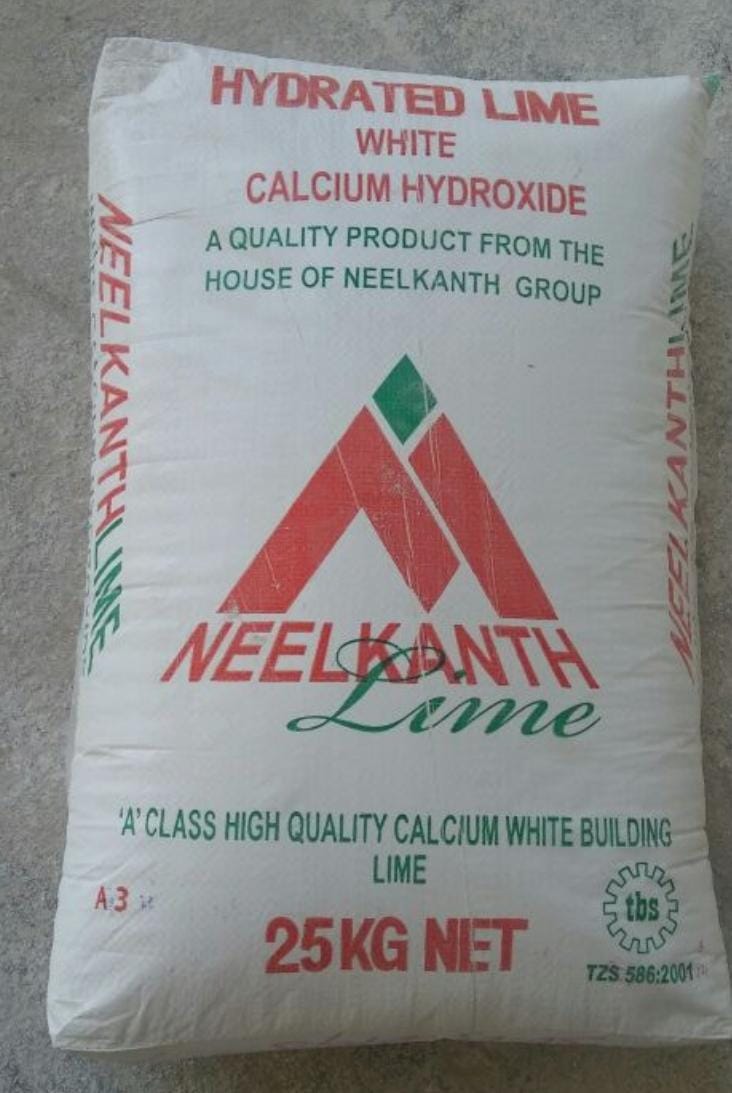
Hydrated Lime (Calcium Hydroxide) Supplier in Kenya | Olinc Chemical Suppliers
. Hydrated lime intended for construction may not meet the purity or contaminant requirements for drinking-water treatment, food-related applications or specialised industrial processes.
Hydrated Lime Product Specifications
| Property | Description |
|---|---|
| Product name | Hydrated Lime |
| Chemical name | Calcium Hydroxide |
| Chemical formula | Ca(OH)₂ |
| CAS number | 1305-62-0 |
| Molecular weight | Approximately 74.09 g/mol |
| Appearance | White or off-white powder |
| Chemical nature | Inorganic alkaline compound |
| Solubility | Slightly soluble in water |
| Main function | pH adjustment, neutralisation and processing aid |
| Common application areas | Construction, water treatment, wastewater treatment and industrial processes |
| Packaging | Confirm current available sizes with Olinc Chemical Suppliers |
| Storage | Keep dry in a tightly closed, suitable container or bag |
These are general reference properties. Actual purity, particle size, moisture content and other specifications depend on the product grade and manufacturer. Request the product’s Technical Data Sheet (TDS) and Safety Data Sheet (SDS) for verified details.
Other Names for Hydrated Lime
When searching for this chemical, customers may encounter several related names:
- Hydrated Lime
- Calcium Hydroxide
- Slaked Lime
- Caustic Lime, in some commercial contexts
- Calcium Hydroxide Powder
- Hydrated Lime Powder
- Lime Hydrate
- Builder’s Lime, depending on local usage and product type
The terms should be checked against the actual product specification because commercial lime products are not all chemically identical.
Do not confuse hydrated lime with quicklime. Quicklime is calcium oxide (CaO), while hydrated lime is calcium hydroxide (Ca(OH)₂). They have different properties and handling requirements.
Uses of Hydrated Lime
Water Treatment
Hydrated lime is used in selected water-treatment processes to adjust pH and alkalinity. It can also support water-softening processes and help manage certain impurities, depending on the treatment system.
Potential applications include:
- pH correction in water-treatment systems.
- Alkalinity adjustment.
- Selected water-softening processes.
- Treatment of water used in industrial operations.
For drinking-water treatment, the product must meet the applicable purity and regulatory requirements. A general industrial or construction grade should not automatically be used for potable water.
Wastewater Treatment
Wastewater-treatment facilities may use calcium hydroxide to neutralise acidic wastewater and raise pH to a required operating range. It can also help precipitate certain dissolved metals as hydroxides under suitable conditions.
Applications may include:
- Industrial wastewater pH adjustment.
- Neutralisation of acidic effluent.
- Treatment processes involving selected dissolved metals.
- Supporting solids separation in compatible treatment systems.
The required quantity depends on the wastewater’s acidity, buffering capacity, composition and treatment objectives. Dosing should be established through appropriate testing and process controls rather than a general rule.
Construction and Building Materials
Hydrated lime has a long history of use in construction. It can be incorporated into suitable building materials to provide specific workability and performance characteristics.
Potential applications include:
- Selected masonry mortars.
- Lime-based plaster and render.
- Certain building and restoration materials.
- Selected soil-treatment and construction applications.
The correct grade and formulation should be selected for the intended building application. Hydrated lime is not interchangeable with cement in every mixture, and proportions should follow the relevant design or product instructions.
Soil Stabilisation and Civil Engineering
Hydrated lime may be used in selected soil-stabilisation projects to improve the engineering properties of suitable clay-rich soils. Depending on the soil composition, lime treatment can alter plasticity and improve workability and strength development.
Potential applications include:
- Road construction and subgrade improvement.
- Civil engineering earthworks.
- Selected building-platform preparation.
- Soil modification for suitable clay soils.
A geotechnical assessment is important before use. Not all soils respond well to lime treatment, and the appropriate dosage depends on laboratory testing and project specifications.
Industrial Chemical Manufacturing
Calcium hydroxide is used as a reagent or processing material in several industrial processes. Its alkaline properties make it useful for neutralisation, pH control and selected chemical reactions.
Potential applications include:
- Acid neutralisation.
- pH adjustment in manufacturing processes.
- Production of selected calcium compounds.
- Processing operations requiring an alkaline material.
Industrial buyers should check the purity and impurity limits required by their process.
Agriculture and Soil pH Management
Certain agricultural lime products are used to reduce soil acidity and support better soil conditions for suitable crops. Calcium hydroxide may be used in specific agricultural settings, but the correct product and application method depend on local agronomic guidance.
Before applying lime to farmland, test the soil and follow the recommendations of a qualified agricultural adviser. Hydrated lime is more reactive and caustic than many agricultural limestone products, so it should not be applied indiscriminately.
Sugar and Food-Processing Industries
Calcium hydroxide is used in certain specialised food-processing and industrial purification processes, including applications in which alkalinity or calcium compounds are required.
For food-related use, the product must be specifically manufactured and documented for the intended application. Industrial or construction-grade hydrated lime should not be assumed to meet food-grade requirements.
Mining and Mineral Processing
Hydrated lime may be used in selected mining and mineral-processing operations for pH control, neutralisation and treatment of process water. The specific use depends on the mineral, process chemistry and environmental requirements.
Industrial operators should confirm the required purity, reactivity and particle size before purchasing.
Benefits of Hydrated Lime
When used in a suitable application, hydrated lime offers several practical advantages:
Effective acid neutralisation: Its alkaline nature makes it useful in processes that require acidity control.
pH adjustment: It can raise pH in suitable water, wastewater and industrial systems.
Versatile industrial use: It is used across construction, environmental treatment, manufacturing and selected agricultural processes.
Useful construction material: Appropriate grades can contribute to the workability and performance of lime-based building materials.
Support for selected treatment processes: It can assist in water softening and the precipitation of certain contaminants when process conditions are suitable.
Performance depends on product quality, purity, particle size, dosage, mixing and the characteristics of the application.
Hydrated Lime vs Quicklime vs Limestone
These products are related but have different chemical compositions and uses.
| Product | Chemical formula | Key distinction |
|---|---|---|
| Hydrated lime | Ca(OH)₂ | Calcium hydroxide; commonly supplied as a powder |
| Quicklime | CaO | Calcium oxide; reacts with water and releases heat |
| Limestone | Primarily CaCO₃ | Calcium carbonate; used in construction, agriculture and industrial processes |
Hydrated lime is produced by adding water to quicklime under controlled conditions. Quicklime reacts more strongly with water, releasing heat, and requires specific handling precautions.
Limestone is chemically different and generally less alkaline and reactive than hydrated lime. The products should not be substituted for one another without confirming the process requirements.
Grades and Quality Considerations
Hydrated lime is available in different grades and specifications according to its intended application. The exact grades offered by a supplier should be confirmed before publishing or ordering.
When selecting a product, consider:
- Purity: Calcium hydroxide content and relevant impurities.
- Particle size: Fineness can influence dispersion, reaction rate and process performance.
- Moisture content: Excess moisture can affect handling and storage.
- Reactivity: Important for neutralisation and treatment processes.
- Application requirements: Construction, wastewater treatment and specialised processing may require different specifications.
- Documentation: Request the TDS, SDS and, where relevant, a Certificate of Analysis (COA).
For drinking-water, food-related or other regulated applications, verify the relevant product approval and compliance requirements before use.
Hydrated Lime Packaging and Storage
Packaging options depend on the manufacturer, order quantity and current availability. Contact Olinc Chemical Suppliers to confirm the available bag sizes and other packaging arrangements.
For safe storage:
- Keep hydrated lime dry and protected from moisture.
- Store in a suitable, clearly labelled container or bag.
- Keep packaging closed when not in use.
- Protect the product from contamination.
- Store separately from incompatible materials, following the SDS.
- Use appropriate handling equipment to minimise dust.
Hydrated lime can absorb carbon dioxide from the air over time, gradually forming calcium carbonate and potentially changing its properties. Proper storage helps maintain product quality.
Safety and Handling of Calcium Hydroxide
Hydrated lime is alkaline and can cause serious eye damage and skin irritation or burns, depending on exposure. Dust can irritate the respiratory tract.
Follow these precautions:
- Wear suitable chemical-resistant gloves and protective clothing.
- Use chemical splash goggles or other eye protection recommended by the SDS.
- Avoid creating or breathing dust.
- Use appropriate ventilation and dust-control measures.
- Wash exposed skin promptly after contact.
- Keep the product away from children and unauthorised personnel.
- Follow the product-specific SDS for spill management, first aid and disposal.
If the product enters the eyes, begin rinsing immediately with plenty of clean water and seek urgent medical attention, following the SDS. Do not rely on a general description instead of the product’s safety documentation.
Frequently Asked Questions About Hydrated Lime
What is hydrated lime?
Hydrated lime is calcium hydroxide, an alkaline inorganic compound with the chemical formula Ca(OH)₂. It is used in construction, water treatment, wastewater treatment and various industrial processes.
What is the chemical formula of hydrated lime?
The chemical formula is Ca(OH)₂, and its CAS number is 1305-62-0.
Is hydrated lime the same as calcium hydroxide?
Yes. Hydrated lime is the common commercial name for calcium hydroxide.
Is hydrated lime the same as quicklime?
No. Hydrated lime is calcium hydroxide (Ca(OH)₂), while quicklime is calcium oxide (CaO). They differ in composition, reactivity and handling requirements.
What is hydrated lime used for in water treatment?
It can be used for pH and alkalinity adjustment and in selected water-softening processes. Drinking-water applications require a suitable product grade and compliance with applicable standards.
Can hydrated lime be used in wastewater treatment?
Yes. Appropriate grades may be used to neutralise acidic wastewater, raise pH and support the precipitation of certain dissolved metals under controlled conditions.
Can hydrated lime be used in construction?
Yes. Suitable grades are used in selected mortars, plasters, renders and soil-stabilisation projects. The correct formulation depends on the construction application.
Is hydrated lime soluble in water?
Calcium hydroxide is only slightly soluble in water. Its solubility depends on temperature and other conditions.
Is hydrated lime dangerous to handle?
It can cause serious eye damage and skin irritation or burns and can irritate the respiratory tract as dust. Use the protective equipment and handling procedures specified in the SDS.
What packaging sizes are available?
Available packaging depends on current stock and supply arrangements. Contact Olinc Chemical Suppliers to confirm the sizes and quantities available.
How can I get a quotation for hydrated lime in Kenya?
Contact Olinc Chemical Suppliers with your required quantity, intended application and delivery location to request current pricing and confirm availability.
Can I enquire about supply to Uganda and Tanzania?
Yes. Contact Olinc Chemical Suppliers to discuss your requirements and confirm availability, delivery options and applicable terms for your location.
Why Choose Olinc Chemical Suppliers?
Olinc Chemical Suppliers serves businesses seeking industrial chemicals and related materials in Nairobi, Kenya. We welcome enquiries from contractors, manufacturers, water-treatment companies and other commercial buyers looking for products suitable for their applications.
When requesting hydrated lime, share the intended use and any available technical specification. This helps establish whether the product being offered meets your requirements.
Request a Quote for Hydrated Lime / Calcium Hydroxide
Looking for a hydrated lime supplier in Nairobi, Kenya? Contact Olinc Chemical Suppliers to enquire about current availability, specifications, packaging and pricing.
Olinc Chemical Suppliers
Location: Avon Business Center, Enterprise Road, Nairobi, Kenya
Phone/WhatsApp: 0793062849
Email: sales@olincinchemicals.com
Website: www.olincinchemicalsl.com
Contact us with your requirements for hydrated lime (calcium hydroxide) and ask about supply enquiries across Kenya, Uganda and Tanzania.

Reviews
There are no reviews yet.